
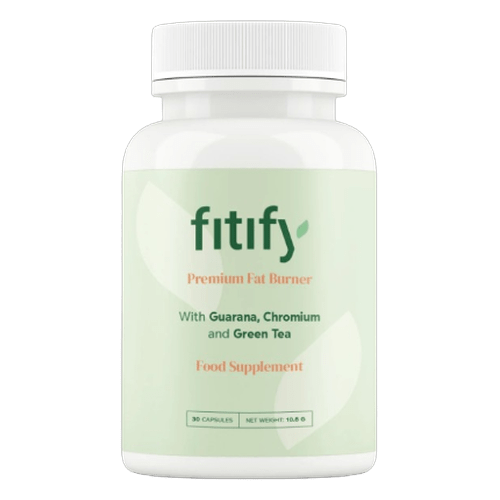
Fitify is promoted as a weight loss supplement that claims to burn fat, suppress appetite, boost metabolism, and deliver rapid results without diet, exercise, or lifestyle changes. Marketed through aggressive online ads, influencer-style testimonials, and fake news-style articles, the product is portrayed as a revolutionary formula for effortless weight loss. However, our investigation uncovered deceptive marketing practices, unverifiable ingredient sourcing, a complete lack of clinical testing, and widespread negative consumer feedback, confirming that the Fitify scam follows the established pattern of targeting individuals seeking quick weight loss solutions.
What Is Fitify?
Fitify is marketed as a weight loss supplement that claims to burn fat, suppress appetite, boost metabolism, and promote rapid weight loss without diet, exercise, or lifestyle changes. Its promotion relies heavily on aggressive pop-up ads, social media influencer posts, fake news-style articles, and manipulated video testimonials. Fitify is sold under a generic name with no identifiable manufacturer, registered production facility, or accountable company. This anonymity means ingredient sourcing, dosage accuracy, purity standards, clinical safety testing, and overall product quality remain completely unverified, leaving consumers unable to confirm its safety, authenticity, or real effectiveness.
Claims vs. Reality: Does Fitify Really Work?
Despite aggressive marketing campaigns and miracle transformation stories, investigative research combined with documented customer feedback shows the Fitify weight loss supplement consistently fails to deliver its promised benefits while lacking any credible scientific substantiation.
| Claim by Fitify | Reality Based on Investigation |
|---|---|
| Burns fat rapidly without diet or exercise | No supplement can safely burn significant fat in days; claims are unverified. |
| Suppresses appetite naturally | Ingredient doses are unknown; no proof of appetite suppression. |
| Boosts metabolism | No clinical evidence supports metabolic enhancement. |
| Produces visible results in a week | Rapid weight loss claims are unrealistic and unsafe. |
| Safe for daily use with no side effects | Users report nausea, headaches, bloating, digestive upset, dizziness, and fatigue. |
| Made from 100% natural ingredients | Purity, sourcing, and actual presence of ingredients remain undocumented. |
| FDA approved | No FDA approval exists; labeling is misleading. |
| Clinically tested formula | No registered trials or published studies exist. |
| Works for all ages | Safety for minors, adults with medical conditions, and elderly is untested. |
| Requires no lifestyle changes | Weight loss without diet or exercise is impossible; claims are deceptive. |
8 Proofs Why Fitify Is a Scam
Fitify is not just another weight loss product; the way it is marketed and sold reveals clear signs of a coordinated Fitify scam operation rather than a legitimate health supplement. Here are eight undeniable proofs:
1. No FDA Approval and False Safety Claims: Fitify lacks any Food and Drug Administration (FDA) evaluation for safety or effectiveness. Despite this, its ads misleadingly suggest doctor endorsements and miracle fat-burning powers. The small disclaimers admit the product does not actually treat obesity or metabolic disorders, highlighting deceptive marketing tactics.
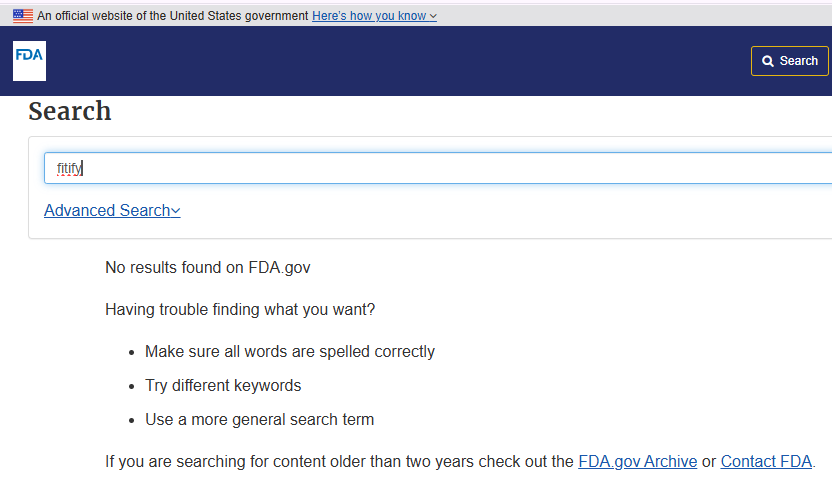
2. Unverified and Unproven Ingredients: The ingredients listed for Fitify are either vague or completely unsubstantiated in scientific literature when it comes to weight loss. There are no published clinical trials supporting the specific Fitify formula, nor is there transparency about ingredient sourcing, purity, or dosage, which is essential for any reputable supplement.
3. Overwhelming Negative Customer Feedback: Numerous user reviews from independent forums document little to no weight loss results after weeks of use. Many customers complain about wasted money, false promises, and even side effects like jitteriness or digestive issues. Some report feeling scammed after repeated purchases failed to deliver any benefits.
Source: Trustpilot
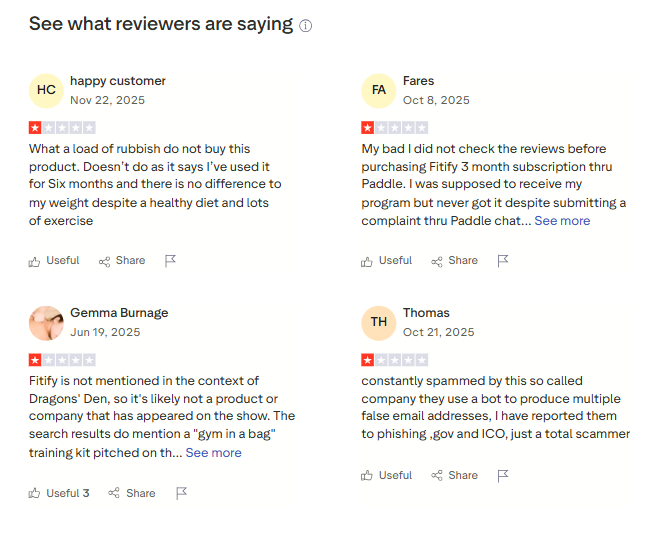
4. High-Pressure Online Sales Tactics: Fitify is aggressively sold through fake scarcity alerts (e.g., countdown timers and “limited stock” warnings), pushy upsell funnels, and influencer promotions that exaggerate results. These manipulative tactics are designed to rush buyers into impulsive decisions without adequate research.
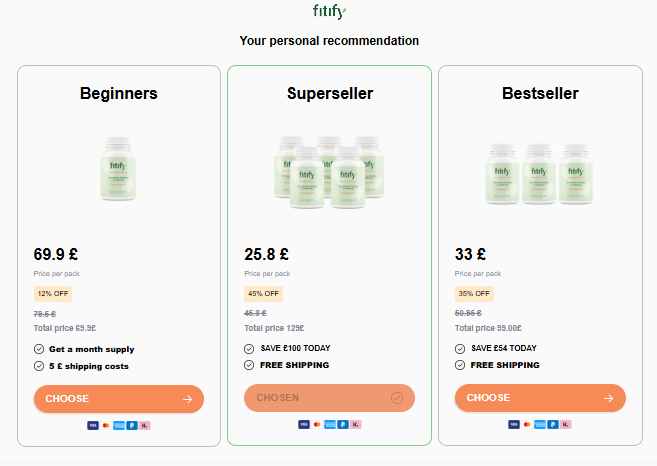
5. Fake and Manipulated Reviews: Many ratings and testimonials on e-commerce and review platforms appear artificially inflated. Analysis reveals repetitive, generic reviews that sound scripted, while genuine negative experiences are buried or heavily filtered. This review manipulation misleads potential buyers about the product’s true efficacy.
6. Suspicious Manufacturer and Distribution Transparency: Fitify’s production source is obscure, with no verifiable company information or physical address. Lack of transparency about manufacturing practices and quality controls raises major credibility concerns and is typical for scam supplements.
7. Poor Customer Service and Refund Issues: Numerous complaints cite unresponsive or rude customer support, denial of refunds despite guarantees, and delays in product dispatch. One user on Reddit reported never receiving the product but being charged once again when trying to cancel, confirming fraudulent sales practices.
8. No Independent Clinical Evidence Supporting Claims: While Fitify claims to boost metabolism and curb appetite, no robust clinical trials or peer-reviewed studies back its specific claims. This blatant overstatement of benefits combined with diverted scientific facts indicates a deliberate scam strategy to capitalize on consumer desperation.
Is Fitify Scam or Legit?
Fitify is a scam that targets people seeking quick weight loss by promising effortless fat burning, appetite suppression, and metabolism boosting, while being sold through anonymous online networks with no verifiable manufacturer or regulatory oversight. Its marketing relies on fake influencer endorsements, recycled testimonials, and exaggerated claims unsupported by legitimate clinical research. Users frequently report no noticeable weight loss along with side effects such as nausea, headaches, bloating, digestive upset, dizziness, and fatigue. Purchases are handled through rotating sales funnels using aggressive billing tactics, exposing buyers to subscription traps, denied refunds, and ongoing financial losses tied to unverified ingredients and unaccountable sellers.
What Fitify Lacks vs. What a Legit Supplement Should Have
The gap between the Fitify weight loss supplement and a legitimate health supplement is impossible to ignore. Below is a direct comparison highlighting the product’s key deficiencies:
| Fitify | A Legit Health Supplement |
|---|---|
| No publicly verified manufacturer or business registration | Clear company identity with published corporate contact information |
| Uses fake influencer endorsements and stock imagery | Endorsed by licensed professionals or verified health experts |
| Provides no testing documentation or ingredient dosage verification | Offers third-party laboratory testing for purity, potency, and safety |
| Promotes unrealistic “rapid fat loss without diet or exercise” claims | Makes achievable claims supported by established scientific research |
| Displays manipulated 5-star testimonials hosted on its own websites | Features authentic customer reviews on neutral consumer platforms |
| Sold through cloned sales funnels and aggressive pop-up advertisements | Distributed only through official brand websites or trusted retail channels |
Fitify Complaints and Reviews
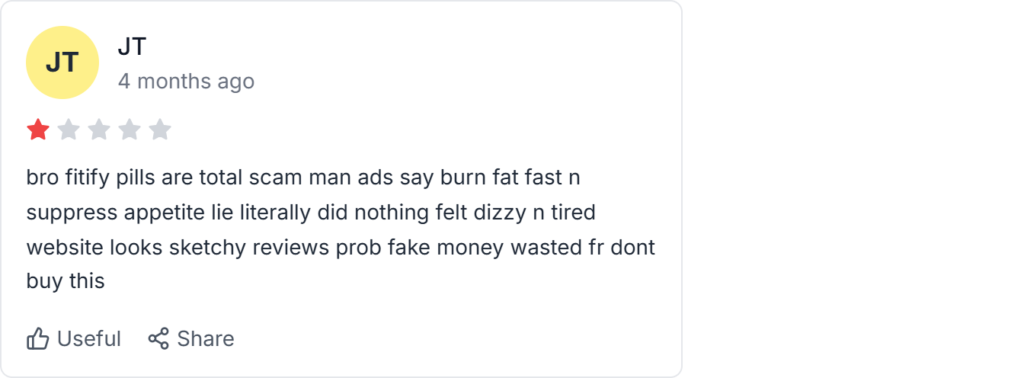
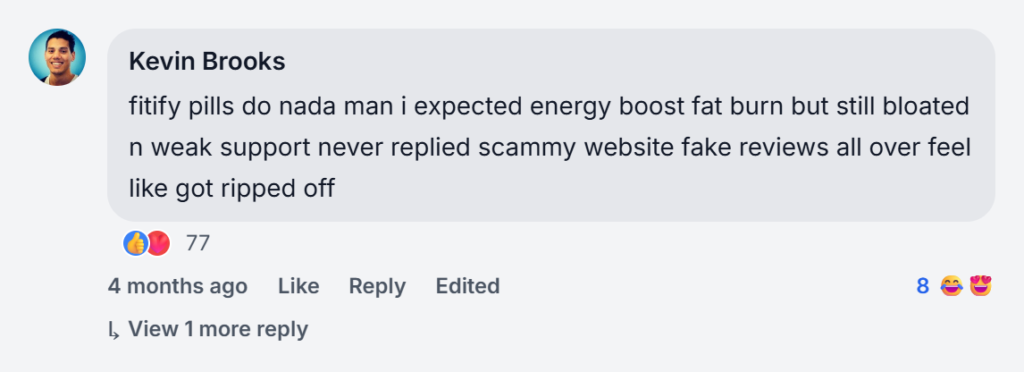
To ensure an unbiased evaluation, we reviewed feedback from neutral platforms such as Trustpilot, Reddit, and Facebook, where seller manipulation is less likely. The response was overwhelmingly negative. Most users reported no weight loss results, persistent bloating, headaches, digestive upset, billing issues, and unresponsive customer support. This consistent pattern of complaints indicates an ongoing Fitify Scam fueled by misleading advertising and unverified claims. Below are representative user experiences:
Samantha Lee, United States, New York, (Age 28, Female)
Source: Reddit
man i been takin fitify tablets for like a month now n nothing changed lol ads said i would drop lbs quick n feel energy boost but nah still same weight bloated all the time pills taste nasty n support never reply emails feel ripped off big time money gone would not recommend to anyone
Jake Thompson, Australia, Sydney, (Age 35, Male)
Source: Twitter
Melissa Carter, United Kingdom, London, (Age 27, Female)
Source: Facebook
ugh fitify capsules trash i took for 4 weeks waist still same no energy bloated af taste awful hard to swallow support never answered emails reviews prob bots fake money gone totally frustrated
David Nguyen, Canada, Toronto, (Age 39, Male)
Source: Reddit
i tried fitify capsules thinking it would help me lose belly fat quick but lol nothing happened still same fat n feel weak pills make me nauseous got allergic reaction as well website fake reviews no customer service at all wasted my money

Emily Roberts, United States, California, (Age 31, Female)
Source: Trustpilot
fitify tablets aint worth it bro i been on them 3 weeks n waist same still bloated taste nasty pills hard to swallow no energy at all feel cheated support never reply fake reviews everywhere dont waste ur cash
Kevin Brooks, United States, Texas, (Age 37, Male)
Source: Facebook
Fitify Ingredients – Inside the Product
The main concern with Fitify weight loss supplement is its unverified ingredient formula. Although marketed as a natural fat-burning and metabolism-boosting supplement, the company provides no third-party lab testing results, sourcing documentation, or dosage transparency. Without certified verification, consumers cannot confirm ingredient purity, potency, or safety standards.
- Garcinia Cambogia Extract: Promoted for appetite suppression and fat burning; dosage levels and clinical validation remain undisclosed.
- Green Coffee Bean Extract: Claimed to boost metabolism and accelerate weight loss; concentration, absorption, and purity are unverified.
- Apple Cider Vinegar Powder: Marketed to aid fat loss and digestion; potency and standardized dosage are not confirmed.
- Cayenne Pepper Extract: Added to support thermogenesis and calorie burning; effectiveness depends on dosage, which is not disclosed or tested.
- Green Tea Leaf Extract: Herbal ingredient advertised for metabolism enhancement and fat oxidation; sourcing quality and clinical efficacy remain unknown.
Fitify Ratings
The ratings for Fitify weight loss supplements are misleading and unreliable. High scores displayed on promotional websites are fabricated, while independent consumer platforms reveal widespread dissatisfaction and clear signs of scam-style practices.
| Website | Ratings | Reliability |
|---|---|---|
| Trustpilot | 1.4 / 5 | Reliable. Verified reviewers frequently report no weight loss, side effects, billing issues, and poor customer service. |
| Amazon | N/A | Unreliable. Product listings are often removed; remaining reviews appear artificially boosted. |
| Walmart | N/A | Unreliable. No verified stable listings; pages show suspicious redirects. |
| BBB | Unrated | Reliable. No accredited business profile; unresolved complaints reported. |
| Official Website | 4.9 / 5 | Fake. Testimonials are curated; negative reviews are filtered or blocked. |
Fitify Scam Risk Score
To assess consumer danger, Fitify capsules were evaluated across five critical risk categories. The results indicate extremely high scam risk and safety concerns.
| Metric | Risk Score (out of 10) | How We Rated It |
|---|---|---|
| Unverified Claims | 10/10 | Promises rapid fat loss and metabolism boost without scientific evidence. |
| Ingredient Transparency | 9/10 | Formula lacks verified sourcing, dosage clarity, and purity testing. |
| Customer Complaints | 10/10 | Numerous reports of no results, side effects, forced rebilling, and refund denial. |
| Manufacturer Transparency | 10/10 | No registered producer or traceable corporate ownership exists. |
| Marketing Honesty | 9/10 | Relies on fake influencer endorsements, recycled testimonials, and pressure tactics. |
| Overall Scam Risk Score | 9.6 / 10 | Extremely High Risk |
Fake Fitify Websites
Multiple fraudulent websites promote Fitify capsules using deceptive tactics resembling legitimate health resources while redirecting consumers into scam sales funnels.
| Website URL Types | Warning Signs / Notes |
|---|---|
| Fake “News” Articles | Appear as health journalism but are paid ads with affiliate redirect links. |
| Affiliate “Review” Blogs | Overly positive, copy-paste “reviews” created for commission earnings. |
| “Official” Sales Pages | Countdown timers, fake scarcity alerts, no manufacturer disclosure. |
| Social Media Ad Links | Exaggerated benefit claims redirect to cloned scam checkout pages. |
How We Investigated Fitify
Our investigation into Fitify weight loss capsules followed a detailed process to uncover its deceptive practices:
Analyzing Website Infrastructure: We examined domain registrations and found multiple anonymous sites protected by privacy services and hosted on servers linked to suspicious affiliate networks.
Scrutinizing Marketing Funnels: We tracked the user journey from aggressive pop-up ads, social media promotions, and countdown timers to checkout pages, revealing high-pressure tactics designed to rush purchases.
Verifying Claims Against Research: Fitify claims to burn fat rapidly, suppress appetite, boost metabolism, and deliver results without diet or exercise. Scientific research shows no credible evidence supporting these effects at the claimed dosages.
Aggregating Consumer Feedback: Ignoring curated testimonials on official sites, we collected reviews from neutral platforms such as Reddit, Trustpilot, and Facebook, which overwhelmingly report no weight loss, side effects, billing problems, and denied refunds.
Checking Retail Presence: Fitify is largely absent from trusted marketplaces like Amazon and Walmart, suggesting sellers avoid transparent retailers to reduce accountability.
How to Identify Scam Supplements Like Fitify
Watch for these warning signs to avoid falling victim to deceptive weight loss supplements like Fitify:
Promises of Instant Fat Loss: Legitimate supplements provide gradual support; beware claims of rapid weight loss without diet or exercise.
Anonymous or Untraceable Manufacturer: Lack of verified company name, address, or contact information is a major red flag.
No Third-Party Lab Testing: Genuine products provide lab certifications; scammers conceal ingredient purity, potency, and dosages.
Fake Endorsements and Pressure Tactics: Watch for nonexistent influencers, recycled testimonial videos, countdown timers, and “limited-time offers.”
Exclusive Sales on Private or Clone Websites: Scams often sell only through pop-ups or duplicate sites, avoiding reputable online retailers.
Fitify Side Effects
Fitify contains unverified natural ingredients and proprietary blends, making side effects unpredictable and potentially harmful:
- Nausea, stomach discomfort, or bloating from untested herbal extracts
- Headaches or dizziness from unknown dosages
- Allergic reactions to plant-based components like Garcinia Cambogia, Green Coffee Bean, or Green Tea Extract
- Possible interactions with medications, particularly stimulants or blood pressure drugs
- Fatigue, lethargy, or brain fog due to ineffective or imbalanced formulation
- Digestive upset or irregularity from unverified thermogenic or enzyme blends
Fitify Refund Process
Do not rely on the seller’s customer service, as it is often unresponsive or fake. To protect yourself and recover funds:
- Report the transaction to your bank or credit card company as fraudulent.
- Provide the website URL, purchase details, and note that the seller is anonymous and unverified.
- Request a chargeback to reverse the payment citing a fraudulent product.
- File a complaint with your country’s consumer protection agency or regulatory authority.
- Ask your bank to block the merchant to prevent recurring charges, a common issue reported by Fitify customers.
Final Verdict: Is Fitify Worth It?
No, Fitify is not worth it. This product is a dangerous scam that risks both your money and your health. Buyers may receive ineffective or potentially harmful supplements from anonymous sellers with no accountability. Only trust weight loss products from reputable brands that provide verified ingredients, clear manufacturer details, and authentic customer reviews on reliable retail platforms.
Frequently Asked Questions (FAQ)
How do I know if Fitify is real?
Authentic supplements come from verifiable companies and are sold on trusted e-commerce sites. If you’re buying through aggressive social media ads, suspicious pop-ups, or pressure-filled sales funnels, it’s most likely a scam.
What are the side effects of Fitify?
Users have reported side effects such as nausea, jitteriness, digestive upset, headaches, and increased heart rate. Unknown and unregulated ingredient blends make the risk even higher.
Is Fitify safe to use?
Safety cannot be guaranteed because the exact ingredients and dosages are unconfirmed. Unregulated or counterfeit products pose serious health risks. Always consult a healthcare professional before taking any supplement.
Has anyone used Fitify? What were the results?
Independent reviews reveal most users saw little to no weight loss effects. Many expressed frustration over wasted money and reported adverse reactions.
Is Fitify approved by the FDA?
No. Fitify has no FDA approval or certification and does not meet safety standards required for medications.
Where can I buy the real Fitify?
There is no verified source or legitimate version of Fitify. Avoid third-party sellers and suspicious websites. Opt for weight loss supplements from transparent brands with clear production sources.
Are there fake Fitify websites?
Yes. Numerous fake websites mimic official sellers using fake discounts, countdown timers, and fabricated customer testimonials. These are designed to steal money and data.
Does Fitify really work for weight loss?
No credible scientific evidence supports Fitify’s weight loss claims. Users report no effective fat burning, appetite reduction, or metabolism boosting.
Who makes Fitify?
The manufacturer is unknown and the product is linked to anonymous sellers with no verifiable company or production information.
How can I avoid Fitify scams online?
Ignore social media “miracle” ads, pushy sales funnels, and offers that seem too good to be true. Purchase supplements only from trusted retailers with verified brand information.
Are there real customer reviews for Fitify?
Most positive reviews are fake or heavily manipulated. Authentic feedback found on forums and independent platforms points to ineffectiveness and dissatisfaction.
Sources
- Menafra, D., de Angelis, C., Garifalos, F., et al. (2022) ‘Long-term high-dose L-arginine supplementation in patients with vasculogenic erectile dysfunction: a multicentre, double-blind, randomized, placebo-controlled clinical trial’, Journal of Endocrinological Investigation, 45, pp. 941-961. Available at: https://pubmed.ncbi.nlm.nih.gov/34973154/
- Onakpoya, I., Hung, S.K., Perry, R., Wider, B., Ernst, E. (2011) ‘The use of Garcinia extract (hydroxycitric acid) as a weight loss supplement: a systematic review and meta-analysis of randomised clinical trials’, Journal of Obesity, 2011, Article ID 509038. Available at: https://pmc.ncbi.nlm.nih.gov/articles/PMC3010674/
- Heymsfield, S.B., Allison, D.B., Vasselli, J.R., Pietrobelli, A., Greenfield, D., Nunez, C. (1998) ‘Garcinia cambogia (hydroxycitric acid) as a potential antiobesity agent: a randomized controlled trial’, JAMA, 280(18), pp. 1596-1600. Available at: https://jamanetwork.com/journals/jama/fullarticle/188147
- Kim, J.H. (2013) ‘Ginseng and male reproductive function’, The Korean Journal of Urology, 54(9), pp. 537-545. Available at: https://pmc.ncbi.nlm.nih.gov/articles/PMC3861174/
- Hursel, R., Westerterp-Plantenga, M.S. (2013) ‘The effect of green tea extract on fat oxidation at rest and during exercise: evidence and possible mechanisms’, Asian Journal of Sports Medicine, 4(4), pp. 245-252. Available at: https://pmc.ncbi.nlm.nih.gov/articles/PMC3649093/

Dr. Michael Harper is a board-certified cardiologist with a focus on cardiovascular health and supplement-related risks to the heart and circulatory system. He earned his Doctor of Pharmacy (Pharm.D.) from the University of Toronto and later completed cardiology training at Toronto General Hospital. Dr. Harper has worked as a Clinical Research Pharmacist and cardiology consultant, studying supplement-induced blood pressure changes, heart risks, and interactions with prescribed medications. He is dedicated to raising awareness about unsafe supplements that claim to “boost heart health.”