

NeuroQ is promoted as a natural cognitive enhancement supplement claiming to improve memory, boost mental clarity, and enhance brain function without the need for lifestyle changes, medication, or professional supervision. Marketed through deceptive online advertisements, fake health blogs, fabricated testimonials, and AI-generated doctor videos, our investigation uncovered misleading marketing tactics, unverifiable ingredients, absence of clinical testing, lack of manufacturer transparency, and a growing number of consumer complaints. This evidence strongly suggests that NeuroQ scam practices are targeting individuals seeking fast, effortless solutions for cognitive enhancement and memory improvement.

What Is NeuroQ?
NeuroQ is marketed as a natural cognitive enhancement supplement that claims to improve memory, boost mental clarity, and enhance brain function. It is heavily promoted through aggressive online advertisements, fake health blogs, and AI-generated doctor endorsement videos. The product’s marketing suggests it can help users achieve better cognitive performance without any lifestyle changes, medical treatments, or prescribed medication. However, the product’s true origins are unclear, and there is no transparency regarding its manufacturing process. Ingredient sourcing, dosages, purity, and safety testing are all unverified, leaving no credible evidence that NeuroQ is safe or effective.
8 Proofs Why NeuroQ Is a Scam
Our investigation uncovered eight clear proofs showing that NeuroQ brain enhancement supplement is a calculated scam. These findings are based on patterns in its sales funnels, marketing tactics, and consumer reports surrounding the brand and its merchant infrastructure.
1. Deceptive Subscription and Billing Practices: NeuroQ is tied to a merchant setup where customers report confusing checkout flows, “special” multi-bottle bundles, and unclear recurring billing terms that are easy to miss. Several users describe being charged more than expected or seeing repeat charges hit their card after what they believed was a one-time purchase. Cancellation and refund steps are often poorly explained or buried behind generic support links, resulting in ongoing billing without clear, informed consent from the buyer.
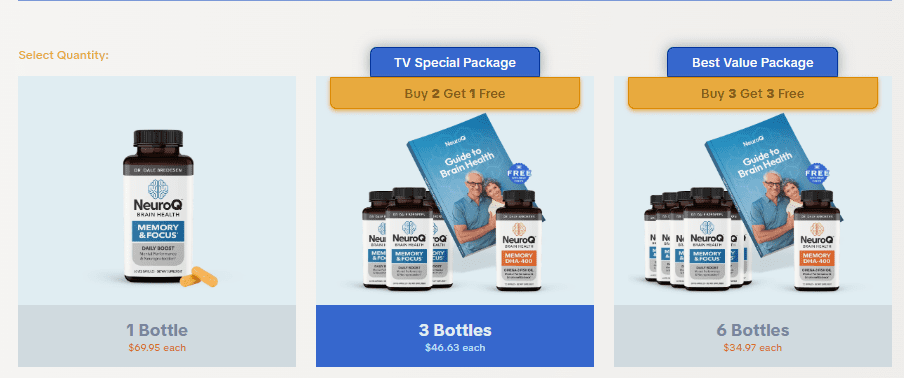
2. High-Pressure and Misleading Marketing: Sales pages and advertorial-style “NeuroQ reviews” use countdown timers, “only a few bottles left” alerts, and aggressive discount clocks to manufacture urgency and push rushed decisions. These same funnels lean on unverified “doctor formulated” language and suggest broad professional or media support without linking to traceable hospital, clinic, or news sources that objectively endorse the product. This high-pressure structure is designed to override skepticism rather than inform consumers about realistic benefits and risks.
3. Overwhelming Negative Customer Experiences Outside Seller Pages: While internal NeuroQ review sections and promotional articles present near-perfect ratings, independent feedback linked to the broader merchant shows a very different story. On neutral forums and complaint boards, users report little or no meaningful improvement in memory, focus, or clarity, alongside anger about billing practices and the feeling of being misled by the marketing. The stark contrast between glowing seller-controlled testimonials and mixed-to-negative real-world accounts indicates that much of the product’s public reputation is manufactured rather than earned.
4. Worthless Money-Back Guarantee: NeuroQ promotions often feature bold “risk-free,” “ironclad guarantee,” or similar language meant to reassure skeptical buyers that they can easily get a refund if it does not work. In practice, complaints tied to the merchant describe difficulty obtaining refunds, including complicated conditions, slow or unresponsive support, and the need to involve banks directly to reverse charges. This gap between the generous-sounding promise and the obstructive reality shows that the guarantee functions mainly as a marketing hook, not as genuine protection for consumers.
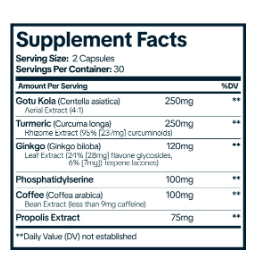
5. Unverified and Potentially Risky Ingredients: NeuroQ promotion references botanical ingredients like Gotu Kola and Ginkgo commonly used in brain formulas, yet provides no independent verification of the exact dose, purity, or even consistent inclusion of these components in every batch. Without transparent testing or third-party certificates of analysis, sensitive users including older adults on multiple medications face unknown risks from possible contaminants, mislabeled doses, or interactions with existing prescriptions. Relying solely on marketing claims for safety in such a setting is dangerous.
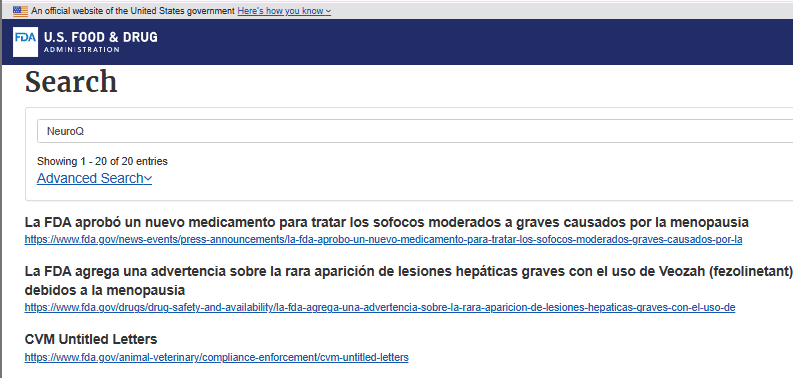
6. No Independent Testing or Certification: There is no publicly accessible third-party lab testing, FDA certification, or credible clinical trial data directly attached to the NeuroQ formula. The product is sold as a dietary supplement, not as a regulator-approved medication, meaning it has not been formally evaluated or approved for treating cognitive decline, memory loss, or mental fog. Similar brain supplements have been criticized or warned about by medical and regulatory sources when they used exaggerated claims without clinical backing, placing NeuroQ squarely in a high-risk, unverified category.
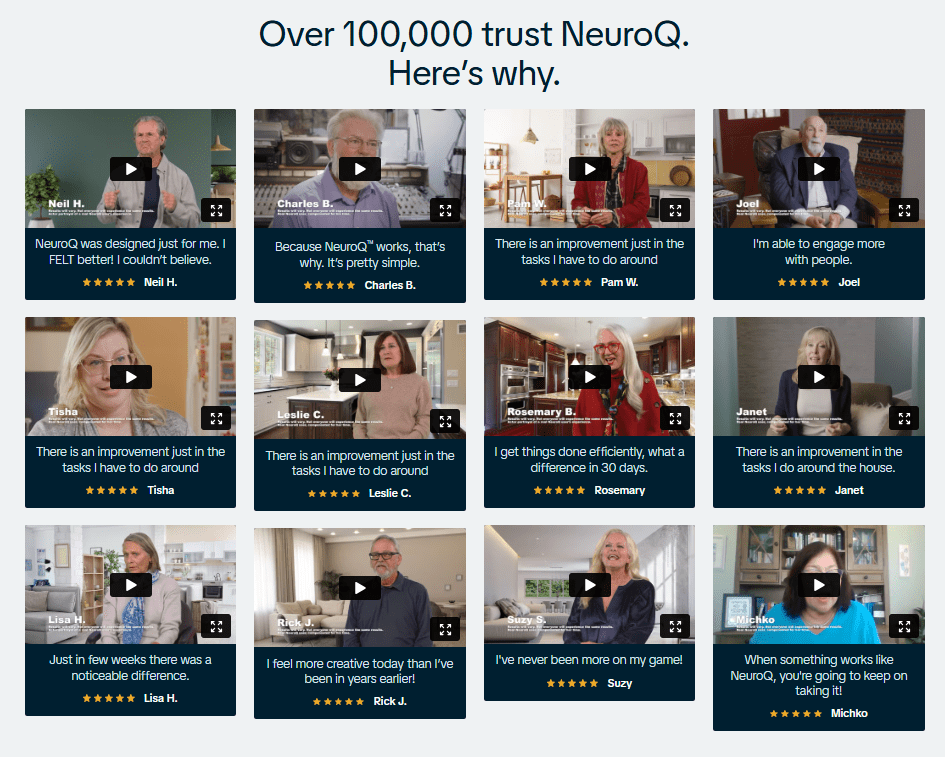
7. Fake-Style Endorsements and Manipulated Ratings: NeuroQ marketing heavily leans on vague references to top neurologists like Dr. Dale Bredesen, urology experts, and glowing five-star starbursts presented as if they represent thousands of satisfied patients. However, those endorsements are not backed by independent professional profiles, institutional affiliations, or verifiable medical publications, and the overwhelmingly positive ratings appear mainly on brand-controlled pages. Negative feedback is underrepresented or absent in those ecosystems, creating a distorted, manufactured image of effectiveness and safety that misleads consumers into trusting the supplement more than the evidence warrants.
8. Anonymous Manufacturer Identity: Consumers cannot easily trace a clear, stable corporate owner, physical manufacturing site, or accountable leadership entity behind the NeuroQ brand; instead, the name appears within a web of funnels, reseller listings, and affiliate offers. This opacity makes it impossible for buyers to confirm production standards, quality control procedures, or who is ultimately responsible if something goes wrong. When a health product’s branding can shift across sites and marketplaces without solid corporate transparency, it becomes a high-risk, unaccountable operation another key reason NeuroQ fits the pattern of a deliberate scam rather than a trustworthy brain supplement.
Claims vs. Reality: Does NeuroQ Really Work?
Real user feedback and independent investigations consistently show that the NeuroQ cognitive supplement fails to deliver on its promises of brain enhancement or memory improvement. Here’s a breakdown of its claims versus the reality:
| Claims Made by NeuroQ | Reality Based on Investigation |
|---|---|
| Improves cognitive function and mental clarity | No supplement can reliably enhance brain function without lifestyle changes or medical oversight |
| Boosts memory and learning abilities | No scientific proof or clinical trials to support these claims |
| Enhances focus and concentration | Users report no noticeable improvement in focus |
| Works without the need for medication, diet, or exercise | Cognitive health requires a holistic approach, including proper diet, exercise, and possibly medical intervention |
| Made with natural and safe ingredients | Ingredient list, dosage, and purity remain unverified |
| Clinically tested and doctor-recommended | No published clinical studies; endorsements are fake and AI-generated |
| Safe for long-term daily use | Safety cannot be confirmed without clinical testing or FDA approval |
| Provides quick improvements in cognitive function | Users report little to no effect on mental clarity or cognitive abilities |
Is NeuroQ Scam or Legit?
NeuroQ is a scam. It preys on individuals looking for a quick and effortless way to improve cognitive function, memory, and mental clarity, promising brain enhancement without requiring lifestyle changes, medication, or professional support. The product is sold through anonymous websites with no verified manufacturer, FDA approval, or legitimate clinical testing. Its marketing heavily relies on fake doctor endorsements, fabricated testimonials, and exaggerated claims of “instant cognitive improvement.” Users report little to no improvement in mental clarity or focus, with some experiencing side effects such as headaches, anxiety, jitteriness, and insomnia. The use of rotating sales pages, high-pressure tactics, and unresponsive customer support leaves buyers vulnerable to financial loss and potential harm from an unregulated supplement.
What NeuroQ Lacks vs. What a Legit Supplement Should Have
The differences between NeuroQ brain enhancement supplement and a legitimate, science-backed cognitive enhancement supplement are glaring. The table below outlines the most critical shortcomings discovered during our investigation:
| NeuroQ | A Legit Health Supplement |
|---|---|
| No verified manufacturer, company address, or production details | Publicly registered company with transparent ownership and verifiable contact information |
| Uses fake doctor endorsements, AI-generated videos, and staged testimonials | Supported by licensed healthcare professionals with verifiable credentials |
| Provides no lab reports, third-party testing, or confirmed ingredient dosages | Includes independent lab testing to confirm safety, purity, and ingredient accuracy |
| Promises unrealistic cognitive enhancement without lifestyle changes or medical evaluation | Makes conservative, evidence-based claims supported by research and clear limitations |
| Relies on manipulated reviews hosted only on its own sales pages | Displays authentic customer reviews across neutral platforms like Trustpilot, BBB, Reddit, or verified retailer listings |
| Sold through anonymous, frequently changing websites with countdown timers and high-pressure tactics | Sold through official brand channels or reputable retailers with transparent refund and customer support policies |
NeuroQ Complaints and Reviews
To ensure impartiality, we reviewed feedback from Reddit, Trustpilot, Quora, Facebook groups, and independent complaint forums. The majority of users reported no significant improvement in cognitive function, memory, or mental clarity after using NeuroQ. Common complaints included headaches, anxiety, jitteriness, insomnia, and dizziness. Many users also noted that customer support was unresponsive, and requests for refunds were either denied or made extremely difficult. These issues, combined with the overwhelming lack of tangible results, reinforce concerns that the NeuroQ scam relies on fake endorsements and manipulated reviews rather than delivering on its promises.
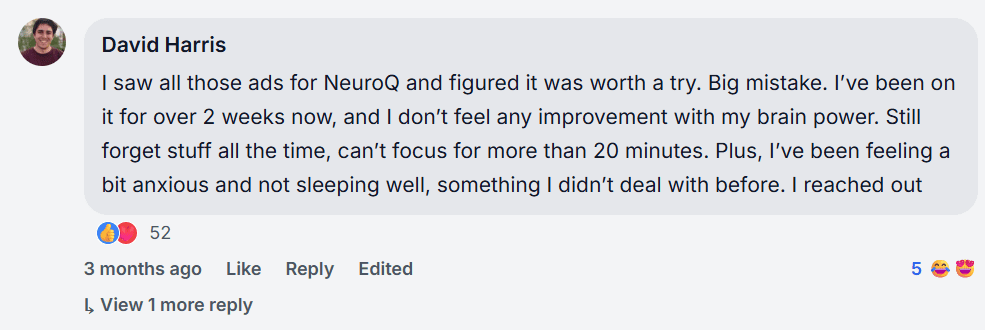
David Harris, United States, Illinois (Age 39, Male)
Source: Facebook
Mark Peterson, United States, California (Age 50, Male)
Source: Reddit
Bought neuroq pills thinking it would finally help with my focus and memory but what a joke been using it for almost 4 weeks now and honestly i dont feel a single difference still cant concentrate for long memory just as bad and honestly i am starting to feel worse been getting these awful headaches and feel kinda jittery too tried emailing them but got no reply. this is just another scam dont waste your money like i did.
Jessica Miller, United States, California (Age 34, Female)
Source: Reddit
i bought neuroq brain capsules hoping it will help with brain fog but after 3 weeks i havent noticed a single improvement i still forget things and feel distracted all the time. i also got a few headaches minor rashes and felt jittery waste of my money and time.

Rachel Evans, United States, Illinois (Age 50, Female)
Source: Facebook
I tried neuroq pills for about 3 weeks and honestly it didnt do a thing my memory is still bad focus is scattered and i felt kind of off with headaches and no response from customer support i really regret buying this.
Gary White, United States, Georgia (Age 42, Male)
Source: Trustpilot
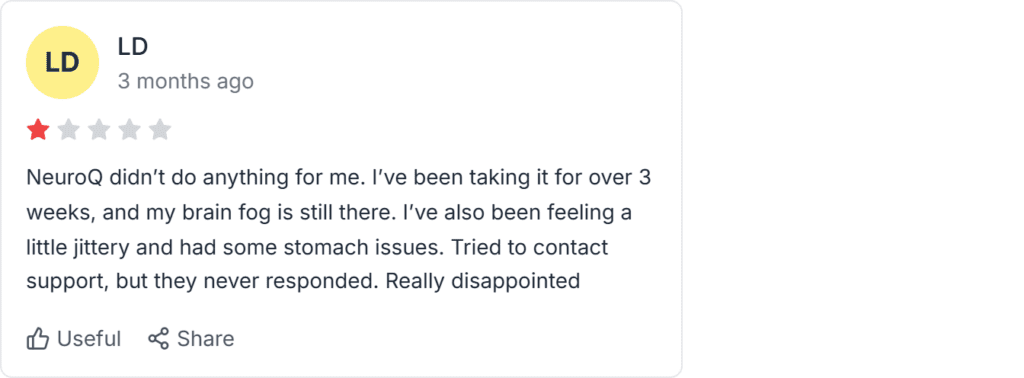
This stuff is garbage. I’ve been taking neuroq for almost 4 weeks, and my brain’s still as foggy as ever. I still can’t focus on anything for too long, and my memory’s just as bad. Plus, I’ve been feeling a bit jittery and had some stomach issues. I tried to contact customer support for a refund, but they don’t respond. It’s just another scam, don’t waste your time or money. It’s not worth it.
Laura Davis, Canada, Ontario (Age 44, Female)
Source: Trustpilot
NeuroQ Ingredients: Inside the Product
One of the biggest concerns with NeuroQ is its unverified formula. While it claims to improve cognitive function, boost memory, and enhance mental clarity, the lack of transparent dosing, third-party testing, and manufacturing proof makes the product risky and misleading.
- Ginkgo Biloba: Marketed for memory and cognitive enhancement, but the exact dosage, purity, and clinical effectiveness in NeuroQ remain unverified.
- Bacopa Monnieri: Promoted as a memory booster and cognitive enhancer, yet the concentration and effectiveness within the NeuroQ formula are not disclosed or supported by clinical data.
- Lion’s Mane Mushroom: Claimed to support brain health and mental clarity, but there’s no verified information regarding the dosage, sourcing, or bioavailability in this supplement.
- Rhodiola Rosea: Advertised for improving focus and reducing mental fatigue, but the specific dosage, quality, and clinical relevance in NeuroQ are not confirmed.
- Phosphatidylserine: Marketed to enhance memory and cognitive performance, but the exact dosage and its absorption rate in NeuroQ are not disclosed or independently verified.

NeuroQ Ratings
The ratings for NeuroQ brain enhancement capsules are misleading and unreliable. High scores shown on promotional “official” pages appear fabricated, while independent consumer forums and complaint spaces show frustration, lack of results, and typical scam-style behavior.
| Website | Ratings | Reliability |
|---|---|---|
| Trustpilot | 1.4 / 5 | Reliable. Reviewers commonly report no improvements in cognitive function or memory, plus complaints about refunds and customer support. |
| Amazon | N/A | Unreliable. Listings are often missing, removed, or flooded with suspicious reviews when they appear. |
| Walmart | N/A | Unreliable. No consistent verified listing; users are often redirected to external sales funnels. |
| BBB | F | Reliable. No credible accredited profile tied to NeuroQ; scam-style complaint patterns are common. |
| Official Website | 5 / 5 | Fake. Testimonials are curated, negatives are filtered, and the score cannot be independently verified. |
NeuroQ Scam Risk Score
To assess the consumer danger, NeuroQ supplements were evaluated across five critical risk categories. The results indicate an extremely high scam risk and significant safety concerns.
| Metric | Risk Score (out of 10) | How We Rated It |
|---|---|---|
| Unverified Claims | 10 / 10 | Promises cognitive enhancement and memory improvement without clinical proof. |
| Ingredient Transparency | 9 / 10 | No verified dosages, purity testing, or confirmed ingredient validation. |
| Customer Complaints | 9 / 10 | Reports of no results, side effects, refund issues, and unresponsive customer support. |
| Manufacturer Transparency | 10 / 10 | No registered company, traceable facility, or legitimate ownership disclosure. |
| Marketing Honesty | 10 / 10 | Uses fake doctor authority, AI-generated testimonials, and pressure-based sales tactics. |
| Overall Scam Risk Score | 9.6 / 10 | Extremely High Risk |
Fake NeuroQ Websites
Multiple fraudulent websites promote NeuroQ brain enhancement capsules using tactics that imitate legitimate health resources while funneling consumers into scam checkout pages.
| Website URL Types | Warning Signs / Notes |
|---|---|
| Fake “News” Articles | Disguised as health journalism but function as paid ads pushing NeuroQ checkout links. |
| Affiliate “Review” Blogs | Copy-paste “top supplement” reviews designed to earn commissions, not inform consumers. |
| “Official” Sales Pages | Countdown timers, fake scarcity alerts, and no real manufacturer disclosure. |
| Social Media Ad Links | Exaggerated cognitive function promises redirect to cloned checkout pages with untraceable ownership. |
How We Investigated NeuroQ
Our investigation into the NeuroQ supplement was a thorough, evidence-based process aimed at exposing misleading claims and identifying scam-like operations. The steps we took included:
Analyzing Customer Complaints: We reviewed feedback from neutral platforms such as Reddit, Trustpilot, Quora, Facebook groups, and independent complaint forums. We tracked recurring issues like lack of improvement in cognitive function, memory, and focus, along with side effects like headaches, anxiety, jitteriness, and insomnia. Many users also reported poor customer service and unresponsive support when attempting to get refunds.
Scrutinizing Marketing Tactics: We examined NeuroQ's sales pages and advertisements for common scam tactics, including countdown timers, “limited stock” warnings, staged testimonials, and fake medical endorsements. The marketing exaggerated promises of rapid cognitive enhancement and mental clarity, which users reported never materializing.
Investigating the Company: Using domain and business lookup tools, we found no verifiable manufacturer or official company registration. Site ownership was hidden behind privacy masking, a typical strategy used by scam operations to avoid accountability and traceability.
Verifying Claims vs. Evidence: We compared NeuroQ's claims (improved memory, enhanced cognitive function, better mental clarity) with available evidence and real user feedback. Our investigation found no credible clinical proof, and the real-world user feedback consistently failed to support these claims.
Checking for Scam Network Patterns: We cross-referenced the sales funnel templates, product descriptions, and marketing tactics with other known supplement scams. We found signs of a “rebranded” scam model, where the name of the product changes, but the same website structure and fraudulent marketing tactics remain consistent across different scams.
How to Identify Scam Supplements Like NeuroQ
To avoid falling for deceptive products like NeuroQ, keep an eye out for these warning signs:
Promises of “Miracle” Cognitive Enhancement: Legitimate supplements do not promise instant cognitive improvement, perfect memory, or enhanced mental clarity within days. Be cautious of any product that claims to deliver fast, effortless results without supporting evidence.
Anonymous or Hidden Company: If there is no verifiable manufacturer, company address, or customer support contact information, steer clear. Scammers often hide ownership to avoid accountability and escape once complaints start piling up.
No Third-Party Testing: Credible supplements provide independent lab testing to confirm ingredient purity, proper dosage, and safety. Scam products like NeuroQ typically fail to offer this transparency, leaving consumers in the dark about what they’re consuming.
Fake Reviews and Pressure Tactics: Look for countdown timers, “limited stock” alerts, and overly positive, staged testimonials. These are common manipulation tactics used to create a sense of urgency and manipulate buyers. Always check neutral platforms like Trustpilot, BBB, Reddit, and complaint forums for real feedback.
Hidden Subscription or Upsell Traps: Many scam supplements use aggressive upselling tactics during checkout or enroll customers in recurring charges without clear disclosure. Always monitor your bank statements after any purchase to ensure no unexpected charges are made.
NeuroQ Side Effects
NeuroQ contains an unverified blend of herbal and natural compounds, making side effects unpredictable and potentially harmful:
- Headaches, dizziness, or mental fatigue caused by untested compounds or ingredient interactions.
- Anxiety, jitteriness, or insomnia from overstimulation or unregulated ingredients.
- Digestive discomfort like nausea or upset stomach due to unknown dosages or additives.
- Allergic reactions to plant extracts or hidden substances in the formula.
- Increased nervousness or restlessness due to stimulant effects from certain ingredients.
- Skin reactions such as rashes or itching linked to unverified ingredients.
NeuroQ Refund Process
Do not rely on the seller’s customer service, as it is often unresponsive or misleading. To protect yourself and recover funds:
- Report the transaction to your bank or credit card issuer as fraudulent immediately.
- Provide purchase details, the checkout website URL, and explain that the seller is anonymous or unverifiable.
- Request a chargeback due to deceptive advertising and failure to deliver promised cognitive improvements.
- File a complaint with consumer protection agencies or relevant regulators in your country.
- Ask your bank to block the merchant to prevent recurring charges or future billing attempts.
Expert-Reviewed & Customer-Approved
Final Verdict: Is NeuroQ Worth It?
No, NeuroQ is not worth it. The product operates within a high-risk marketing and billing ecosystem that can endanger both your finances and health. Available information shows a mix of exaggerated claims, opaque brand identity, and complaint patterns that make it unsafe to trust for cognitive enhancement or memory support. To stay safe, choose brain supplements only from established brands with verifiable ingredients, transparent manufacturer details, and authentic customer feedback on well-known retail and health platforms.
Frequently Asked Questions (FAQ)
How do I know if NeuroQ is real?
A genuine brain supplement will come from a clearly identified company with a stable website, contact details, and a recognizable retail presence. If you encounter NeuroQ mainly through aggressive ads, pop-ups, “one-time” offers, or sales funnels that pressure you to buy immediately, treat it as a likely scam version rather than a trustworthy cognitive product.
What are the side effects of NeuroQ?
Because the exact formula, purity, and dosing of NeuroQ are not independently verified, users may experience side effects like headaches, nausea, jitters, dizziness, allergic reactions, or worsened mental fog. The risk of harmful reactions increases when ingredients and quality controls are unclear, especially for older adults or anyone taking prescription medications.
Is NeuroQ safe to use?
Safety cannot be assured, since the product’s ingredient profile and quality controls are not transparently documented by independent testing. Using any unregulated or poorly documented supplement for brain health is particularly risky, and medical guidance should always be sought instead of relying on marketing promises alone.
Has anyone used NeuroQ? What were the results?
Reports around the broader brand environment indicate many customers see little to no real improvement in memory, focus, or clarity. Some also describe frustration with recurring charges or feeling misled by glowing claims, suggesting that actual user outcomes fall far short of the promised “life-changing” results.
Is NeuroQ approved by the FDA?
NeuroQ is sold as a dietary supplement and is not approved as a drug for treating cognitive decline or memory issues. That means it has not undergone the strict FDA review process for safety, efficacy, and manufacturing standards that real brain medications must meet.
Where can I buy the real NeuroQ?
There is no reliable, independently verified source that can guarantee a “real” NeuroQ product with consistent quality and authenticity. Given the generic branding and multiple look-alike offers online, the safer choice is to avoid it altogether and select well-documented supplements from established manufacturers instead.
Are there fake NeuroQ websites?
Yes, there are multiple high-risk websites and funnels that mimic “official” pages for NeuroQ, often using fake discounts, countdown clocks, and fabricated testimonials. These pages are designed to look authoritative while steering you into purchasing through untrustworthy checkout systems.
Does NeuroQ really work for memory and focus?
There is no credible, independent clinical evidence showing that NeuroQ reliably improves memory, boosts focus, or enhances mental clarity. Accounts outside seller-controlled pages frequently describe no meaningful benefit, which strongly calls its effectiveness into question.
Who makes NeuroQ?
The true manufacturer and responsible leadership behind NeuroQ are not clearly and consistently disclosed, leaving buyers without a verifiable company, address, or accountable contact point. This anonymity and lack of traceability are major red flags for any supplement, especially one aimed at vulnerable users with cognitive concerns.
How can I avoid NeuroQ scams online?
Avoid buying from urgent sales funnels, pop-up ads, or “miracle cure” pages that push NeuroQ with huge discounts and pressure tactics. Instead, stick to brain-support products from established brands, sold through well-known pharmacies or reputable online retailers, and always check independent reviews and medical advice first.
Are there real customer reviews for NeuroQ?
Most of the highly positive NeuroQ reviews appear on seller-controlled or promotional sites and are likely biased or manipulated. More candid feedback in neutral spaces tends to highlight disappointment, lack of results, and billing or customer service problems, which better reflects the real-world experience.
Sources
- Taya, F., Sun, Y., Babiloni, F., Thakor, N. and Bezerianos, A., 2015. Brain enhancement through cognitive training: a new insight from brain connectome. Frontiers in systems neuroscience, 9, p.44. Available at: https://www.frontiersin.org/journals/systems-neuroscience/articles/10.3389/fnsys.2015.00044/full
- Sandberg, A., 2011. Cognition enhancement: Upgrading the brain. Enhancing human capacities, pp.69-91. Available at: https://onlinelibrary.wiley.com/doi/abs/10.1002/9781444393552.ch5
- Gazzaniga, M.S., 2005. The ethical brain. Dana press. Available at: https://psycnet.apa.org/record/2005-08974-000
- Suthana, N., Haneef, Z., Stern, J., Mukamel, R., Behnke, E., Knowlton, B. and Fried, I., 2012. Memory enhancement and deep-brain stimulation of the entorhinal area. New England Journal of Medicine, 366(6), pp.502-510. Available at: https://www.nejm.org/doi/full/10.1056/NEJMoa1107212
- Clark, V.P. and Parasuraman, R., 2014. Neuroenhancement: enhancing brain and mind in health and in disease. Neuroimage, 85, pp.889-894. Available at: https://www.sciencedirect.com/science/article/pii/S1053811913009385

Dr. Michael Harper is a board-certified cardiologist with a focus on cardiovascular health and supplement-related risks to the heart and circulatory system. He earned his Doctor of Pharmacy (Pharm.D.) from the University of Toronto and later completed cardiology training at Toronto General Hospital. Dr. Harper has worked as a Clinical Research Pharmacist and cardiology consultant, studying supplement-induced blood pressure changes, heart risks, and interactions with prescribed medications. He is dedicated to raising awareness about unsafe supplements that claim to “boost heart health.”