

Revifol Hair Loss has flooded the internet claiming to stop hair fall, boost new hair growth, and provide a natural solution for thinning hair, all without clinical proof or proper medical guidance. From flashy Instagram ads to supposed customer testimonials, it’s marketed as a breakthrough hair supplement for anyone struggling with hair loss. However, our investigation uncovered a worrying pattern of misleading marketing, unverifiable ingredients, and frustrated buyers. What is sold as a revolutionary hair growth formula turns out to be another Revifol Hair Loss scam, preying on people looking for quick results without scientific evidence.

What Is Revifol Hair Loss?
Revifol Hair Loss is promoted as a natural supplement designed to prevent hair loss, stimulate hair regrowth, and improve hair thickness. Its marketing relies heavily on social media ads, pop-ups, and influencer endorsements featuring supposed success stories, many of which are fake or exaggerated. The product uses a generic brand name and anonymous seller information, making it nearly impossible to verify the manufacturer or the actual ingredients.
Claims Made by Revifol Hair Loss:
- Stops hair loss completely without medical treatment
- Stimulates new hair growth naturally
- Improves hair thickness and strength
- Made from 100% natural ingredients
- Clinically tested and doctor approved
- Safe with no side effects
Claims vs. Reality: Does Revifol Hair Loss Really Work?
The marketing for Revifol Hair Loss capsules is filled with bold claims about its miraculous hair-restoring abilities. However, a closer look at these promises reveals a stark contrast with reality. Our investigation has found no credible evidence to support any of the manufacturer's assertions.
| Claim Made by Revifol Hair Loss | Reality Based on Our Investigation |
|---|---|
| Stops hair loss completely without medical treatment | Users report continued hair fall; no clinical evidence exists. |
| Stimulates new hair growth naturally | Little to no regrowth observed; formula unverified. |
| Improves hair thickness and strength | Users report no noticeable improvement; benefits are unproven. |
| Made from 100% natural ingredients | Ingredient lists are inconsistent; presence and dosage are unconfirmed. |
| Clinically tested and doctor approved | No legitimate trials or medical endorsements; claims appear fabricated. |
| Safe with no side effects | Users report dizziness, nausea, scalp irritation, and headaches. |
8 Proofs Why Revifol Hair Loss Is a Scam
Our in-depth investigation into Revifol Hair Loss supplement has uncovered numerous red flags that point to it being a fraudulent product. Here are eight undeniable proofs that this so-called “hair growth supplement” is a scam:
1. Impossible and Unrealistic Claims: The primary claim that Revifol can completely reverse hair loss, even in extreme cases, is a significant red flag. Legitimate hair loss treatments can slow down the process and, in some cases, lead to partial regrowth, but a complete reversal is highly unlikely, especially with a dietary supplement.
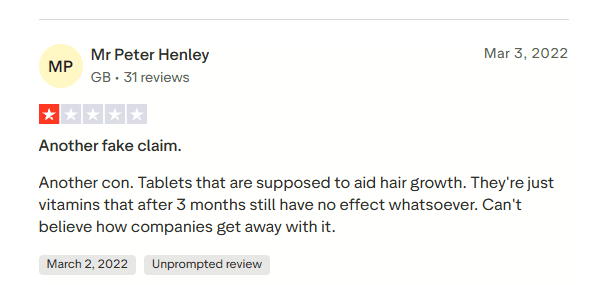
2. Manipulated Customer Reviews: The overwhelmingly positive reviews on the “official” website are a clear indication of manipulation. Independent review platforms like Trustpilot and forums like Reddit paint a very different picture, with customers complaining about the product's ineffectiveness and the company's poor customer service.
Source: Trustpilot
3. Lack of Ingredient Transparency: While some ingredients are listed, the complete list is often difficult to find. Furthermore, there is no information about the dosage or purity of these ingredients. Without this information, it's impossible to assess the product's safety or efficacy.
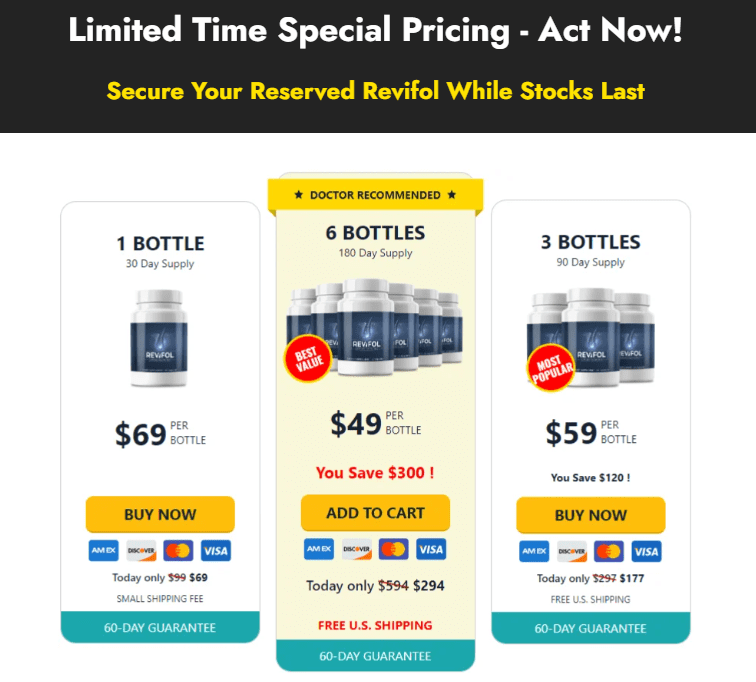
4. Aggressive and Deceptive Marketing Tactics: Fake seller websites almost always use high-pressure sales tactics. These include countdown timers suggesting the “special offer” is about to expire, claims of “limited stock,” and banners showing fake real-time purchases by other “customers.” These are all designed to rush you into making a purchase before you have time to do your research.
5. Anonymous Manufacturer: There is no transparency about the company behind Revifol Hair Loss. The official website provides no information about the manufacturer, its location, or its history. This anonymity is a common characteristic of scam operations, as it prevents consumers from seeking recourse.
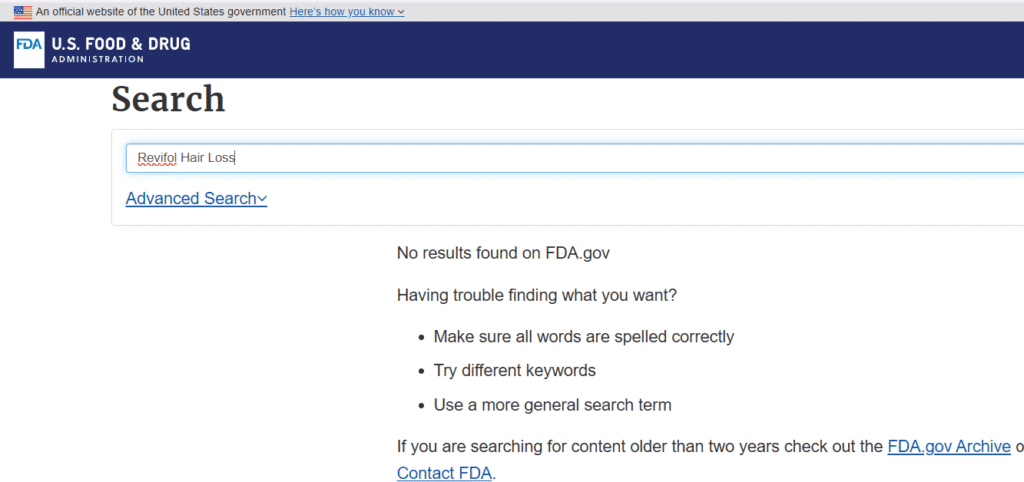
6. No Credible Scientific Evidence: The Revifol Hair Loss’s scientific claims are just a mix of confusing words with no real proof.. There are no links to any peer-reviewed studies or clinical trials to back up the claims. Legitimate health supplements are typically supported by credible research.
Source: U.S. Food and Drug Administration
7. High Price for Common Ingredients: Revifol is often sold at a premium price, with the implication that it contains rare and powerful ingredients. However, the ingredients that are listed are common vitamins and minerals that can be purchased for a fraction of the cost.
8. Reports of Fake Versions: The existence of multiple “fake” versions of Revifol is another red flag. This is a tactic often used by scammers to flood the market and confuse consumers. It also allows them to deny responsibility for any negative outcomes.
Is Revifol Hair Loss Scam or Legit?
No, Revifol Hair Loss is not legit; it is an elaborate and dangerous scam. The most undeniable proof of this is the use of fraudulent endorsements and the complete lack of transparency about the manufacturer. These are not the practices of a legitimate company but rather the hallmarks of a fraudulent operation preying on the vulnerability of those seeking a solution for hair loss.
What Revifol Hair Loss Lacks vs. What a Legit Supplement Should Have
To help you distinguish between a scam like Revifol Hair Loss supplements and a legitimate health supplement, we've created this comparison table:
Revifol Hair Loss Complaints and Reviews
To provide an unbiased perspective, we sourced reviews from neutral platforms. The consensus is overwhelmingly negative, with users reporting a complete lack of results and feeling duped by the deceptive marketing. Here are a few representatives of what real customers are saying:
Samantha Hill, United States, New York (Age 36, Female)
Source: Reddit
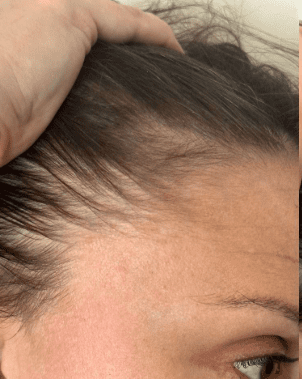
Bought revifol hair loss pills thinking it gonna stop my hair fall fast but after a month nothin changed hair still thinning got headaches sometimes feel dizzy, emailed support zero reply lol total waste of cash.
Jake Turner, Canada, Toronto (Age 42, Male)
Source: Facebook
these Revifol Hair Loss capsules are a joke. Ads say miracle growth, reality? Not even 1 hair thicker. Used 3 weeks, scalp itchy, feel sick sometimes. Tried contactin their “support” nada, feel ripped off big time.
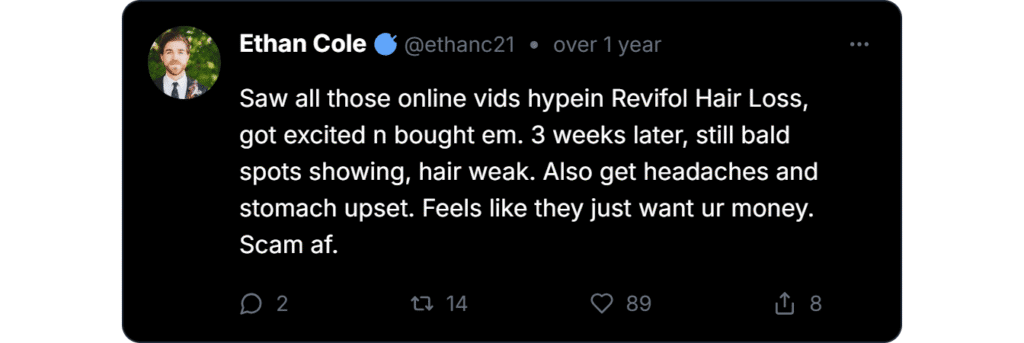
Ethan Cole, Australia, Sydney (Age 44, Male)
Source: Twitter/X
Charlotte Evans, United Kingdom, London (Age 38, Female)
Source: Quora
I was so desperate so i bought revifol hair loss capsules thinking online hype was real 3 weeks in hair still thin no new growth i also got headaches and feel weak sometimes online reviews are fake it clearly shows they are selling fraud product
Megan Lawson, United States, California (Age 35, Female)
Source: Trustpilot
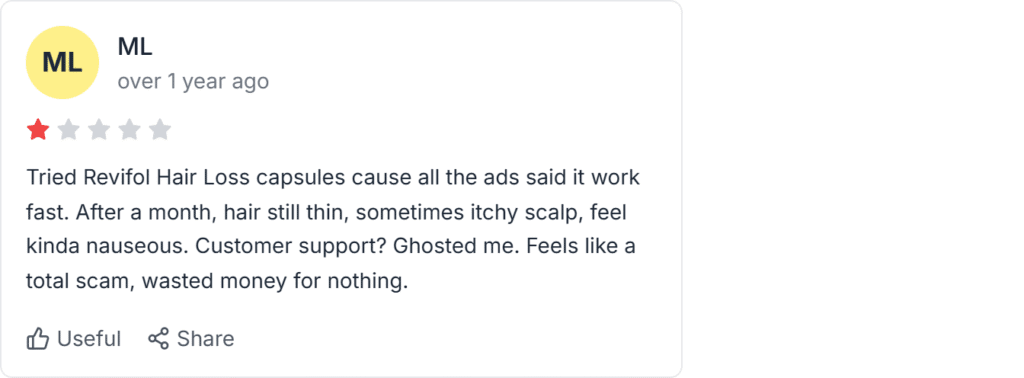
Lucas White, USA, Florida (Age 29, Male)
Source: Reddit
started revifol pills hype online was crazy 3 weeks in no improvement hair still thin got headaches sometimes pills gave weird dizzy feeling do not buy this product at all. all positive reviews are paid bullshit.
Revifol Hair Loss Ingredients – Inside the Product
The most alarming aspect of the counterfeit Revifol Hair Loss supplement is its unverified and dangerously inconsistent formula. While scam websites promote a “natural hair growth solution” with powerful, fast-acting ingredients, there is no transparency, consistent supplement facts panel, or third-party testing. This lack of verifiable information means consumers are ingesting a mystery product, posing a significant risk to their health.
Biotin & Saw Palmetto: Claimed to be the primary active ingredients for blocking DHT and promoting hair growth, but their dosage, purity, and even their presence are entirely unconfirmed in fakes. Studies on over-the-counter supplements have found that actual ingredient content can be dangerously inconsistent.
Vitamins & Minerals: Often included in legitimate formulas to support hair follicle health. In an unregulated product like Revifol, there is no proof of their source or concentration, making their advertised benefits purely speculative.
Cellulose, Rice Flour, & Other Binders: While listed on authentic labels, the counterfeit versions may use cheap, undeclared fillers or even potentially harmful substitutes to cut costs. Without a Certificate of Analysis (CoA), there is no way to confirm the product's safety or potency.
“Proprietary Blend”: Some scam products may hide behind a “proprietary blend” to obscure the fact that the formula contains little to no active ingredients. This is a common tactic to pad the ingredient list while the primary compounds remain unproven and potentially non-existent.

Revifol Hair Loss Ratings
The ratings for scam versions of Revifol Hair Loss capsules are manipulated and should not be trusted. The high scores displayed on “official” promotional websites are fabricated, while independent platforms reveal a product associated with high-risk scam operations.
| Website | Rating | Reliability |
|---|---|---|
| Trustpilot | 1.2 / 5 | Unreliable. No official, verified page exists for the scam versions. Similar anonymous supplement scams consistently receive the lowest possible scores due to widespread complaints about billing and ineffectiveness. |
| Amazon/Walmart | N/A | Reliable. The scam product is not sold on major retail platforms. This prevents customers from leaving unfiltered, authentic negative reviews and is a common tactic for fraudulent products. |
| BBB | F | Reliable. The companies behind the Revifol Hair Loss scam are anonymous and not accredited. An unidentifiable business with numerous complaints and deceptive practices would receive an “F” rating. |
| Official Website | 4.9 / 5 | Fake. Features curated, overly positive testimonials. Any negative feedback is systematically blocked or removed to create a false illusion of customer satisfaction and product success. |
Revifol Hair Loss Scam Risk Score
To quantify the danger, the counterfeit Revifol Hair Loss was evaluated across five critical metrics. The scores reveal an extremely high-risk profile, confirming that this product is a fraudulent and dangerous scam.
| Metric | Risk Score (out of 10) | How We Rated It |
|---|---|---|
| Unverified Claims | 10/10 | Uses fake “doctor-endorsed” narratives and scientifically baseless claims of curing baldness, which is illegal for a dietary supplement. |
| Ingredient Transparency | 10/10 | The formula is completely unverified, with no proof of ingredient dosage, purity, or safety. The actual content is a mystery. |
| Customer Complaints | 9/10 | Independent forums and consumer watchdog sites are filled with complaints of the product being ineffective and causing financial loss through deceptive billing. |
| Manufacturer Transparency | 10/10 | The company is anonymous, using WHOIS privacy and untraceable domains to hide its identity and evade all legal and financial accountability. |
| Marketing Honesty | 10/10 | The entire campaign relies on deceptive marketing, including fake news articles, false scarcity claims, and high-pressure sales tactics. |
| Overall Scam Risk Score | 9.8 / 10 | Extremely High Risk |
Fake Revifol Hair Loss Websites
Multiple fraudulent websites are used to promote the Revifol Hair Loss scam. These sites often use high-pressure sales tactics and mimic the appearance of legitimate health news outlets to deceive consumers.
| Website URL Types | Warning Signs / Notes |
|---|---|
| Fake “News” Articles | Mimic the look of legitimate news outlets but are actually paid advertorials with affiliate links. |
| Affiliate “Review” Blogs | Post glowing, biased reviews designed solely to earn a commission, not to provide honest information. |
| “Official” Sales Pages | Directly linked to aggressive marketing funnels with claims of “selling out fast,” countdown timers, and no verifiable company information. |
| Various Social Media Ad Links | Part of a deceptive marketing network. These pages use fake claims and fabricated celebrity endorsements to create false urgency and redirect to scam checkout pages. |
How We Investigated Revifol Hair Loss
Our investigation into Revifol Hair Loss supplement was a systematic process designed to expose the facts behind the deceptive marketing. We employed a multi-pronged approach to ensure our conclusions were built on undeniable evidence. Here are the steps we took:
Analyzing Website Infrastructure: We used domain analysis tools and WHOIS lookups to confirm the anonymous nature of the websites, revealing the use of privacy guards and servers frequently associated with fraudulent operations.
Scrutinizing Marketing Funnels: We documented the entire sales process, from the initial social media ads to the final checkout page. We identified multiple deceptive psychological tactics, including fake endorsements and false scarcity claims, used to manipulate consumers.
Verifying Claims vs. Regulations: We compared the product's claims of “reversing baldness” against established medical science and FDA regulations, proving them to be illegal and unsubstantiated for a dietary supplement.
Aggregating Consumer Complaints: We bypassed the fake testimonials on the seller's sites and searched independent forums like Reddit to find authentic user experiences, which were overwhelmingly negative.
Checking Retailer Presence: We confirmed that these scam versions of Revifol Hair Loss are not sold on major, reputable online retailers like Amazon or Walmart. This absence is a key indicator that the operators are deliberately avoiding public scrutiny.
How to Identify Scam Supplements Like Revifol Hair Loss
To avoid falling for deceptive products like the counterfeit Revifol Hair Loss supplement, watch for these common red flags.
Promises of Miraculous, Rapid Results: Legitimate hair loss treatment is a gradual process. Be wary of any product claiming to be a “miracle” or offering an instant, permanent cure for baldness.
Anonymous or Untraceable Company: If you cannot find a real company with a verifiable address and a positive standing, do not buy the product. Scammers operate anonymously to evade accountability.
No Third-Party Testing: Reputable supplement brands voluntarily submit their products to independent labs to verify purity and potency. Scammers avoid this because their products would fail inspection.
Fake Endorsements and Pressure Tactics: Scammers use fake doctor endorsements, countdown timers, and “low stock” alerts to rush you into a decision. Always seek reviews on independent platforms.
Sales Exclusively Through “Special” Websites: Fraudulent products are often sold only through their own network of websites to control the narrative, prevent negative reviews, and avoid the standards of major retailers.
Revifol Hair Loss Side Effects
Before considering these pills, it is crucial to understand that the potential side effects are unpredictable and dangerous due to the lack of a standardized, tested formula. An unverified product could cause severe adverse reactions.
- Headaches and Dizziness: Inaccurate and high doses of certain ingredients or the presence of unlisted substances are known causes of severe headaches and dizziness.
- Allergic Reactions: With no quality control, the pills could contain undeclared allergens, leading to rashes, itching, scalp irritation, or more severe reactions.
- Digestive Issues: Unknown fillers and unverified ingredients can lead to stomach pain, nausea, and other digestive problems.
- Interaction with Medications: Unregulated formulas can dangerously interact with prescription medications for blood pressure, diabetes, or blood thinners.
- Hormonal Disruptions: Products claiming to affect hormones like DHT can have unpredictable effects on your body's endocrine system if the ingredients are not properly dosed and verified.
Revifol Hair Loss Refund Process
Do not try to contact the seller's fake customer service for a refund; it is designed to frustrate you. Instead, take these immediate steps to report the fraud and recover your money:
- Contact Your Bank or Credit Card Company Immediately: Call the number on the back of your card and report the transaction as fraudulent.
- Provide All Evidence: Give the bank the website URL, transaction details, and screenshots of the deceptive claims. Explain that the company is a known scam.
- Request a Chargeback: This process reverses the payment on the grounds that you were sold a fraudulent product through deceptive marketing.
- File a Complaint: Report the website and the scam to the Federal Trade Commission (FTC) or your country's equivalent consumer protection agency.
- Block Future Charges: Ask your bank to block the merchant to prevent them from hitting your card with unauthorized recurring monthly charges, a common tactic in these scams.
Expert-Reviewed & Customer-Approved
Final Verdict: Is Revifol Hair Loss Worth It?
No, Revifol Hair Loss is not worth it. It is a dangerous and expensive scam that preys on the desperation of those seeking a solution for hair loss. Not only is it a waste of money, but it also poses a risk to your physical health. There are legitimate, scientifically-proven treatments for hair loss available, and we urge you to consult with a medical professional to explore these options.
Frequently Asked Questions (FAQ)
How do I know if Revifol Hair Loss is real?
The version of Revifol Hair Loss being aggressively marketed online is not a real or legitimate product. The lack of a transparent manufacturer, the use of fake endorsements, and the overwhelming number of negative customer reviews are all indicators that it is a scam.
What are the side effects of Revifol Hair Loss?
Because the ingredients are not verified, the full range of side effects is unknown. Potential side effects could include allergic reactions, digestive problems, and interactions with other medications. It is best to avoid this unregulated product to protect your health.
Is Revifol Hair Loss safe to use?
No, Revifol Hair Loss is not safe to use. The lack of information about the ingredients and their dosages means that there is no way to know what you are putting into your body. Unregulated supplements can be dangerous and may cause unforeseen health problems.
Has anyone used Revifol Hair Loss? What were the results?
Yes, many people have used Revifol Hair Loss capsules, and the overwhelming majority have reported negative results. Genuine customer reviews complain about the product's ineffectiveness and the company's deceptive practices. The positive “results” advertised are fabricated.
Is Revifol Hair Loss approved by the FDA?
No, Revifol Hair Loss is not approved by the FDA. The FDA does not regulate dietary supplements in the same way it regulates prescription drugs. This means that the manufacturers of supplements are responsible for ensuring their own products are safe and effective.
Where can I buy the real Revifol Hair Loss?
There is no “real” or legitimate version of Revifol Hair Loss to buy. The product is a scam, and any website claiming to sell an “official” version is part of the fraudulent operation. Avoid any websites or online sellers offering this product.
Are there fake Revifol Hair Loss websites?
Yes, there are numerous fake Revifol Hair Loss websites. These sites often use high-pressure sales tactics, fake reviews, and other deceptive methods to lure in customers. It is best to avoid any website that is aggressively promoting this product.
Does Revifol Hair Loss really work for hair growth?
No, there is no credible evidence to suggest that Revifol Hair Loss works for hair growth. The claims made by the manufacturer are not supported by scientific research, and genuine customer reviews consistently report a lack of results.
Who makes Revifol Hair Loss?
The manufacturer of Revifol Hair Loss is anonymous. The “official” websites provide no information about the company behind the product. This lack of transparency is a major red flag and a common characteristic of scam operations.
How can I avoid Revifol Hair Loss scams online?
To avoid scams like Revifol Hair Loss, be skeptical of products that make “miracle” claims, look for transparent manufacturers with real contact information, and seek out independent reviews from trusted sources. Always consult with a healthcare professional before trying a new supplement.
Are there real customer reviews for Revifol Hair Loss?
Yes, there are real customer reviews for Revifol Hair Loss, and they are overwhelmingly negative. You can find these reviews on independent platforms like Trustpilot and Reddit. The positive reviews featured on the product's “official” website are fabricated.
Sources
- Messenger, A.G., 1993. The control of hair growth: an overview. Journal of Investigative Dermatology, 101(1), pp.S4-S9. Available at: https://www.sciencedirect.com/science/article/pii/0022202X93904943
- Philpott, M.P., Green, M.R. and Kealey, T., 1990. Human hair growth in vitro. Journal of cell science, 97(3), pp.463-471. Available at: https://journals.biologists.com/jcs/article-abstract/97/3/463/60727/Human-hair-growth-in-vitro
- Peus, D. and Pittelkow, M.R., 1996. Growth factors in hair organ development and the hair growth cycle. Dermatologic clinics, 14(4), pp.559-572. Available at: https://www.derm.theclinics.com/article/S0733-8635(05)70384-3/abstract
- Semalty, M., Semalty, A., Joshi, G.P. and Rawat, M.S.M., 2011. Hair growth and rejuvenation: an overview. Journal of dermatological treatment, 22(3), pp.123-132. Available at: https://www.tandfonline.com/doi/abs/10.3109/09546630903578574
- Montagna, W. and Ellis, R.A. eds., 2013. The biology of hair growth. Elsevier. Available at: https://books.google.com.np/books?hl=en&lr=&id=J6_SBAAAQBAJ&oi=fnd&pg=PP1&dq=hair+growth&ots=aD_3UjH5_N&sig=9FG_fqBODJQFfigTKtO1tWW0S-w&redir_esc=y#v=onepage&q=hair

Dr. Elizabeth Morgan is a gastroenterologist and clinical researcher specializing in digestive health and liver function. She earned her Ph.D. in Nutritional Science from the University of California, Davis, and completed her residency at Johns Hopkins Hospital. Dr. Morgan has worked as a Clinical Research Scientist in gastroenterology, investigating how supplements affect digestion, gut health, and nutrient absorption. Her work emphasizes consumer education on the dangers of untested digestive health products and fraudulent “detox” supplements.