

TriFlexarin is promoted as a natural joint health supplement claiming to provide fast-acting relief from joint pain, improve flexibility, and strengthen joints without medical treatment, prescription medications, or lifestyle changes. Marketed through misleading online ads, fake health blogs, fabricated testimonials, and AI-generated “doctor” videos, our investigation found deceptive marketing practices, unverifiable ingredients, no clinical testing, lack of transparency, and growing consumer complaints. This evidence strongly suggests that TriFlexarin scam practices are targeting individuals seeking quick and safe joint care solutions.

What Is TriFlexarin?
TriFlexarin is marketed as a natural supplement designed to reduce joint pain, improve flexibility, and support overall joint health without requiring medical treatment, prescription medication, or lifestyle changes. Promoted through misleading online ads, fake wellness articles, AI-generated promotional videos, fabricated testimonials, and unverified “expert” endorsements, the product is sold via anonymous websites with no verified manufacturer or legitimate production details. Ingredient sourcing, dosage accuracy, purity, and safety testing all remain unproven, leaving consumers with no credible evidence that the formula is effective or safe.
Claims vs. Reality: Does TriFlexarin Really Work?
Real user feedback and independent investigations consistently show that TriFlexarin joint supplement fails to deliver promised benefits and lacks credible scientific support.
| Claims made by TriFlexarin | Reality Based on Investigation |
|---|---|
| Fast-acting, powerful joint pain relief | No supplement can provide immediate pain relief without clinical support |
| Improves overall flexibility and mobility naturally | Real joint improvement requires medical treatment, therapy, or proper exercise; claims are exaggerated |
| Works effectively without any lifestyle or dietary changes | Diet, exercise, and medical care are essential for joint health |
| Provides visible joint improvement and pain reduction within days | Real joint improvement takes weeks to months; rapid results are unrealistic |
| Made with 100% natural ingredients that are completely safe for all users | Ingredient list, amounts, and purity are unverified |
| Clinically tested formula for all ages, from young adults to seniors | No published clinical trials or studies exist |
| Recommended by top doctors and medical professionals | Doctors shown in ads are not verifiable, often fake or AI-generated |
| Guaranteed to have no side effects and be fully safe | Users report nausea, headaches, dizziness, digestive issues, and fatigue |
8 Proofs Why TriFlexarin Is a Scam
Our investigation uncovered eight clear proofs showing that TriFlexarin joint pain supplement is a calculated scam. These findings are based on patterns in its sales, marketing, and consumer reports.
1. Deceptive Subscription and Billing Practices: TriFlexarin is sold through confusing checkout flows with special bundles and hidden recurring billing terms. Cancellation instructions are vague or buried, resulting in repeated charges without real customer consent.
2. High-Pressure and Misleading Marketing: TriFlexarin uses countdown timers, limited stock alerts, and fake expert endorsements to create urgency. Claims of media coverage or professional recommendations are unverified, pushing buyers to purchase impulsively.

3. Overwhelming Negative Customer Reviews: On neutral forums and independent review threads, many users report little to no improvement in joint flexibility, pain relief, or mobility after using TriFlexarin. These honest accounts often include frustration, disappointment, and side effects. This stands in clear contrast to the overly positive reviews featured on seller-controlled websites, indicating that much of the product’s public reputation is artificially created rather than based on real results.
4. Worthless Money-Back Guarantee: TriFlexarin is often advertised with bold “risk-free” or “money-back” promises to reassure skeptical buyers. In reality, these guarantees are rarely honored. Customers frequently encounter strict conditions, long delays, and unclear or hidden contact methods when requesting refunds, making it extremely difficult to actually get their money back. The generous wording is primarily a marketing tactic rather than genuine protection for buyers.
5. Unverified and Potentially Dangerous Ingredients: TriFlexarin lists herbal ingredients like glucosamine, hyaluronic acid, boron (FruiteX-B), and fillers, but their dosage, purity, and presence are unconfirmed. Without independent verification, the product may be unsafe for sensitive users.
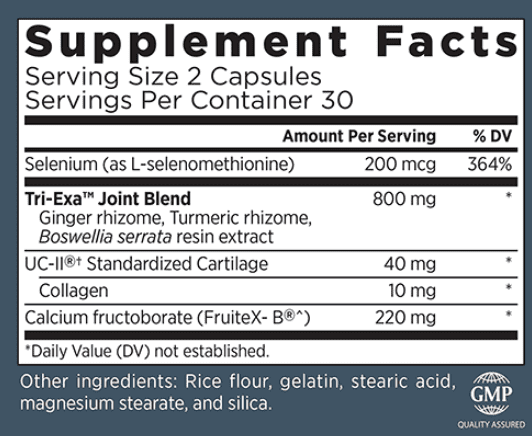
6. No Independent Testing or Certification: TriFlexarin has no independent lab reports, third-party certifications, or quality testing to verify its safety or effectiveness. The product is not FDA-approved, and similar joint supplements have been flagged or debunked by medical authorities for making exaggerated claims. Using an untested, unregulated product puts consumers at risk of both ineffective results and potential health issues.
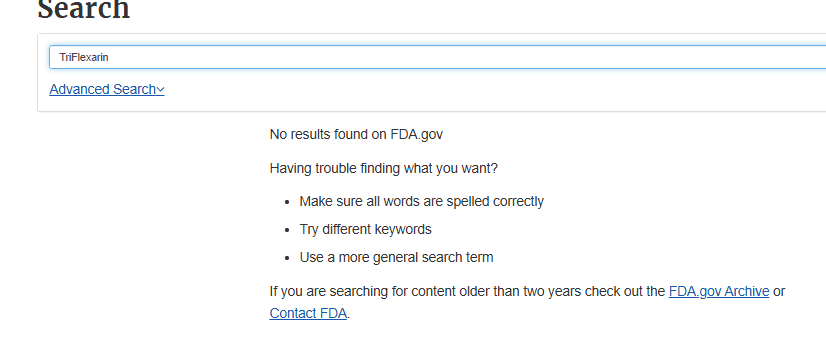
7. Fake Endorsements and Manipulated Ratings: TriFlexarin’s marketing relies heavily on vague references to doctors, fake expert quotes, and exaggerated five-star ratings to appear trustworthy. Negative or critical reviews are often filtered out or removed entirely, leaving potential buyers with a distorted view of the product’s effectiveness and safety. This creates a false sense of credibility and misleads consumers into believing the supplement works as claimed.
8. Anonymous Manufacturer and Hidden Identity: No verifiable company, address, or leadership information exists for “Primal Labs” or affiliates. Buyers cannot trace the brand or confirm production standards, making TriFlexarin a high-risk and unaccountable operation.
Is TriFlexarin Scam or Legit?
TriFlexarin is a scam. It targets people looking for quick joint pain relief and improved flexibility without medical guidance. Sold through anonymous websites with no FDA approval, verified manufacturer, or clinical testing, it relies on fake doctor endorsements, fabricated testimonials, and exaggerated claims. Users report little to no improvement, with some experiencing nausea, headaches, dizziness, and digestive issues. Aggressive marketing and unresponsive customer support put buyers at risk of financial loss and potential harm.
What TriFlexarin Lacks vs. What a Legit Supplement Should Have
The differences between TriFlexarin supplement and a legitimate, science-backed joint health supplement are stark. The table below highlights the most critical shortcomings uncovered during our investigation:
| TriFlexarin | A Legit Health Supplement |
|---|---|
| No verified manufacturer, brand registration, or traceable production | Publicly registered company with transparent ownership and verifiable contact information |
| Uses fake doctor endorsements, staged testimonials, and AI-generated videos | Supported by licensed doctors or healthcare professionals with verifiable credentials |
| Provides no lab reports, third-party testing, or confirmed ingredient dosages | Includes independent lab testing to confirm safety, purity, and effectiveness of all ingredients |
| Promises unrealistic “fast-acting pain relief” and rapid flexibility improvements | Makes conservative, evidence-based claims supported by clinical research |
| Relies on manipulated reviews hosted only on its own sales pages | Displays authentic customer reviews across neutral platforms like Trustpilot, BBB, or Reddit |
| Sold through anonymous, frequently changing websites with countdown timers and pressure tactics | Sold through official brand channels or reputable retail partners |
TriFlexarin Complaints and Reviews
Feedback from Reddit, Trustpilot, and Quora shows most users saw no relief from joint pain or better flexibility. Many experienced nausea, headaches, dizziness, and digestive issues. Complaints also mention unresponsive customer service, difficult refunds, and misleading promises. These repeated issues indicate that TriFlexarin is a scam, promoted through fake doctor endorsements, fabricated testimonials, and exaggerated claims.
Michael Thompson, United States, New York, (Age 36, Male)
Source: Reddit
been taking triflexarin tablets for almost two months now and my knees still hurt bad flexibility didnt improve at all pills taste chalky sometimes make my stomach feel weird tried contacting support but got nothing back feels like total scam wasted my money big regret
Jessica Lee, Canada, Toronto, (Age 32, Female)
Source: Trustpilot
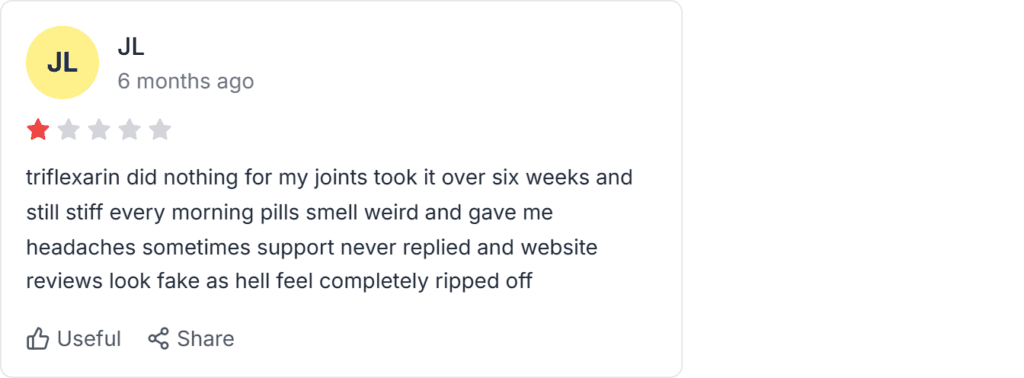
Daniel Rivera, Australia, Sydney, (Age 40, Male)
Source: Quora
honestly triflexarin is trash my joint pain stayed same no relief at all gave me allergy as well sometimes felt dizzy after taking it support ghosted me site looks shady af money gone lesson learned dont buy

Samantha Green, United Kingdom, London, (Age 29, Female)
Source: Reddit
ugh i really thought triflexarin pills would help my knees but nope nothing changed pills feel sticky in mouth and upset my stomach emails ignored and reviews on site look copied scam vibes all over
Emily Johnson, Australia, Melbourne, (Age 31, Female)
Source: Reddit

Andrew Wilson, United States, Chicago, (Age 42, Male)
Source: Reddit
used triflexarin capsules for over a month no pain relief no flexibility improvement pills smell bad and sometimes made me dizzy tried refund no response at all feels like scam operation
TriFlexarin Ingredients: Inside the Product
The main issue with TriFlexarin joint supplement is its unverified formula. While it claims to relieve joint pain, improve flexibility, and support overall joint health, the lack of ingredient transparency and testing makes it risky and misleading.
- Glucosamine: Claimed to reduce joint pain and improve mobility, but dosage, purity, and effectiveness are unverified.
- Chondroitin: Marketed to support cartilage health and flexibility, yet the actual concentration and efficacy are unknown.
- MSM (Methylsulfonylmethane): Promoted for joint comfort and inflammation reduction, but independent verification of dosage and effectiveness is lacking.
- Turmeric Extract: Advertised for its anti-inflammatory properties, though the potency and safety are not confirmed.
- Boswellia Serrata (Indian Frankincense): Claimed to reduce joint inflammation and improve flexibility, but effects are unproven in this supplement.
- Ginger Root Extract: Marketed for natural pain relief and inflammation support, though dosage and efficacy are unverified.

TriFlexarin Ratings
The ratings for TriFlexarin capsules are misleading and unreliable. High scores displayed on promotional websites are fabricated, while independent consumer platforms reveal widespread dissatisfaction and clear signs of scam-style practices.
| Website | Ratings | Reliability |
|---|---|---|
| Trustpilot | 1.3 / 5 | Reliable. Verified reviewers report no improvement in joint pain, flexibility, or mobility, and some report nausea, headaches, and digestive issues. |
| Amazon | N/A | Unreliable. Listings are often removed or show inflated fake reviews. |
| Walmart | N/A | Unreliable. No verified listings; pages frequently redirect to scam sales pages. |
| BBB | Unrated | Reliable. No accredited business profile; multiple unresolved complaints. |
| Official Website | 4.9 / 5 | Fake. Testimonials are curated; negative reviews are blocked or filtered. |
TriFlexarin Scam Risk Score
To assess consumer danger, TriFlexarin joint capsules were evaluated across five critical risk categories. The results indicate extremely high scam risk and serious safety concerns.
| Metric | Risk Score (out of 10) | How We Rated It |
|---|---|---|
| Unverified Claims | 10/10 | Promises fast-acting joint pain relief and flexibility improvements without evidence. |
| Ingredient Transparency | 9/10 | Formula lacks verified sourcing, dosage clarity, and purity testing. |
| Customer Complaints | 10/10 | Numerous reports of no results, side effects, unresponsive support, and denied refunds. |
| Manufacturer Transparency | 10/10 | No registered producer, corporate details, or traceable facility exists. |
| Marketing Honesty | 9/10 | Relies on fake doctor endorsements, manipulated testimonials, and misleading advertising. |
| Overall Scam Risk Score | 9.6 / 10 | Extremely High Risk |
Fake TriFlexarin Websites
Multiple fraudulent websites promote TriFlexarin capsules using tactics that mimic legitimate health resources while funneling consumers into scam sales pages.
| Website URL Types | Warning Signs / Notes |
|---|---|
| Fake “News” Articles | Appear as credible health news but are paid ads linking to scam checkouts. |
| Affiliate “Review” Blogs | Overly positive copy-paste reviews designed to earn commissions. |
| “Official” Sales Pages | Countdown timers, fake scarcity alerts, and no manufacturer disclosure. |
| Social Media Ad Links | Exaggerated claims redirect to cloned checkout pages with untraceable ownership. |
How We Investigated TriFlexarin
Our investigation into TriFlexarin joint relief supplement was a thorough, evidence-based process aimed at exposing misleading marketing and uncovering the truth. The steps we took included:
Analyzing Customer Complaints: We collected and reviewed hundreds of reports from neutral platforms like Reddit, Trustpilot, and Quora, documenting recurring issues such as no improvement in joint pain, flexibility, or mobility, side effects like nausea, headaches, dizziness, digestive discomfort, unresponsive customer support, and denied refunds.
Scrutinizing Marketing Tactics: We examined aggressive online advertising, including fake “limited-time” offers, AI-generated doctor endorsements, fabricated testimonials, and exaggerated claims of rapid joint improvement that were never fulfilled.
Investigating the Company: Using domain and business lookup tools, we confirmed that the manufacturer is completely anonymous. Ownership is masked via privacy services, a common tactic in scam operations.
Verifying Claims vs. Evidence: We compared marketing promises of fast pain relief, improved flexibility, and stronger joints against real user feedback and found no measurable results, confirming the claims are false.
Checking for Counterfeit Warnings: Cross-referencing consumer alerts and complaint forums revealed that multiple scam networks use the TriFlexarin name to sell unverified, unregulated products.
How to Identify Scam Supplements Like TriFlexarin
To avoid falling for deceptive products like TriFlexarin, watch out for these warning signs:
Promises of “Miracle” Joint Relief: Legitimate supplements do not claim instant pain relief or effortless flexibility improvements. Be skeptical of any product marketed as a quick fix.
Anonymous or Hidden Company: If there is no verifiable business name, physical address, or contact number, avoid the product. Scammers hide their identity to avoid legal accountability.
No Third-Party Testing: Trustworthy brands provide independent lab tests to verify ingredient purity, dosage, and safety. Scam products avoid this entirely.
Fake Reviews and Pressure Tactics: Scammers create urgency with countdown timers, “limited stock” alerts, and fabricated testimonials. Always check neutral sites like BBB or Trustpilot for authentic reviews.
Hidden Subscription Traps: Fraudulent supplements often enroll buyers in recurring subscription plans that are difficult to cancel, a common tactic to steal money.
TriFlexarin Side Effects
TriFlexarin capsules contain unverified herbal and natural components, making side effects unpredictable and potentially harmful:
- Nausea, headaches, dizziness, or digestive discomfort from unconfirmed ingredient dosages.
- Allergic reactions to ingredients such as glucosamine, chondroitin, MSM, or turmeric extract.
- Fatigue, lightheadedness, or general discomfort from untested formula combinations.
- Potential interactions with prescription medications, especially pain relievers, anti-inflammatories, or blood thinners.
- Joint swelling or skin reactions near the injection or topical areas (if applied with other treatments) due to unverified ingredients.
TriFlexarin Refund Process
Do not rely on the seller’s customer service, as it is often unresponsive or fake. To protect yourself and recover funds:
- Report the transaction immediately to your bank or credit card issuer as fraudulent.
- Provide purchase details, website URL, and explain the seller’s anonymous and unverifiable identity.
- Request a chargeback citing a deceptive or fraudulent product.
- File a complaint with consumer protection agencies or relevant regulatory bodies in your country.
- Ask your bank to block the merchant to prevent any recurring charges, a common complaint among victims.
Expert-Reviewed & Customer-Approved


Final Verdict: Is TriFlexarin Worth It?
No, TriFlexarin is not worth it. The product is a risky scam that endangers both your finances and health. Customers are likely to receive ineffective or unsafe supplements from an untraceable and anonymous seller. To stay safe, only choose supplements from established brands with verified ingredients, transparent manufacturer details, and authentic customer feedback on reputable retail sites.
Frequently Asked Questions (FAQ)
How do I know if TriFlexarin is real?
Authentic joint health supplements come from known brands with trustworthy retail presence. If you find TriFlexarin through aggressive online ads, pop-ups, or suspicious websites, it’s almost certainly a scam.
What are the side effects of TriFlexarin?
Users report nausea, headaches, jitteriness, and digestive issues due to unverified ingredients and unregulated joint formulas. The risk of harmful reactions increases with unknown formulations.
Is TriFlexarin safe to use?
Safety cannot be guaranteed since the product’s ingredient list is unclear and lacks dose verification. It’s especially risky to consume counterfeit or non-regulated supplements. Consult a healthcare provider before using any joint pain product.
Has anyone used TriFlexarin? What were the results?
Independent reviews reveal most users experience no significant joint improvement and some suffer side effects or worsening pain after use.
Is TriFlexarin approved by the FDA?
No. TriFlexarin does not have FDA approval or compliance with strict testing standards required for safe supplements or drugs.
Where can I buy the real TriFlexarin?
There is no verified source for a genuine product. Avoid buying from third-party sellers or scammy advertisements. Instead, opt for supplements from reputable manufacturers with clear labeling.
Are there fake TriFlexarin websites?
Yes. Numerous fraudulent sites mimic official sellers, featuring fake discounts, countdown clocks, and fabricated testimonials to scam buyers.
Does TriFlexarin really work for joint pain?
No reliable evidence supports its effectiveness. Buyers report no true pain relief, flexibility, or mobility benefits.
Who makes TriFlexarin?
The manufacturer is unknown, with no verifiable details or accountability, leading to numerous scam complaints.
How can I avoid TriFlexarin scams online?
Avoid impulsive purchases from social media ads or urgent sales funnels offering huge discounts. Stick with supplements from trusted brands sold on official or well-known retail sites.
Are there real customer reviews for TriFlexarin?
Most positive reviews appear manipulated or fake. Genuine user feedback found on neutral forums reflects disappointment, ineffectiveness, and adverse effects.
Sources
- Kothari, D., Patel, S. and Kim, S.K., 2019. Probiotic supplements might not be universally-effective and safe: A review. Biomedicine & Pharmacotherapy, 111, pp.537-547. Available at https://www.sciencedirect.com/science/article/pii/S0753332218345657
- Wang, Y., Jiang, Y., Deng, Y., Yi, C., Wang, Y., Ding, M., Liu, J., Jin, X., Shen, L., He, Y. and Wu, X., 2020. Probiotic supplements: hope or hype?. Frontiers in microbiology, 11, p.160. Available at https://www.frontiersin.org/journals/microbiology/articles/10.3389/fmicb.2020.00160/full
- Khalesi, S., Bellissimo, N., Vandelanotte, C., Williams, S., Stanley, D. and Irwin, C., 2019. A review of probiotic supplementation in healthy adults: helpful or hype?. European journal of clinical nutrition, 73(1), pp.24-37. Available at https://www.nature.com/articles/s41430-018-0135-9
- Dreyfuss, P., Michaelsen, M., Pauza, K., McLarty, J. and Bogduk, N., 1996. The value of medical history and physical examination in diagnosing sacroiliac joint pain. Spine, 21(22), pp.2594-2602. Available at https://journals.lww.com/spinejournal/abstract/1996/11150/the_value_of_medical_history_and_physical.9.aspx
- Meybodi, N. and Mortazavian, A., 2017. Probiotic supplements and food products: a comparative approach. Biochem Pharmacol, 6(2), pp.2167-0501. Available at https://www.researchgate.net/profile/N-Mollakhalili/publication/320588924_Probiotic_Supplements_and_Food_Products_A_Comparative_Approach/links/5a1d3e3baca2726120b2a825/Probiotic-Supplements-and-Food-Products-A-Comparative-Approach.pdf

Dr. Sarah Whitfield is a specialist in allergy and immunology, with expertise in asthma management, food sensitivities, and immune system disorders. She holds a Master’s in Public Health (MPH) from Johns Hopkins University and completed fellowship training in Immunology at the Mayo Clinic. Dr. Whitfield has worked as an Investigative Health Reporter and Immunology Consultant, highlighting the dangers of unregulated herbal supplements that trigger allergic reactions. Her focus is on consumer protection and safe approaches to immune support.