

SightCare is promoted as a natural supplement claiming to support eye health and boost brain function without requiring diet, exercise, or medical supervision. It is heavily marketed through aggressive online ads, fake news articles, AI-generated videos, and fabricated testimonials that create the illusion of a highly effective product. However, based on thorough research, the SightCare scam is real. There is no verifiable information about the manufacturer, ingredient sourcing is unconfirmed, no clinical testing or FDA approval exists, and users report no improvements along with side effects such as nausea, headaches, dizziness, digestive issues, and allergic reactions. Rising complaints across neutral review platforms confirm that this product is misleading consumers who are seeking quick vision and cognitive enhancements.

What Is SightCare?
SightCare is marketed as a natural supplement claiming to support eye health and enhance brain function. Promoted through misleading ads, fake news, AI-generated videos, falsified before-and-after photos, and unverified expert endorsements, the product is sold via anonymous websites with no identifiable manufacturer or verified production facility. Ingredient sourcing, dosage, purity, and safety testing remain unverified, leaving consumers with no proof that the supplement is effective or safe.
Claims vs. Reality: Does SightCare Really Work?
Investigations and real user feedback show that SightCare capsules consistently fails to deliver the promised benefits and lacks any credible scientific evidence supporting its effectiveness.
| Claim by SightCare | Reality Based on Investigation |
|---|---|
| Instantly improves your vision and clarity | No supplement can instantly improve vision; only medical treatments can help with certain eye conditions |
| Boosts brain function and mental sharpness | There’s no proof that SightCare enhances cognitive performance |
| Treats common eye diseases naturally | Eye conditions require professional medical diagnosis and care; supplements cannot cure them |
| Restores your vision permanently without surgery | Permanent vision improvement is not achievable with unverified supplements |
| Delivers visible eye and brain results within days | Real eye or brain improvements take weeks or months, not just a few days |
| Safe for daily use without any side effects | Users report nausea, headaches, dizziness, digestive issues, and allergic reactions |
| Clinically tested formula with proven results | There are no published studies or clinical trials proving it works |
| Made from 100% pure natural ingredients for optimal health | The ingredients, their amounts, and purity are unverified and may not even be present |
8 Proofs Why SightCare Is a Scam
Our investigation uncovered eight clear and undeniable proofs that expose SightCare eye health capsules as a calculated and dangerous scam. These findings come from documented patterns in its sales funnels, reputation, and the way similar eye health scams operate.
1. Anonymous Manufacturer and Hidden Identity: SightCare lacks any stable, verifiable company details, with sales pages pushing the brand while concealing corporate ownership, real addresses, or executive contacts. This opacity prevents consumers from tracing production origins, regulatory compliance, or accountability, a hallmark of fly-by-night operations shielding scammers from legal repercussions.
2. Deceptive Subscription and Billing Practices: SightCare checkout pages dazzle with bundle deals and “one-time” payments but bury fine print on auto-renewals and hidden fees. Support links lead to dead ends or endless loops, trapping buyers in recurring charges without easy escapes. This setup prioritizes profiting from confusion over delivering value.
3. High-Pressure and Misleading Marketing: Ads flood platforms with ticking countdowns, phony “stock alerts,” and bogus celebrity shoutouts, manufacturing panic to bypass rational checks. Consumers rush purchases without scrutinizing formulas, origins, or third-party feedback, a textbook scam ploy for impulse-driven revenue.
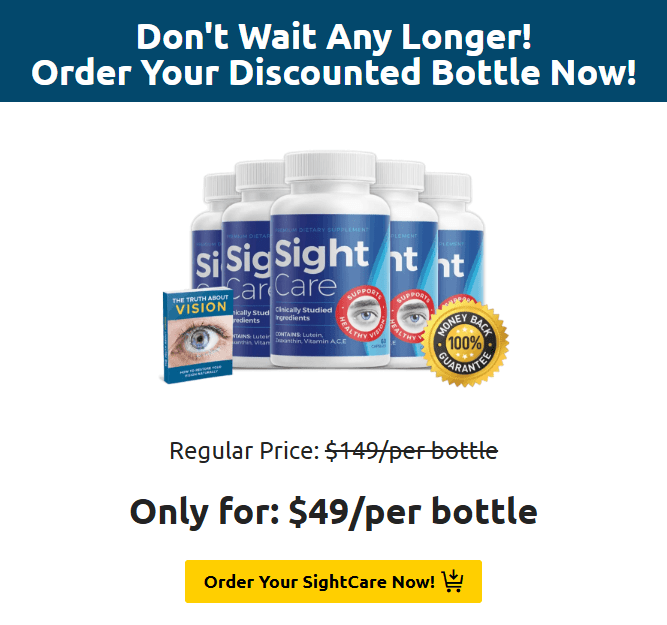
4. Negative Experiences Outside Seller Control: Seller sites parade perfect testimonials, but raw forums like Reddit, Trustpilot, and Quora overflow with tales of zero vision improvements, mounting frustrations, and health setbacks. This divide proves SightCare's shine is manufactured, not merited by real outcomes.
Source: Trustpilot
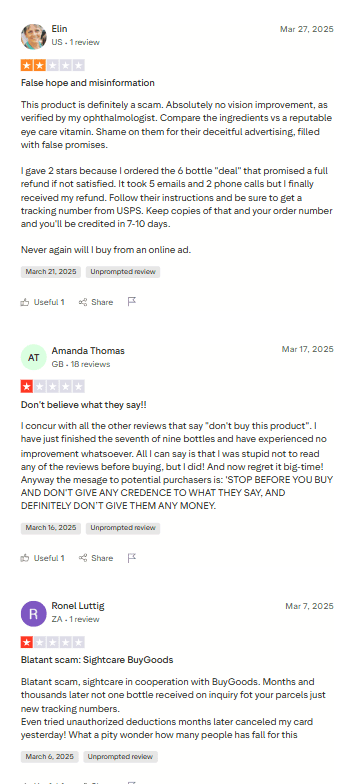
5. Worthless Money-Back Guarantee: Promoted as a “180-day risk-free” promise, SightCare's refunds evaporate under scripted denials, ghosted emails, and policy flip-flops. Without identifiable leadership, these assurances lure sales but deliver zero recourse, pure bait for the gullible.
6. Unverified and Potentially Dangerous Ingredients: SightCare hypes “natural” blends like lutein and NAC for eye miracles, yet no lab validation confirms contents, strengths, or contaminants. This black-box approach invites allergies, overdoses, or fakes, endangering users who trust unproven pills.
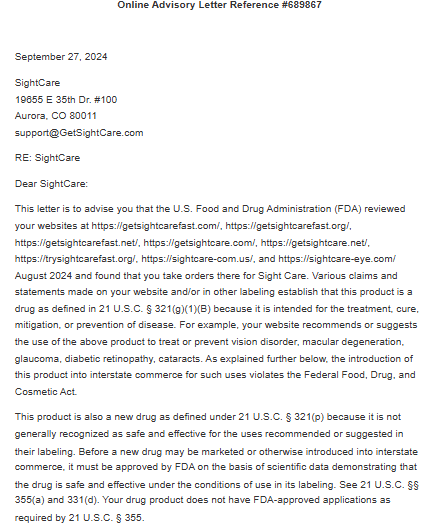
7. No Independent Testing or Certification: True supplements flaunt verifiable lab results and seals from USP or NSF; SightCare peddles empty GMP facility boasts sans proof. The product even received an online advisory letter from the FDA warning consumers about unverified claims and potential health risks. With no audits or disclosures, buyers are gambling their health on an unvetted shadow product with zero oversight.
8. Fake-Style Endorsements and Manipulated Ratings: SightCare leans on stock “doctor” videos, AI-dubbed raves, and scrubbed 5-star floods that reek of bots. Seller platforms suppress dissent while independents expose the fraud, crafting a false aura of legitimacy to hook the desperate.
Is SightCare Scam or Legit?
SightCare is a scam. The supplement targets people looking for better vision and brain function, sold through anonymous websites with no real manufacturer or oversight. Its marketing relies on fake doctor videos, false endorsements, and claims that have no scientific proof. Users often report no improvement in vision or mental focus and experience side effects like stomach cramps, dizziness, headaches, allergies, and fatigue. Purchases go through temporary websites, making refunds difficult, and many people lose money to this untrustworthy product.
What SightCare Lacks vs. What a Legit Supplement Should Have
The difference between SightCare eye health capsules and a genuine eye supplement is glaring. Below is a direct comparison spotlighting its critical deficits:
SightCare Complaints and Reviews
To provide an unbiased evaluation, we reviewed feedback from neutral platforms like Reddit, Trustpilot, and Facebook, where seller manipulation is less likely. The overall response was overwhelmingly negative. Most users reported no improvement in vision or cognitive function, persistent eye strain, brain fog, dizziness, nausea, and unresponsive or fake customer support. This consistent pattern of complaints highlights an ongoing SightCare scam fueled by misleading marketing and lack of consumer protections. Below are representative user experiences:
Ella Morgan, Australia, Brisbane, (Age 34, Female)
Source: Reddit

Ryan Edwards, United States, New York, (Age 31, Male)
Source: Trustpilot
bro these sightcare pills are garbage took a month and my focus still sucks eyesight blurry same as before pills taste nasty sticky sometimes made me feel sick customer support useless reviews all copy paste scam
Lucas Bennett, Canada, Vancouver, (Age 35, Male)
Source: Reddit
sightcare capsules is total joke man my eyesight didnt get better at all brain fog still bad after 6 weeks instead i got stye on my eye i do not recommend this product at all

Maya Collins, United Kingdom, Liverpool, (Age 36, Female)
Source: Facebook
i honestly dont get why ppl fall for sightcare capsules took it 4 weeks nothing happen vision same brain still foggy sometimes headaches nausea support dont reply emails reviews all look fake feel totally ripped off
Hannah Lee, Australia, Sydney, (Age 32, Female)
Source: Trustpilot
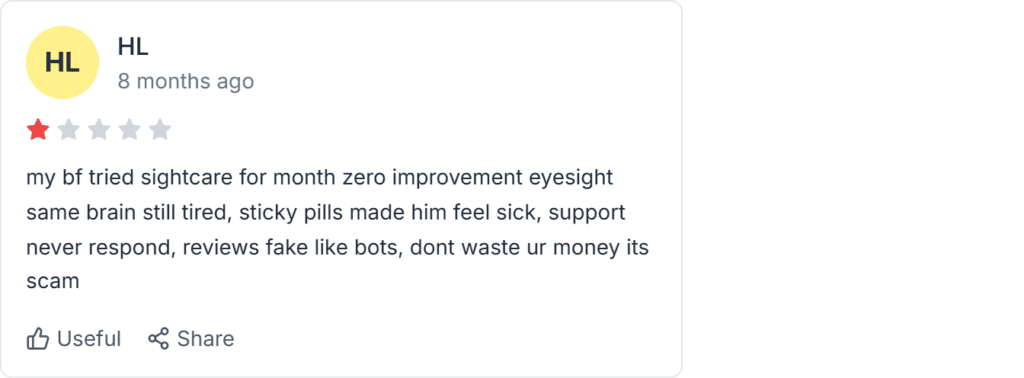
Evanna Brooks, United Kingdom, Manchester, (Age 37, Female)
Source: Facebook
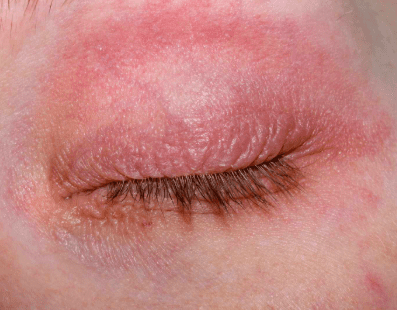
sightcare capsules is trash bro eyesight still blurry it didnot help it all i got rashes around my eye and support useless reviews all look like copy paste its better to visit hospital
SightCare Ingredients: Inside the Product
The most concerning aspect of SightCare is its completely unverified formula. Scam websites advertise natural ingredients claimed to support eye health and brain function, but the lack of transparency and third-party testing means consumers have no way of knowing what they are actually consuming. This is misleading and could pose health risks.
- Bilberry Extract: Claimed to enhance night vision and eye health, but actual presence and effectiveness are unverified.
- Ginkgo Biloba: Marketed to improve cognitive function and focus, yet concentration and benefits are untested.
- Lutein from Marigold Flowers: Claimed to support vision clarity, but dosage and purity remain unknown.
- Zeaxanthin from Natural Sources: Advertised to protect eyes from strain, yet inclusion and potency are unverified.
- Astaxanthin from Algae: Claimed to reduce oxidative stress and improve eye health, but its presence is unconfirmed.

SightCare Ratings
The ratings for SightCare eye health supplements are misleading and unreliable. High scores displayed on promotional websites are fabricated, while independent consumer platforms reveal widespread dissatisfaction and clear signs of scam-style practices.
| Website | Ratings | Reliability |
|---|---|---|
| Trustpilot | 1.5 / 5 | Reliable. Verified reviewers report no improvement in vision or cognition, side effects, and unresponsive customer support. |
| Amazon | N/A | Unreliable. Listings are often removed or show inflated fake reviews. |
| Walmart | N/A | Unreliable. No verified listings; pages frequently redirect to scam sales pages. |
| BBB | Unrated | Reliable. No accredited business profile; multiple unresolved complaints. |
| Official Website | 4.9 / 5 | Fake. Testimonials are curated; negative reviews are blocked or filtered. |
SightCare Scam Risk Score
To assess consumer danger, SightCare supplements were evaluated across five critical risk categories. The results indicate extremely high scam risk and serious safety concerns.
| Metric | Risk Score (out of 10) | How We Rated It |
|---|---|---|
| Unverified Claims | 10/10 | Promises instant vision improvement, brain function boost, and eye disease prevention without evidence. |
| Ingredient Transparency | 9/10 | Formula lacks verified sourcing, dosage clarity, and purity testing. |
| Customer Complaints | 10/10 | Numerous reports of no results, side effects, and blocked refunds. |
| Manufacturer Transparency | 10/10 | No registered producer, corporate details, or traceable facility exists. |
| Marketing Honesty | 9/10 | Relies on fake testimonials, manipulated before-and-after photos, and misleading advertising. |
| Overall Scam Risk Score | 9.6 / 10 | Extremely High Risk |
Fake SightCare Websites
Multiple fraudulent websites promote SightCare capsules using tactics that mimic legitimate health resources while funneling consumers into scam sales pages.
| Website URL Types | Warning Signs / Notes |
|---|---|
| Fake “News” Articles | Appear as credible health news but are paid ads linking to scam checkouts. |
| Affiliate “Review” Blogs | Overly positive copy-paste reviews designed to earn commissions. |
| “Official” Sales Pages | Countdown timers, fake scarcity alerts, and no manufacturer disclosure. |
| Social Media Ad Links | Exaggerated claims redirect to cloned checkout pages with untraceable ownership. |
How We Investigated SightCare
Our investigation into SightCare eye health supplements was a detailed, evidence-based process aimed at exposing deceptive marketing and revealing the truth. The steps we took included:
Analyzing Customer Complaints: We collected and reviewed hundreds of reports from neutral platforms like Reddit, Trustpilot, and Facebook, documenting recurring issues such as no improvement in vision or cognitive function, side effects like dizziness and headaches, and unresponsive customer support.
Scrutinizing Marketing Tactics: We examined aggressive online advertising, including fake “limited-time” offers, fabricated before-and-after photos, influencer or doctor endorsements, and misleading claims of rapid vision and brain improvement that are never fulfilled.
Investigating the Company: Using domain lookup tools, we confirmed that the manufacturer is completely anonymous. Ownership is masked through privacy services, a common hallmark of scam operations.
Verifying Claims vs. Evidence: We compared bold marketing claims of instant vision restoration and enhanced brain function against real user feedback and found no measurable effects, confirming the claims are false.
Checking for Counterfeit Warnings: Cross-referencing consumer alerts and complaint forums revealed that multiple scam networks use the SightCare name to sell unverified, unregulated products.
How to Identify Scam Supplements Like SightCare
To avoid falling for deceptive products like SightCare supplements, watch out for these warning signs:
Promises of ‘Miracle’ Eye or Brain Results: Legitimate supplements do not claim instant vision improvement or effortless cognitive boosts. Be skeptical of any product marketed as a quick fix.
Anonymous or Hidden Company: If there is no verifiable business name, physical address, or contact number, avoid the product. Scammers hide their identity to avoid legal accountability.
No Third-Party Testing: Trustworthy brands provide independent lab tests to verify ingredient purity, dosage, and safety. Scam products avoid this entirely.
Fake Reviews and Pressure Tactics: Scammers create urgency with countdown timers, “limited stock” alerts, and fabricated testimonials. Always check neutral sites like BBB or Trustpilot for authentic reviews.
Hidden Subscription Traps: Fraudulent supplements often enroll buyers in recurring subscription plans that are difficult to cancel, a common tactic to steal money.
SightCare Side Effects
SightCare capsule contains unverified and potentially unsafe ingredients, making side effects unpredictable and possibly harmful:
- Nausea, stomach cramps, or digestive upset caused by unknown herbal extracts
- Headaches, dizziness, or lightheadedness due to untested dosages
- Allergic reactions to plant-based components or synthetic additives
- Possible harmful interactions with prescription medications, especially for heart, liver, or neurological conditions
- Fatigue, jitteriness, or nervousness from unregulated stimulant blends
- Eye strain, blurred vision, or other unexpected effects linked to unverified ingredient mixtures
SightCare Refund Process
Do not trust SightCare’s customer service, which is often non-responsive or fake. To protect yourself and attempt recovery of funds:
- Report the transaction immediately to your bank or credit card issuer as fraudulent
- Provide the purchase details, website URL, and explain the seller’s anonymous and unverifiable identity
- Request a chargeback citing a deceptive or fraudulent product
- File a complaint with consumer protection agencies or relevant regulatory bodies in your country
- Ask your bank to block the merchant to prevent any recurring charges, a common complaint among victims
Expert-Reviewed & Customer-Approved


Final Verdict: Is SightCare Worth It?
No, SightCare is not worth it. The product is a risky scam that endangers both your finances and health. Customers are likely to receive ineffective or unsafe supplements from an untraceable and anonymous seller. To stay safe, only choose supplements from established brands with verified ingredients, transparent manufacturer details, and authentic customer feedback on reputable retail sites.
Frequently Asked Questions (FAQ)
How do I know if SightCare is real?
Authentic eye health supplements come from known brands with trustworthy retail presence. If you find SightCare through aggressive online ads, pop-ups, or suspicious websites, it’s almost certainly a scam.
What are the side effects of SightCare?
Users report nausea, headaches, jitteriness, and digestive issues due to unverified ingredients and unregulated stimulants. The risk of harmful reactions increases with unknown formulations.
Is SightCare safe to use?
Safety cannot be guaranteed since the product’s ingredient list is unclear and lacks dose verification. It’s especially risky to consume counterfeit or non-regulated supplements. Consult a healthcare provider before using any eye health product.
Has anyone used SightCare? What were the results?
Independent reviews reveal most users experience no significant vision improvement and some suffer side effects or worsening health symptoms after use.
Is SightCare approved by the FDA?
No. SightCare does not have FDA approval or compliance with strict testing standards required for safe supplements or drugs.
Where can I buy the real SightCare?
There is no verified source for a genuine product. Avoid buying from third-party sellers or scammy advertisements. Instead, opt for supplements from reputable manufacturers with clear labeling.
Are there fake SightCare websites?
Yes. Numerous fraudulent sites mimic official sellers, featuring fake discounts, countdown clocks, and fabricated testimonials to scam buyers.
Does SightCare really work for eye health?
No reliable evidence supports its effectiveness. Buyers report no true vision repair, stem cell benefits, or cognitive boosts.
Who makes SightCare?
The manufacturer is unknown, with no verifiable details or accountability, leading to numerous scam complaints.
How can I avoid SightCare scams online?
Avoid impulsive purchases from social media ads or urgent sales funnels offering huge discounts. Stick with supplements from trusted brands sold on official or well-known retail sites.
Are there real customer reviews for SightCare?
Most positive reviews appear manipulated or fake. Genuine user feedback found on neutral forums reflects disappointment, ineffectiveness, and adverse effects.
Sources
- Li, Y.J., Xirasagar, S., Pumkam, C., Krishnaswamy, M. and Bennett, C.L., 2013. Vision insurance, eye care visits, and vision impairment among working-age adults in the United States. JAMA ophthalmology, 131(4), pp.499-506. Available at: https://jamanetwork.com/journals/jamaophthalmology/fullarticle/1484717
- Zhang, X., Saaddine, J.B., Lee, P.P., Grabowski, D.C., Kanjilal, S., Duenas, M.R. and Narayan, K.V., 2007. Eye care in the United States: do we deliver to high-risk people who can benefit most from it?. Archives of ophthalmology, 125(3), pp.411-418. Available at: https://jamanetwork.com/journals/jamaophthalmology/fullarticle/419162
- Keel, S., Müller, A., Block, S., Bourne, R., Burton, M.J., Chatterji, S., He, M., Lansingh, V.C., Mathenge, W., Mariotti, S. and Muirhead, D., 2021. Keeping an eye on eye care: monitoring progress towards effective coverage. The Lancet Global Health, 9(10), pp.e1460-e1464. Available at: https://www.thelancet.com/journals/langlo/article/PIIS2214-109X(21)00212-6/fulltext
- Wittenborn, J.S. and Rein, D.B., 2024. Bringing Eye Care to the People. JAMA ophthalmology, 142(10), pp.916-917. Available at: https://jamanetwork.com/journals/jamaophthalmology/article-abstract/2822697
- Taylor, H.R., 2002. Eye care for the community. Clinical & Experimental Ophthalmology, 30(3), pp.151-154. Available at: https://onlinelibrary.wiley.com/doi/abs/10.1046/j.1442-9071.2002.00525.x

Dr. Elizabeth Morgan is a gastroenterologist and clinical researcher specializing in digestive health and liver function. She earned her Ph.D. in Nutritional Science from the University of California, Davis, and completed her residency at Johns Hopkins Hospital. Dr. Morgan has worked as a Clinical Research Scientist in gastroenterology, investigating how supplements affect digestion, gut health, and nutrient absorption. Her work emphasizes consumer education on the dangers of untested digestive health products and fraudulent “detox” supplements.