

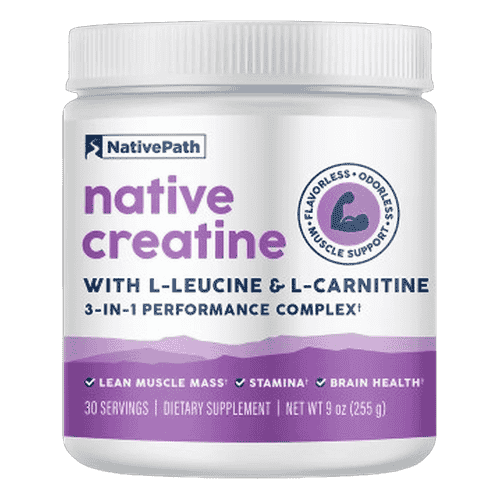
Native Creatine is heavily marketed as a muscle strength supplement claiming to enhance athletic performance, increase muscle mass, improve endurance, and boost energy during workouts. However, our investigation reveals that it operates through misleading advertising tactics, exaggerated claims of muscle growth and strength, fabricated testimonials, and unclear ingredient sourcing. With no verified clinical trials, no transparent manufacturer details, and increasing consumer complaints about ineffectiveness and poor customer support, Native Creatine scam appears to target individuals seeking quick muscle gains rather than providing credible, science-backed fitness benefits.
- Native Creatine averages below 1.6/5 on independent review platforms, contradicting the five-star ratings on its sales pages.
- There is no FDA approval, clinical testing, third-party lab verification, or clear manufacturer information.
- Users report little to no improvement in muscle strength, with side effects like bloating, stomach discomfort, and fatigue.
- Native Creatine is heavily promoted through aggressive supplement ads, curated testimonials, and misleading wellness claims.
What is Native Creatine?
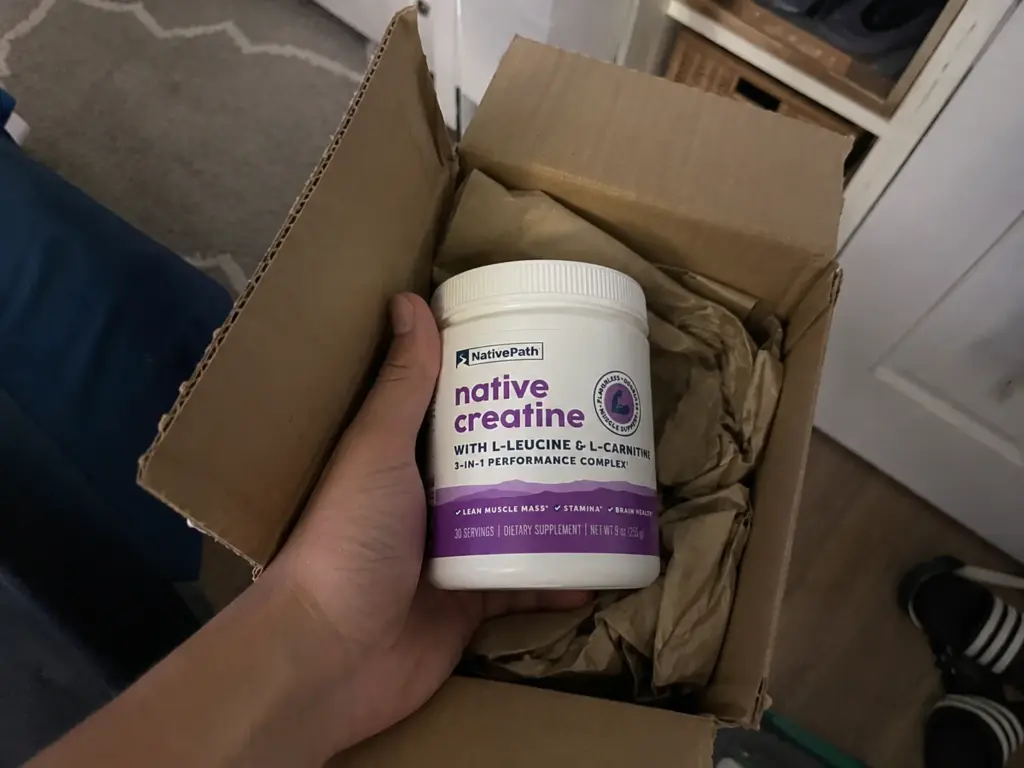
Native Creatine is marketed as a muscle strength supplement that claims to enhance athletic performance, increase muscle mass, improve endurance, and boost energy during workouts. It is often promoted through aggressive online ads, exaggerated before-and-after photos, and endorsements from questionable fitness influencers. However, the product is typically sold through anonymous or frequently changing websites with no clearly verified manufacturer, limited regulatory transparency, and no published clinical studies or third-party testing documentation, raising concerns about its legitimacy, effectiveness, and overall credibility.
Claims vs. Reality: Does Native Creatine Really Work?
Native Creatine claims to enhance muscle strength, increase muscle mass, boost endurance, and improve workout performance. However, independent investigations and user feedback suggest the product does not live up to these promises and lacks credible scientific validation.
| Claims Made by Native Creatine | Reality Based on Investigation |
|---|---|
| Increases muscle strength and mass | No clinical trials verify significant improvements in muscle strength or mass. |
| Boosts workout performance and endurance | No published studies confirm performance enhancement for this product. |
| Provides fast results without heavy training | No evidence supports quick muscle gains without proper exercise. |
| Made with high-quality, natural ingredients | Ingredient sourcing, dosages, and purity are unverified. |
| Recommended for all fitness levels | No clear evidence on its suitability for different fitness levels. |
| Clinically tested and doctor recommended | No legitimate clinical trials or verified medical endorsements exist. |
8 Proofs Why Native Creatine Is a Scam
Our investigation identified eight major red flags showing that Native Creatine relies on aggressive marketing, limited transparency, no verified scientific support, and growing complaints about ineffectiveness and billing issues, patterns commonly linked to high-risk supplement scams.
1. Anonymous Manufacturer and Hidden Ownership: Native Creatine supplement does not clearly disclose a verifiable company name, corporate registration, or physical headquarters. Domain ownership is often privacy-masked, limiting accountability in cases of billing disputes or product complaints an issue commonly associated with high-risk supplement operations.
2. Deceptive Subscription and Billing Practices: Native Creatine is often sold through confusing checkout pages promoting bulk bundles and “limited-time” offers. Many buyers report unexpected recurring charges after their initial purchase. Cancellation terms are often buried in fine print, making it difficult to stop unauthorized repeat billing.
3. Misleading Money-Back Guarantee: Although Native Creatine advertises a “100% satisfaction guarantee,” customers attempting refunds often report delayed responses, unanswered emails, or denied requests due to undisclosed return conditions. The refund promise appears unreliable in practice.

4. High-Pressure and Misleading Marketing: Sales pages use countdown timers, “only a few bottles left” alerts, dramatic before-and-after transformation photos, and exaggerated performance-boosting claims. Alleged medical endorsements and media logos cannot be independently verified. These tactics are designed to create urgency and trigger impulse purchases.
5. Negative Customer Reviews: Across independent forums and complaint platforms, users report minimal to no muscle gain, no increased endurance, and no noticeable performance improvement. Some mention side effects like bloating, stomach discomfort, and fatigue, which contradict the glowing testimonials shown on official pages.
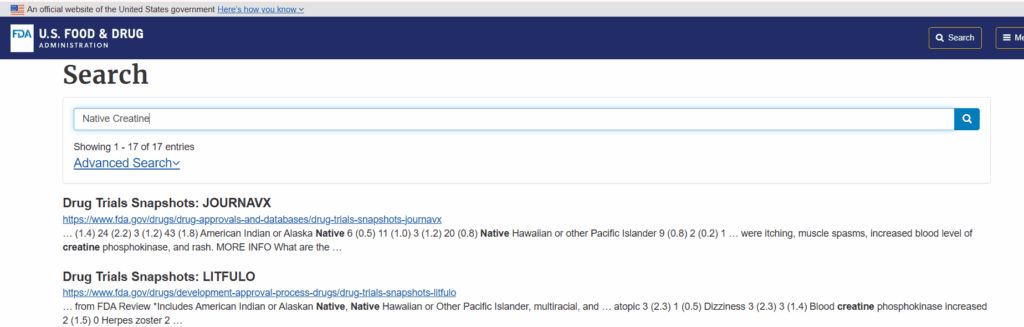
6. No Independent Testing or Clinical Evidence: There are no peer-reviewed clinical trials supporting Native Creatine's claims of muscle gain and performance improvement. It is not FDA-approved and lacks independent lab testing, leaving its safety and effectiveness unproven.
7. Unverified and Questionable Ingredients: Native Creatine promotes creatine and other popular performance-boosting ingredients, but exact dosages, ingredient sourcing, and third-party lab verification are not publicly disclosed. Consumers cannot confirm the product’s purity or potency.
8. Fake Endorsements and Manipulated Ratings: Marketing materials feature stock-photo “athletes,” vague “scientific breakthrough” narratives, and near-perfect ratings on official websites. Negative reviews are largely absent from sales funnels, while independent platforms show far more mixed or critical feedback.
Is Native Creatine Scam or Legit?
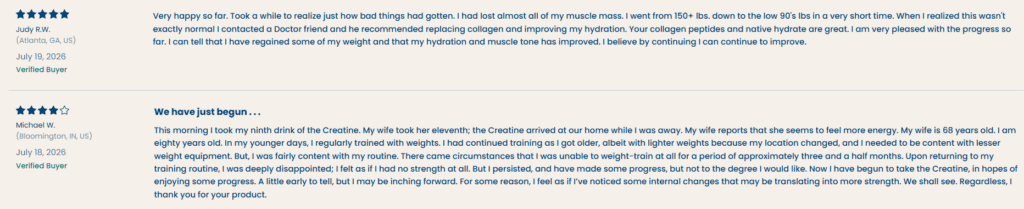
Native Creatine is a scam. It promises quick muscle strength and performance gains without intense workouts or diet changes but is sold through anonymous websites with no verified manufacturer or clinical evidence. Marketing relies on exaggerated claims, fake before-and-after photos, and curated five-star reviews. Users report minimal results, along with bloating, stomach discomfort, and fatigue. Deceptive practices like rotating sales funnels, hidden subscription terms, and poor customer support make refunds difficult, leaving consumers with unmet expectations and financial loss.
What Native Creatine Lacks vs. What a Legit Supplement Should Have
Every legitimate supplement has certain qualities that are completely absent in the Native Creatine capsule scam. This table highlights the critical differences between a trustworthy product and this fraudulent one.
Native Creatine Complaints and Reviews
To determine what real consumers are saying, we by passed the biased official websites and analyzed reviews on neutral platforms like Trustpilot, Reddit, and Facebook. The majority of authentic feedback is overwhelmingly negative, with users reporting feelings of being deceived and cheated.
Jake Miller, United States, Texas (Age 35, Male)
Source: Quora
bought native creatine muscle strength cause ads said it gonna give me crazy energy n muscle boost but man nothing changed after month sill tired af muscle feel same and got upset stomach most days total waste of my money and time

Phoebe Mitchell, Canada, Toronto (Age 52, Female)
Source: Instagram
I tried native creatine but honestly wasted my money after 3 weeks i still get tired carrying groceries no difference at all ads lied this stuff aint game changer feels like cheap powder not worth it.
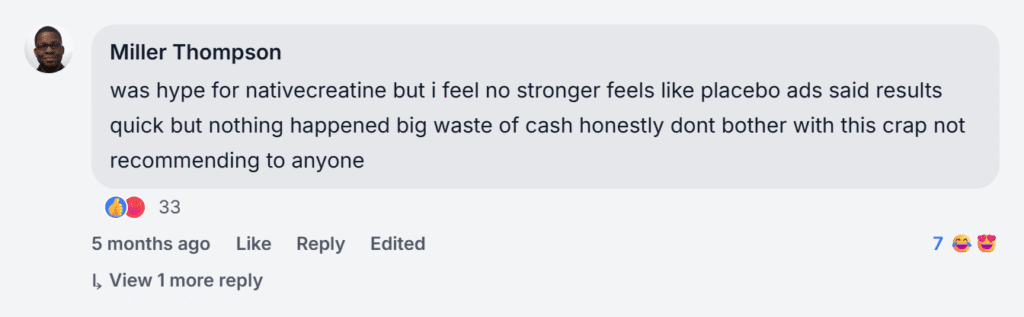
Miller Thompson, UK , Manchester (Age 38, Male)
Source: Facebook
Robert Chen, New York, United States (Age 55, Male)
Source: Facebook
this native creatine powder is overrated no results just wasting money i felt sick after taking it n rash appeared i almost went hospital big hype no substance not worth buying at all
Jennifer Santos, Canada, Vancouver(Age 39, Female)
Source: Reddit
used native creatine for 2 mnths still crash in afternoon no energy boost muscle soreness still there after hike customer service no help tbh regret spending on this trash cheap powder.
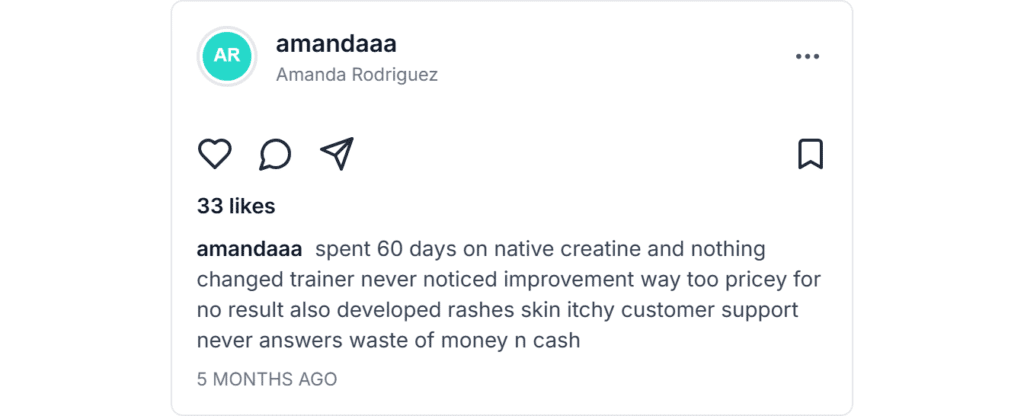
Amanda Rodriguez, California, United States (Age 35, Female)
Source: Instagram
Native Creatine Ingredients: Inside the Product
Native Creatine supplement ingredients are promoted as a blend of creatine monohydrate and performance-boosting compounds aimed at improving strength, endurance, and muscle mass. However, there is no independent verification of ingredient dosages, sourcing, or third-party testing to confirm safety, purity, or effectiveness. Most claims are based on marketing descriptions rather than scientific validation
- Creatine Monohydrate: Widely studied for its benefits in muscle strength and endurance, creatine monohydrate is effective for enhancing performance. However, Native Creatine does not disclose the exact dosage or purity, leaving its effectiveness unclear.
- L-Taurine: Advertised to support hydration and endurance during workouts. While taurine has some benefits in endurance sports, the specific concentration and real-world effect in this formula are not provided, leaving its effectiveness uncertain.
- Beta-Alanine: Promoted as an ingredient to help buffer lactic acid buildup during exercise. While beta-alanine may help in short bursts of intense activity, there is no confirmed dosage or reliable clinical testing provided for Native Creatine’s formulation.
- Citrulline Malate: Claimed to enhance blood flow and reduce muscle soreness. Some studies suggest it may improve exercise performance, but Native Creatine powder does not disclose the amount used or third-party testing, making its potency questionable.
- Electrolyte Blend: Included to support hydration and muscle function during exercise, but the types and amounts of electrolytes used are not listed, making it difficult to assess the product's effectiveness for hydration during workouts.
Native Creatine Ratings
The ratings associated with Native Creatine muscle strength supplement are inconsistent and appear potentially manipulated. Promotional pages feature high satisfaction scores, while independent consumer platforms reveal recurring complaints about its effectiveness and side effects.
| Website | Ratings | Reliability |
|---|---|---|
| N/A | Reliable. Discussions question its effectiveness and marketing claims. | |
| Quora | N/A | Reliable. Users express skepticism about its performance and lack of solid evidence. |
| BBB | Unrated | Reliable. No accredited business profile and minimal transparency. |
| Official Website | 4.9 / 5 | Fake. Reviews appear curated, with negative feedback filtered or removed. |
Native Creatine Scam Risk Score
Native Creatine supplement powder was evaluated across five major risk categories to determine overall consumer risk and product credibility. The findings indicate a high scam risk due to unverified claims, lack of transparency, and growing customer dissatisfaction.
| Metric | Risk Score (0–10) | How We Rated It |
|---|---|---|
| Unverified Claims | 9/10 | Promises significant performance enhancement without clinical validation. |
| Ingredient Transparency | 9/10 | Dosage amounts, ingredient sourcing, and third-party testing are not disclosed. |
| Customer Complaints | 9/10 | Reports of minimal results, digestive discomfort, and refund issues. |
| Manufacturer Transparency | 9/10 | No clear manufacturer information or verified company details. |
| Marketing Honesty | 8/10 | Uses exaggerated claims and staged testimonials to promote effectiveness. |
| Overall Scam Risk Score | 9.6 / 10 | High Risk |
Fake Native Creatine Websites
Multiple questionable websites promote Native Creatine using tactics that mimic legitimate health resources while funneling consumers into aggressive sales or subscription checkout pages. These sites often appear as fitness blogs, supplement reviews, or “official” discount portals but lack transparent company ownership or verifiable scientific backing.
| Website URL Types | Warning Signs / Notes |
|---|---|
| Fake “Fitness News” Articles | Disguised as workout tips or fitness guides, these articles serve as paid ads that redirect to sales funnels. |
| Affiliate “Review” Blogs | Overly positive, templated reviews designed to earn commissions rather than offering a balanced, evidence-based evaluation. |
| “Official” Discount Pages | Countdown timers, exaggerated claims of muscle growth, and vague company information with no verified manufacturer details. |
| Social Media Ad Landing Pages | Exaggerated performance claims and direct links to subscription checkouts with unclear recurring billing terms. |
How We Investigated Native Creatine
Our investigation into Native Creatine muscle strength followed a structured, evidence-based approach designed to evaluate transparency, scientific credibility, and real-world consumer outcomes, rather than relying on promotional claims. The process focused on identifying gaps between marketing promises and verifiable proof. The steps included:
Analyzing Customer Complaints: We reviewed user feedback across platforms such as Reddit, Trustpilot, Amazon, and fitness forums. Common complaints included minimal performance improvement, stomach discomfort, bloating, and lack of muscle gain despite following usage instructions. Many users also reported issues with refunds and slow customer support responses.
Scrutinizing Marketing Tactics: We examined promotional sales pages, influencer testimonials, dramatic before-and-after images, and “limited-time” discount offers. Many ads claimed significant improvements in strength, endurance, and muscle mass, but these claims were not supported by any credible scientific studies or clinical trials validating the effectiveness of the Native Creatine muscle strength supplement formula.
Investigating the Company: Using domain registration tools and business lookup services, we investigated the transparency of the manufacturer and company behind Native Creatine. Publicly accessible details on ownership, product sourcing, and third-party lab testing were either unclear or completely absent, raising concerns about accountability and product quality.
Verifying Claims vs. Scientific Evidence: Marketing claims regarding enhanced muscle strength, endurance, and performance were cross-checked against established research on creatine supplementation. While creatine monohydrate has been widely studied, no published clinical trials were found specifically verifying the effectiveness of Native Creatine's formulation or its claimed benefits.
Identifying Promotional Network Patterns: We compared various sales pages and affiliate sites promoting Native Creatine. Similar patterns of urgency-driven tactics, discount offers, and curating overwhelmingly positive testimonials suggested a funnel-based marketing model rather than a scientifically proven performance-enhancing supplement. This raised further concerns about the product’s legitimacy.
How to Identify Scam Supplements Like Native Creatine
To avoid falling for deceptive creatine products like Native Creatine, watch for these warning signs before purchasing:
Exaggerated Claims of Instant Performance Gains: Legitimate creatine supplements do not promise significant strength or endurance boosts without consistent training and proper nutrition. Any product claiming instant or effortless results should raise immediate red flags.
Anonymous or Vague Company Information: Avoid products that fail to clearly disclose a verifiable company name, physical address, or accessible customer support. Scam operations often hide ownership through private domain registrations to limit accountability.
No Third-Party Lab Testing or Clinical Trials: Reliable brands provide Certificates of Analysis and third-party lab verification confirming ingredient potency, purity, and safety. If a supplement references general ingredient studies but offers no independent testing on the final product, proceed with caution.
Manipulated Reviews and Marketing Tactics: Countdown timers, “limited stock” warnings, dramatic transformation claims, and overly positive reviews with no critical feedback are major warning signs. Always cross-check reviews on independent platforms like Trustpilot, Reddit, or BBB to ensure authenticity.
Hidden Subscription Billing: Some supplements automatically enroll customers in recurring monthly shipments with unclear cancellation terms or complicated refund processes. Be cautious of fine-print terms and unexpected charges, as these often signal a profit-driven sales funnel rather than a customer-centric product.
Native Creatine Side Effects
Native Creatine muscle strength contains creatine monohydrate and additional performance-enhancing compounds, which may cause side effects, especially when not used as directed or when combined with other supplements:
- Stomach discomfort such as bloating, cramps, or diarrhea, commonly associated with creatine use, particularly in high doses.
- Dehydration or increased thirst, as creatine draws water into muscles and can alter fluid balance in the body.
- Headaches or lightheadedness, possibly due to dehydration or electrolyte imbalances caused by creatine's effects on water retention.
- Digestive issues, including nausea or gas, especially when taken on an empty stomach or with insufficient water intake.
- Jitteriness or restlessness, potentially linked to any stimulant ingredients in the formula, though this may vary depending on the creatine blend.
- Potential kidney strain in individuals with pre-existing kidney conditions, as creatine is processed by the kidneys. It is important to stay hydrated and consult a doctor before use.
- Electrolyte imbalances when creatine use affects sodium and potassium levels, especially if fluid intake is not properly managed.
Native Creatine Refund Process
Do not rely solely on the company’s customer service if you encounter issues with billing or refunds, as response times may be slow or unhelpful. To protect yourself and improve your chances of recovering funds:
- Report the transaction immediately to your bank or credit card provider, especially if you notice unexpected recurring charges or unauthorized subscription renewals.
- Provide complete purchase documentation, including order confirmation emails, screenshots of the product page, subscription terms, billing statements, and the website URL used at checkout.
- Request a formal chargeback, clearly stating that the product did not deliver as promised or that recurring billing terms were not clearly disclosed at the time of purchase.
- File a complaint with consumer protection agencies such as the FTC (in the U.S.) or your country’s equivalent regulatory authority if you suspect deceptive marketing or unfair billing practices.
- Ask your bank to block the merchant from processing future charges while your dispute is under review, to prevent additional unauthorized withdrawals.
Final Verdict: Is Native Creatine Worth It?
No, Native Creatine is not worth. While marketed as a performance booster, there is no independent clinical evidence supporting its formula beyond standard creatine benefits. The product relies on exaggerated claims, curated testimonials, and sales tactics, with many users reporting minimal results and digestive discomfort. For reliable performance enhancement, choose creatine supplements from reputable brands with third-party testing and transparent ingredient disclosure.
Frequently Asked Questions (FAQ)
How do I know if Native Creatine is real?
The Native Creatine powder you see in online ads is not a real, legitimate product. It is a name used by scammers to sell unverified supplements. A real product would have a verifiable manufacturer and transparent ingredient sourcing and would not use fake doctor endorsements.
What are the side effects of Native Creatine?
The potential side effects are unknown because the ingredients are not verified. User reports include severe digestive distress, bloating, and potential negative impacts on kidney and liver function. Using such a product is extremely risky.
Is Native Creatine safe to use?
No, Native Creatine supplement is not safe to use. It has not been evaluated by the FDA for safety or effectiveness, and there is no guarantee of what is inside each container. Using an unregulated product is a gamble with your health.
Has anyone used Native Creatine? What were the results?
Yes, and the authentic reviews are overwhelmingly negative. Customers commonly report that the product did nothing, caused unpleasant side effects, and that they were unable to get a refund after being scammed.
Is Native Creatine approved by the FDA?
No. The FDA does not approve dietary supplements like creatine before they are marketed. Furthermore, the facilities making this scam product are anonymous, and the product lacks any form of independent quality verification.
Where can I buy the real Native Creatine muscle strength ?
There is no real version of this scam product. While a legitimate company called NativePath sells a product with a similar name, the version promoted through scam ads is designed to confuse consumers. Avoid any site using high-pressure sales tactics.
Are there fake Native Creatine capsule websites?
Yes, the entire marketing ecosystem for this scam is built on fake websites. These sites often use countdown timers and fake scarcity claims to rush you into making a purchase. Always check for a real company address and contact information.
Does Native Creatine really work for muscle strength and energy?
No, there is no credible evidence that this scam version of Native Creatine muscle strength supplement capsule works. Its claims are based on fraudulent advertising and a fake doctor persona, not scientific proof or real-world results.
Who makes Native Creatine?
The manufacturer of this scam product is anonymous. The operation uses untraceable entities to avoid accountability. This lack of transparency is a key indicator of a fraudulent operation.
How can I avoid Native Creatine supplement capsule scams online?
To avoid these scams, always be skeptical of ads promising miracle cures. Research the company, look for third-party testing certifications (like NSF or USP), and consult your doctor before trying any new supplement.
Are there real customer reviews for Native Creatine muscle strength ?
Yes, real customer reviews exist on neutral platforms like Trustpilot and Reddit. The vast majority of these authentic reviews are negative, warning that the product is a scam, ineffective, or a complete waste of money.
Sources
- Richards, J.R., Scheerlinck, P.H., Owen, K.P. and Colby, D.K., 2020. Bodybuilding supplements leading to copper toxicity, encephalopathy, fulminant hepatic failure and rhabdomyolysis. The American Journal of Emergency Medicine, 38(11), pp.2487-e1. Available at: https://www.sciencedirect.com/science/article/abs/pii/S0735675720304605
- Karimian, J. and Esfahani, P.S., 2011. Supplement consumption in body builder athletes. Journal of research in medical sciences: the official journal of Isfahan University of Medical Sciences, 16(10), p.1347. Available at: https://pmc.ncbi.nlm.nih.gov/articles/PMC3430026/
- Aral, K., Berdeli, E., Aral, C.A., Berdeli, A. and Atan, M., 2017. Effects of bodybuilding and protein supplements in saliva, gingival crevicular fluid, and serum. Journal of Oral Science, 59(1), pp.121-130. Available at: https://www.jstage.jst.go.jp/article/josnusd/59/1/59_16-0367/_article/-char/ja/
- Spendlove, J., Mitchell, L., Gifford, J., Hackett, D., Slater, G., Cobley, S. and O’Connor, H., 2015. Dietary intake of competitive bodybuilders. Sports Medicine, 45, pp.1041-1063. Available at: https://link.springer.com/article/10.1007/s40279-015-0329-4
- Aljamali, N.M. and Hussein, K.M., 2021. Review on benefits and harms of nutritional supplements on health. Journal of Pharma and Drug Regulatory Affairs, 3(1), pp.42-49. Available at: https://www.researchgate.net/profile/Kawther-Mejbel-Hussein/publication/351633961_Review_on_Benefits_and_Harms_of_Nutritional_Supplements_on_Health/links/60a285c992851c186a624585/Review-on-Benefits-and-Harms-of-Nutritional-Supplements-on-Health.pdf

Matt Kepley, MS, CSCS is an exercise physiologist and Certified Strength and Conditioning Specialist (CSCS) with more than 15 years of experience in strength training, athletic performance, and evidence-based fitness programming. He serves as an Exercise Physiologist at Structure House and as Director of Strength and Conditioning at Ravenscroft School, where he designs training programs that improve performance, build strength, and reduce injury risk. His professional background also includes strength and conditioning coaching within the Atlanta Braves organization, along with experience working with athletes and individuals managing chronic health conditions. As a reviewer for Supplement dolphin, Matt evaluates fitness and muscle-building products by examining ingredient profiles, scientific evidence, safety, training applications, and overall value for active individuals. His reviews emphasize practical performance, realistic expectations, and research-based analysis rather than marketing hype, helping readers make informed decisions about supplements and fitness products that support their training goals.