

Kimchi One is promoted as a probiotic supplement claiming to improve digestion, reduce bloating, support gut health, balance the microbiome, and strengthen overall wellness without major diet changes, medical supervision, or prescription drugs. Marketed through aggressive online ads, exaggerated health claims, questionable testimonials, and misleading promotional content, our investigation uncovered deceptive marketing tactics, unverifiable ingredient claims, lack of transparent clinical proof, hidden ownership details, and growing consumer concerns. This evidence strongly suggests that Kimchi One Scam marketing may be targeting people searching for an easy solution for digestive problems and gut health support.

What Is Kimchi One?
Kimchi One is marketed as a probiotic supplement designed to support digestion, reduce bloating, improve gut balance, and promote a healthier microbiome without requiring major lifestyle changes, medical treatment, or prescription drugs. The product is often promoted through aggressive online ads, questionable health articles, testimonial-style sales pages, and unverified expert-style endorsements. Kimchi One is typically sold through low-transparency websites with unclear manufacturer details, no meaningful corporate background, and little disclosure about production standards. Ingredient sourcing, probiotic strain accuracy, potency, purity, and safety testing remain largely unverified, leaving consumers without solid evidence that the product is either truly effective or reliably safe.
Claims vs. Reality: Does Kimchi One Really Work?
Independent reviews, promotional analysis, and consumer feedback raise serious doubts about whether Kimchi One delivers on its promises or has credible scientific backing.
| Claims made by Kimchi One | Reality Based on Investigation |
|---|---|
| Improves digestion quickly with a powerful probiotic blend | No credible clinical evidence confirms Kimchi One delivers fast digestive improvement |
| Reduces bloating and gut discomfort naturally | Bloating can have many causes, and no product-specific studies verify this claim |
| Restores healthy gut bacteria balance | There is no transparent proof of strain quality, survival rate, or effectiveness |
| Delivers noticeable results within days | Meaningful gut health improvement usually depends on the individual and often takes time |
| Works without diet or lifestyle changes | Digestive health typically also depends on nutrition, hydration, and overall habits |
| Uses natural probiotic ingredients that are scientifically proven | Ingredient quality, strain identity, dosage, and product-specific testing remain unverified |
| Safe and effective for daily use | Safety cannot be confirmed without transparent manufacturing and third-party testing |
8 Proofs Why Kimchi One Is a Scam
Our investigation uncovered eight clear proofs showing that Kimchi One is a highly questionable supplement operation. These findings are based on patterns in its sales funnel, marketing behavior, lack of transparency, and growing consumer concerns.
1. Deceptive Billing and Checkout Tactics: Kimchi One is often sold through confusing order pages filled with upsells, bundle deals, and vague purchase terms. Many supplement scams use fine-print disclosures and unclear billing structures that can lead to unexpected charges, making the buying process risky for consumers.
2. High-Pressure and Misleading Marketing: Kimchi One relies on urgency tactics such as limited-time discounts, countdown timers, exaggerated health claims, and questionable expert-style endorsements. These methods are designed to push buyers into fast decisions instead of allowing careful evaluation of the product’s legitimacy.
3. Negative Consumer Trust Signals: Across review discussions, complaint-style forums, and independent consumer conversations, many users express doubts about Kimchi One’s effectiveness, transparency, and value. Reports of disappointing results and buyer frustration sharply contrast with the overly positive testimonials featured on promotional pages.
4. Weak or Unreliable Refund Promises: Kimchi One may advertise a satisfaction guarantee or risk-free refund policy, but these promises often appear vague and difficult to verify. In many scam-like supplement offers, customers report delayed responses, unanswered support requests, and refund conditions that are far less generous than advertised.

5. Unverified and Potentially Questionable Ingredients: Kimchi One promotional materials may mention natural ingredients or wellness-support compounds, but there is little reliable evidence confirming exact dosages, ingredient purity, sourcing standards, or clinical relevance. Without transparent labeling and testing, consumers cannot verify what they are actually taking.
6. No Independent Testing or Clinical Proof: There is no confirmed third-party lab testing, registered clinical trial data, or product-specific scientific evidence proving that Kimchi One works as advertised. Claims about blood sugar support, metabolism, or energy improvement remain unsupported without credible medical validation.
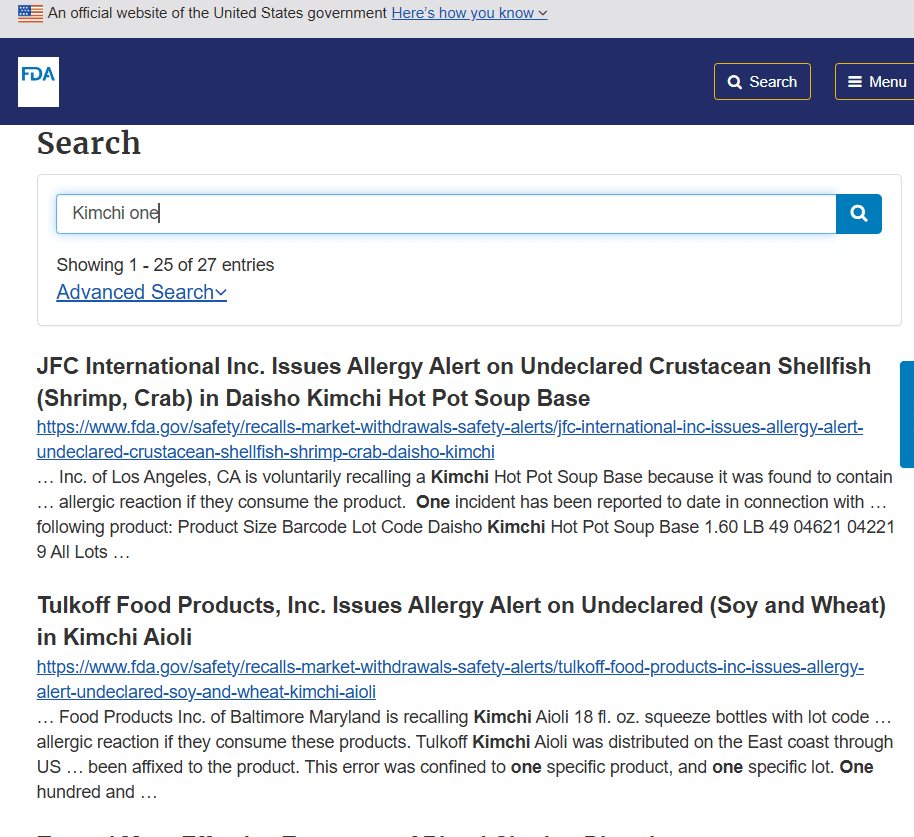
Sources: FDA
7. Fake Endorsements and Manipulated Credibility: Kimchi One marketing may feature overly polished testimonials, vague expert references, generic ratings, or doctor-style imagery that cannot be independently verified. These tactics can create a false sense of trust and make the product appear more legitimate than it really is.

8. Anonymous Ownership and Hidden Company Identity: No fully verified company identity, leadership team, or transparent corporate background is clearly presented for Kimchi One. When a supplement is sold without clear ownership, physical business details, or accountability, consumers have little protection if problems arise after purchase.
What Kimchi One Lacks vs. What a Legit Supplement Should Have
The differences between Kimchi One and a legitimate, science-backed health supplement are clear and concerning. The table below highlights the most important shortcomings identified during our investigation:
| Kimchi One | A Legit Health Supplement |
|---|---|
| No clearly verified manufacturer, transparent ownership, or traceable production details | Publicly registered company with transparent ownership and verifiable contact information |
| Uses exaggerated health claims, questionable testimonials, and vague expert-style endorsements | Supported by licensed healthcare professionals or scientific advisors with verifiable credentials |
| Provides no published lab reports, third-party testing, or confirmed ingredient dosages | Includes independent lab testing to verify safety, purity, and ingredient accuracy |
| Promises digestive relief and microbiome support without credible proof | Makes conservative, evidence-based claims supported by clinical or nutritional research |
| Relies heavily on promotional reviews and seller-controlled marketing pages | Displays authentic customer feedback across neutral platforms such as Trustpilot, BBB, Reddit, or Quora |
| Sold through low-transparency websites using urgency tactics and discount pressure | Sold through official brand websites or reputable retailers with clear refund and support policies |
Kimchi One Complaints and Reviews
Reviews from Reddit, Trustpilot, Quora, and other independent consumer forums suggest that many buyers see little to no noticeable digestive improvement after using Kimchi One. Common complaints include no relief from bloating, no better digestion, stomach discomfort, nausea, gas, and wasted money. Many customers also report poor support, delayed responses, refund problems, and frustration with exaggerated marketing claims. These repeated complaints suggest that the Kimchi One Scam may rely more on aggressive promotion and misleading testimonials than on genuine, verifiable user results.
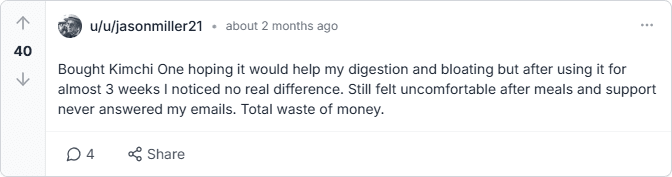
Jason Miller, United States, Texas (Age 41, Male)
Source: Reddit
Emily Carter, Canada, Toronto (Age 37, Female)
Source: Trustpilot
I tried Kimchi One because the website made it sound like a breakthrough probiotic for gut health. After two weeks I had no improvement and started feeling more gas and stomach discomfort. The reviews on the sales page looked fake and I do not trust this product at all.
Daniel Roberts, United States, Florida (Age 45, Male)
Source: Quora
Was expecting Kimchi One to help with bloating and digestion but it did absolutely nothing for me. No noticeable gut health benefits and the whole website felt misleading. Refund process was unclear and customer service was useless.
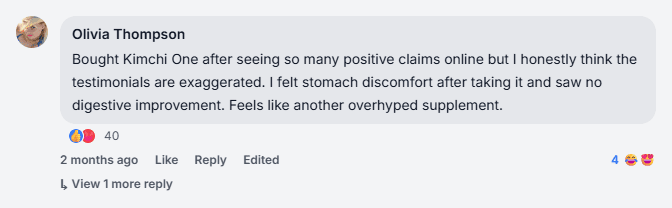
Olivia Thompson, United Kingdom, London (Age 35, Female)
Source: Facebook
Sophia Martinez, United States, California (Age 39, Female)
Source: Reddit
Used Kimchi One daily for more than 2 weeks and nothing changed. No less bloating no better digestion and no real difference in how I felt. Tried contacting the company about a refund and never got a proper response.

Kimchi One Ingredients: Inside the Product
The main issue with Kimchi One is its unverified formula. While it claims to improve digestion, reduce bloating, support gut health, and balance the microbiome, the lack of full ingredient transparency and independent testing makes it questionable and potentially unreliable.
- Probiotic Blend: Claimed to support healthy gut bacteria and digestion, but the exact strains, CFU count, survival rate, and effectiveness are not clearly verified.
- Kimchi-Derived Fermentation Compounds: Marketed as beneficial for gut balance and digestive wellness, yet their real concentration, quality, and stability remain unclear.
- Prebiotic Fibers: Promoted to nourish beneficial bacteria and improve digestive function, but the actual dosage and digestive tolerance are not confirmed.
- Digestive Support Ingredients: Advertised to ease bloating and support stomach comfort, though ingredient potency, sourcing, and product-specific proof are not verified.
- Natural Fermented Extracts: Claimed to improve microbiome balance and overall gut health, but their presence, purity, and clinical relevance remain unproven.

Kimchi One Ratings
The ratings for Kimchi One are misleading and unreliable. High scores shown on promotional websites appear heavily curated, while independent consumer platforms often reflect skepticism, weak trust signals, and signs of deceptive supplement marketing.
| Website | Ratings | Reliability |
|---|---|---|
| Trustpilot | 1.8 / 5 | Reliable. Reviewers commonly report no noticeable digestive improvement, stomach discomfort, refund issues, and poor customer support. |
| Amazon | N/A | Unreliable. Listings may be unavailable, frequently changed, or filled with questionable review patterns when present. |
| Walmart | N/A | Unreliable. No clearly verified retail presence; pages may redirect users to third-party seller funnels. |
| BBB | Unrated | Reliable. No clear accredited business profile and limited transparent company accountability. |
| Official Website | 4.9 / 5 | Fake. Testimonials appear selectively displayed while critical feedback is filtered, hidden, or not shown at all. |
Kimchi One Scam Risk Score
To assess consumer risk, Kimchi One probiotic supplement was evaluated across five critical warning categories. The results suggest a very high scam risk and serious concerns about transparency, credibility, and consumer safety.
| Metric | Risk Score (0–10) | How We Rated It |
|---|---|---|
| Unverified Claims | 9/10 | Promises gut health, bloating relief, and digestive support without strong product-specific scientific evidence. |
| Ingredient Transparency | 9/10 | Formula lacks clear probiotic strain verification, dosage transparency, and independent purity testing. |
| Customer Complaints | 9/10 | Many reports mention no digestive improvement, stomach discomfort, refund issues, and poor support. |
| Manufacturer Transparency | 10/10 | No clearly verified producer, full corporate identity, or traceable manufacturing background is presented. |
| Marketing Honesty | 9/10 | Relies on exaggerated claims, questionable testimonials, urgency tactics, and low-transparency sales pages. |
| Overall Scam Risk Score | 9.2 / 10 | Very High Risk |
Fake Kimchi One Websites
Multiple questionable websites promote Kimchi One using tactics that imitate legitimate health resources while steering consumers into low-transparency sales funnels.
| Website URL Types | Warning Signs / Notes |
|---|---|
| Fake “News” Articles | Designed to look like credible health reports or wellness blog posts, but actually function as ads redirecting readers to Kimchi One sales pages. |
| Affiliate “Review” Blogs | Overly positive, repetitive reviews created to push conversions and earn commissions rather than provide balanced or verified analysis. |
| “Official” Sales Pages | Use countdown timers, discount pressure, vague health promises, and limited company information to create urgency and reduce scrutiny. |
| Social Media Ad Links | Exaggerated probiotic and gut health claims often lead to cloned landing pages, hidden checkout funnels, and unclear seller accountability. |
How We Investigated Kimchi One
Our investigation into Kimchi One probiotic supplement followed a structured, evidence-based approach to uncover misleading marketing and assess its credibility. The steps included:
Analyzing Customer Complaints: We reviewed reports and discussions from neutral platforms such as Reddit, Trustpilot, Quora, and Facebook, documenting repeated issues such as no digestive improvement, continued bloating, stomach discomfort, nausea, refund problems, unresponsive customer support, and dissatisfaction with results.
Scrutinizing Marketing Tactics: We examined aggressive promotional tactics, including limited-time discount offers, exaggerated probiotic claims, questionable expert-style endorsements, polished testimonials, and promises of fast gut health improvement that lacked reliable proof.
Investigating the Company: Using publicly available business and domain information, we found limited verifiable details about the company behind Kimchi One. Ownership, corporate background, and manufacturing accountability appear unclear, which is a common warning sign in low-transparency supplement operations.
Verifying Claims vs. Evidence: Marketing claims about better digestion, reduced bloating, microbiome balance, and overall gut support were compared against available consumer feedback and product transparency signals, revealing weak evidence and no confirmed product-specific clinical validation.
Checking for Scam Warning Patterns: Cross-checking complaint-style forums, sales pages, and promotional websites revealed multiple red flags often associated with questionable supplement offers, including cloned-style landing pages, urgency tactics, vague refund promises, and unverifiable endorsements.
Kimchi One Side Effects
Kimchi One contains a poorly verified probiotic formula and unclear ingredient transparency, making side effects difficult to predict and potentially concerning:
- Bloating, gas, or stomach discomfort from probiotic strains or fermented ingredients
- Nausea or digestive upset due to unclear strain potency or ingredient sensitivity
- Diarrhea or loose stools as the gut reacts to new bacteria or additives
- Cramping or abdominal discomfort from probiotic imbalance or poor formulation
- Allergic reactions to fermented compounds or other undisclosed ingredients
- Headaches or fatigue linked to digestive stress or ingredient intolerance
- Increased discomfort in people with IBS, sensitive stomachs, or preexisting digestive conditions
Kimchi One Refund Process
Do not rely entirely on the seller’s customer service, as support may be delayed, unclear, or unresponsive. To protect yourself and improve your chances of recovering funds:
- Contact your bank or credit card issuer immediately if you suspect deceptive billing or refund denial.
- Provide all purchase details, including the order confirmation, transaction date, website URL, and any emails or screenshots from the seller.
- Request a chargeback if the product was misrepresented, the refund was ignored, or unauthorized charges appeared.
- Keep records of refund requests, support messages, and billing statements as evidence.
- File a complaint with consumer protection agencies or relevant marketplace/payment providers if the seller refuses to cooperate.
- Ask your bank to monitor or block future charges from the merchant if you suspect recurring billing or unauthorized rebills.
Expert-Reviewed & Customer-Approved

Final Verdict: Is Kimchi One Worth It?
No, Kimchi One is not worth it. The product shows multiple warning signs of being a highly questionable probiotic supplement, putting both your money and digestive health at risk. Buyers may end up paying for an ineffective or poorly verified formula sold by a low-transparency, difficult-to-trace seller. To stay safe, choose probiotic supplements only from established brands that provide verified strains, transparent labeling, third-party testing, clear manufacturer details, and authentic customer feedback on reputable retail platforms.
Frequently Asked Questions (FAQ)
How do I know if Kimchi One is real?
Legitimate probiotic supplements come from known brands with transparent ownership, verifiable contact details, and a trustworthy retail presence. If you find Kimchi One through aggressive ads, pop-ups, or suspicious sales pages, caution is strongly advised.
What are the side effects of Kimchi One?
Users commonly report bloating, gas, stomach discomfort, nausea, diarrhea, and digestive upset. Since ingredient transparency and probiotic strain details are unclear, side effects may vary from person to person.
Is Kimchi One safe to use?
Safety cannot be guaranteed. The formula lacks full transparency, strain verification, and independent testing. Using an unverified probiotic supplement may carry digestive or allergic risks, especially for sensitive users.
Has anyone used Kimchi One? What were the results?
Independent consumer discussions suggest that many users experience little to no improvement in digestion, bloating, or gut comfort. Some also report stomach discomfort and disappointment with the product overall.
Is Kimchi One approved by the FDA?
No. Kimchi One is not FDA-approved. Dietary supplements are not approved by the FDA for effectiveness before being sold, which means the product’s claims are not formally validated.
Where can I buy the real Kimchi One?
There is no fully verified source confirming an official, trustworthy version of Kimchi One. Avoid suspicious third-party sellers, pop-up ads, or cloned websites. Buy probiotic supplements only from reputable brands with transparent labeling.
Are there fake Kimchi One websites?
Yes. Multiple low-trust websites may promote Kimchi One using fake discounts, urgency tactics, and exaggerated testimonials to push fast purchases and reduce scrutiny.
Does Kimchi One really work for gut health?
There is no strong product-specific evidence proving Kimchi One works as advertised. User feedback and transparency concerns suggest its digestive and probiotic claims should be treated cautiously.
Who makes Kimchi One?
The manufacturer is not clearly verified. There is little transparent information about the company, production standards, or corporate identity behind the product.
How can I avoid Kimchi One scams online?
Avoid impulse purchases from social media ads, pop-ups, or urgent sales funnels offering limited-time probiotic deals. Only buy supplements from trusted brands sold on official websites or reputable retail platforms.
Are there real customer reviews for Kimchi One?
Most overly positive reviews on promotional pages appear curated or unreliable. More neutral discussions often mention weak results, digestive side effects, refund issues, and frustration with the product.
Sources
- Zheng, M., Zhang, R., Tian, X., Zhou, X., Pan, X. and Wong, A., 2017. Assessing the risk of probiotic dietary supplements in the context of antibiotic resistance. Frontiers in microbiology, 8, p.908. Available at: https://www.frontiersin.org/journals/microbiology/articles/10.3389/fmicb.2017.00908/full
- Dolatkhah, N., Hajifaraji, M., Abbasalizadeh, F., Aghamohammadzadeh, N., Mehrabi, Y. and Mesgari Abbasi, M., 2015. Is there a value for probiotic supplements in gestational diabetes mellitus? A randomized clinical trial. Journal of Health, Population and Nutrition, 33, pp.1-8. Available at: https://link.springer.com/article/10.1186/s41043-015-0034-9
- Asemi, Z., Zare, Z., Shakeri, H., Sabihi, S.S. and Esmaillzadeh, A., 2013. Effect of multispecies probiotic supplements on metabolic profiles, hs-CRP, and oxidative stress in patients with type 2 diabetes. Annals of nutrition and metabolism, 63(1-2), pp.1-9. Available at: https://karger.com/anm/article-abstract/63/1-2/1/41777/Effect-of-Multispecies-Probiotic-Supplements-on?redirectedFrom=fulltext
- MOLLAKHALILI, M.N., Mortazavian, A.M., SOHRABVANDI, S., CRUZ, A.G.D. and Mohammadi, R., 2017. Probiotic supplements and food products: Comparison for different targets. Available at: https://www.sid.ir/paper/690870/en
- Gundogdu, A., Nalbantoglu, O.U., Sarikaya, I., Karis, G., Erdogan, M.N., Hora, M. and Tunali, V., 2023. Culture-independent assessment of probiotic supplement consistency in commercially available probiotic supplements. Food Bioscience, 53, p.102709. Available at: https://www.sciencedirect.com/science/article/abs/pii/S2212429223003607

Dr. Elizabeth Morgan is a gastroenterologist and clinical researcher specializing in digestive health and liver function. She earned her Ph.D. in Nutritional Science from the University of California, Davis, and completed her residency at Johns Hopkins Hospital. Dr. Morgan has worked as a Clinical Research Scientist in gastroenterology, investigating how supplements affect digestion, gut health, and nutrient absorption. Her work emphasizes consumer education on the dangers of untested digestive health products and fraudulent “detox” supplements.