
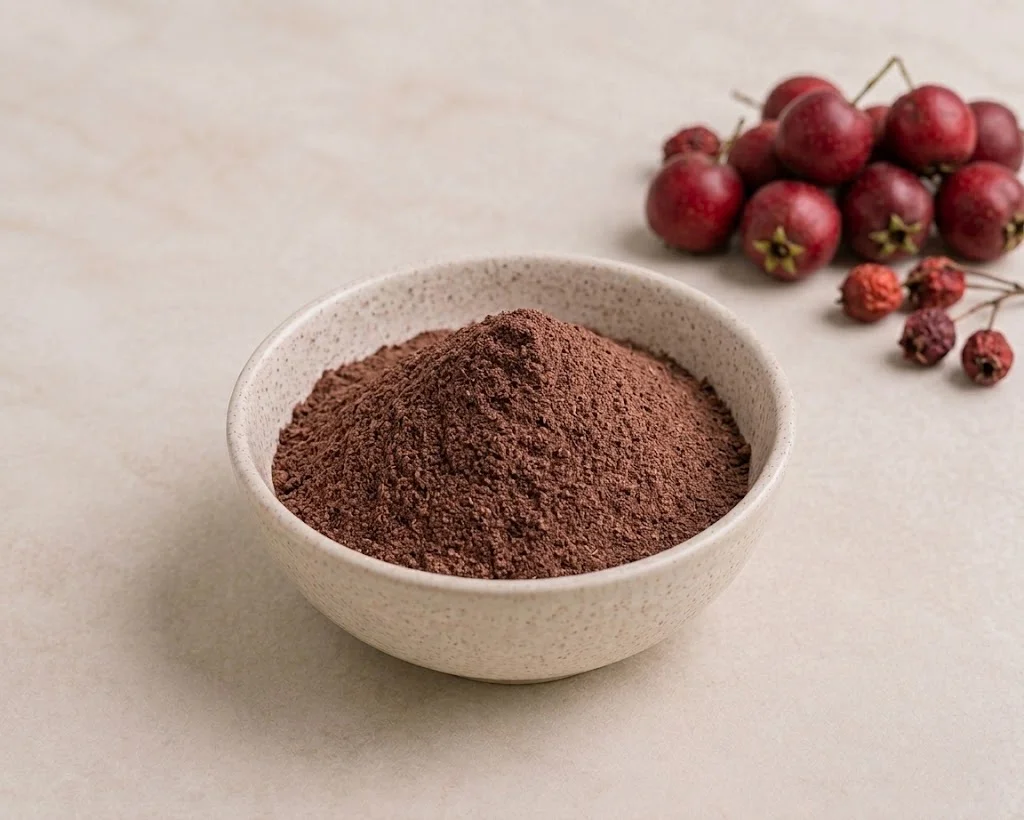
Hawthorn berry is a botanical ingredient derived from small red fruits produced by shrubs and trees in the Crataegus genus. It is popular in dietary supplements because of its long history of use for cardiovascular wellness, circulation, and general vitality. Hawthorn grows throughout Europe, North America, and parts of Asia, where its berries, leaves, and flowers have been used in traditional herbal preparations for centuries. Today, hawthorn berry is commonly included in heart-health formulas because it contains flavonoids, oligomeric procyanidins, and other plant compounds that have been studied for vascular and antioxidant activity. Consumers often choose hawthorn berry to support healthy blood pressure, normal circulation, and overall cardiovascular function, as summarized by the National Center for Complementary and Integrative Health [1].
What Is Hawthorn Berry?
Hawthorn berry comes from Crataegus species, most commonly Crataegus monogyna and Crataegus laevigata. These thorny shrubs belong to the Rosaceae family, the same plant family that includes apples, pears, and roses. The berries, also called haws, are rich in polyphenols and are traditionally prepared as teas, tinctures, syrups, and extracts. In European herbal medicine, hawthorn leaves and flowers were especially valued for heart and circulation support, while the berries were used in tonics and foods. Modern supplements may use the berry alone or combine berry, leaf, and flower extracts. Standardized products often measure flavonoids or oligomeric procyanidins, the compounds most often associated with hawthorn’s biological activity [2].
How Does Hawthorn Berry Work?
Hawthorn berry works mainly through its polyphenol content, including flavonoids such as hyperoside, vitexin, rutin, and procyanidins. These compounds have been studied for their ability to support endothelial function, antioxidant defenses, and vascular relaxation [2]. Research suggests hawthorn may influence nitric oxide availability, which helps blood vessels maintain normal flexibility and tone. Laboratory studies also indicate that hawthorn extracts may support healthy cardiac muscle function by affecting calcium handling and oxidative stress pathways, although these mechanisms are not fully established in humans [3]. After ingestion, hawthorn polyphenols are metabolized by intestinal enzymes, gut bacteria, and the liver into smaller phenolic compounds that circulate in the bloodstream. These metabolites likely contribute to the systemic effects observed in cardiovascular and antioxidant research [2].
Potential Health Benefits of Hawthorn Berry
Supports Healthy Blood Pressure
Hawthorn berry has been studied for its potential to support blood pressure already within or near the normal range. A randomized trial in people with type 2 diabetes found that hawthorn extract was associated with a reduction in diastolic blood pressure compared with placebo [4]. People commonly use hawthorn for circulatory wellness because it may support vascular relaxation and normal arterial tone through nitric oxide-related pathways.
Promotes Cardiovascular Wellness
Hawthorn is best known for its traditional role in heart-health support. Clinical research has evaluated standardized hawthorn extracts as adjunctive support in people with impaired cardiac function, with some studies reporting improvements in symptoms such as fatigue and exercise tolerance [5]. These findings do not make hawthorn a replacement for medical care, but they help explain why it remains common in cardiovascular supplement formulas.
Supports Healthy Circulation
Hawthorn berry may help support normal blood flow by promoting healthy vascular tone and protecting blood vessels from oxidative stress. Its flavonoids have been studied for effects on endothelial signaling, which is central to circulation and vessel flexibility [2]. People often take hawthorn to support peripheral circulation, especially when combined with lifestyle practices such as regular walking, balanced nutrition, and healthy weight management.
Provides Antioxidant Support
Hawthorn berry is naturally rich in plant antioxidants, especially flavonoids and procyanidins. Research suggests these compounds may help neutralize free radicals and reduce oxidative stress in cardiovascular tissues [3]. This antioxidant activity is one reason hawthorn is included in broad wellness formulas. Current evidence supports its role in cellular defense, although human outcomes depend on extract quality, dose, and individual health status.
Supports Exercise Tolerance and Stamina
Hawthorn has been studied for its potential to support healthy exercise tolerance, especially in research involving cardiovascular function. A Cochrane review found that some hawthorn trials reported improved exercise capacity when used alongside conventional care in selected populations [5]. For general wellness users, hawthorn is commonly taken to support stamina by promoting circulation, oxygen delivery, and cardiovascular efficiency during normal daily activity.
Supports Digestive and Traditional Wellness Uses
In traditional systems, hawthorn berry was also used to support digestion and general vitality. The berries contain fiber-like plant materials, tannins, and organic acids that may contribute to their traditional use after meals. However, modern human evidence for digestive benefits is limited. Hawthorn is more strongly researched for cardiovascular mechanisms, while digestive applications remain largely based on historical use and phytochemical plausibility [1].
Natural Food Sources
Hawthorn berry is itself the natural food source. The small red fruits grow on Crataegus shrubs and may be eaten fresh, dried, or cooked, although they are not common grocery-store foods. Traditional preparations include:
- Hawthorn berry tea or decoction
- Dried berries in herbal blends
- Hawthorn syrups and fruit preserves
- Alcohol-based tinctures
- Standardized capsules or liquid extracts
Because fresh berries are seasonal and vary in potency, supplements provide a more consistent source of active compounds.
Why Is It Included in Dietary Supplements?
Hawthorn berry is included in dietary supplements primarily for cardiovascular support, circulation formulas, blood pressure support blends, and antioxidant products. It is often paired with coenzyme Q10, magnesium, garlic, grape seed extract, or omega-3 fatty acids to support complementary aspects of vascular and heart wellness. Typical hawthorn formulations deliver berry powder, liquid extract, or standardized leaf-and-flower extract. Clinical studies have often used standardized extracts in divided daily doses, though products vary widely in strength and composition [5]. The overall purpose is to provide polyphenol-rich botanical support for normal vascular function.
Safety and Possible Side Effects
Hawthorn is generally well tolerated when used appropriately, and clinical studies have reported a relatively low rate of adverse effects [1]. Mild side effects may include nausea, digestive upset, dizziness, headache, or palpitations in sensitive individuals. Dosage depends on the extract type, concentration, and intended use, so label directions should be followed carefully. People with heart disease, low blood pressure, irregular heartbeat, liver disease, kidney disease, or complex medication regimens should use caution. Because hawthorn can affect cardiovascular function, it should not be used to self-manage serious symptoms such as chest pain, shortness of breath, fainting, or swelling.
Precautions and Possible Interactions
Hawthorn may interact with prescription medications, especially drugs used for blood pressure, heart rhythm, heart failure, and circulation. It may have additive effects with antihypertensives, nitrates, beta-blockers, calcium channel blockers, digoxin, or other cardiac medications [1]. Because some hawthorn compounds may influence platelet activity, individuals taking blood-thinning medications should use caution. People taking diabetes medications should monitor carefully, as cardiovascular herbs may indirectly affect metabolic status. Pregnant and breastfeeding women should avoid hawthorn supplements due to limited safety data. Stop use before surgery unless a clinician advises otherwise. Anyone with an existing medical condition should consult a qualified healthcare professional before starting hawthorn berry.
Current Scientific Research
Human Studies
Human research has focused mainly on standardized hawthorn extracts for cardiovascular outcomes. A Cochrane review found that hawthorn extract, used as adjunctive support in chronic heart failure studies, improved some symptom and exercise measures compared with placebo [5]. However, the larger SPICE trial did not show a significant effect on its primary endpoint, although the extract appeared generally safe alongside conventional care [6]. Blood pressure studies suggest possible modest benefits, but more consistent trials are needed [4].
Animal Studies
Animal and laboratory studies show that hawthorn extracts may influence vascular relaxation, antioxidant defenses, cardiac contractility, and inflammatory signaling [2][3]. These findings help explain traditional use, but preclinical evidence cannot be assumed to predict human outcomes.
Overall Evidence
The strongest evidence for hawthorn involves cardiovascular support, particularly circulation, blood pressure, and symptom-related outcomes in selected populations. Still, study quality, extract standardization, and dosing vary considerably. More large, modern clinical trials are needed to clarify who may benefit most, which extracts are optimal, and how hawthorn interacts with standard medications.
Frequently Asked Questions
What is hawthorn berry used for?
Hawthorn berry is commonly used to support cardiovascular wellness, healthy circulation, blood pressure already within the normal range, and antioxidant defense. It is often included in heart-health supplements with minerals, polyphenols, or other vascular-support ingredients [1].
Is hawthorn berry safe?
Hawthorn berry is generally well tolerated when used at appropriate supplemental doses. Mild digestive upset, dizziness, headache, or palpitations may occur. People taking heart, blood pressure, or blood-thinning medications should consult a healthcare professional first [1].
Can hawthorn berry be taken every day?
Hawthorn berry is often taken daily in supplement form, especially in standardized extracts or teas. Because it can affect cardiovascular function, daily use is best discussed with a qualified healthcare professional, particularly for anyone using prescription medication [5].
What foods contain hawthorn berry?
Hawthorn berry is not widely present in common foods. It is consumed directly as dried berries, teas, syrups, tinctures, or preserves. In most supplement routines, standardized extracts provide a more consistent source of active flavonoids.
Can hawthorn berry be combined with other supplements?
Hawthorn berry is commonly combined with CoQ10, magnesium, garlic, omega-3 fatty acids, or grape seed extract. However, combining multiple heart-support ingredients may increase physiological effects, so people with cardiovascular conditions should seek professional guidance [1].
References
[1] Hawthorn
National Center for Complementary and Integrative Health
https://www.nccih.nih.gov/health/hawthorn
[2] Hawthorn (Crataegus spp.) in the Treatment of Cardiovascular Disease
Pharmacognosy Reviews, PubMed Central
https://www.ncbi.nlm.nih.gov/pmc/articles/PMC3249900/
[3] Hawthorn: Pharmacology and Therapeutic Uses
American Journal of Health-System Pharmacy, PubMed
https://pubmed.ncbi.nlm.nih.gov/11887407/
[4] Hypotensive Effects of Hawthorn for Patients With Diabetes Taking Prescription Drugs
British Journal of General Practice, PubMed Central
https://www.ncbi.nlm.nih.gov/pmc/articles/PMC1839018/
[5] Hawthorn Extract for Treating Chronic Heart Failure
Cochrane Database of Systematic Reviews, PubMed Central
https://pmc.ncbi.nlm.nih.gov/articles/PMC11753770/
[6] The Efficacy and Safety of Crataegus Extract WS 1442 in Patients With Heart Failure
European Journal of Heart Failure, PubMed
https://pubmed.ncbi.nlm.nih.gov/19019730/