

lycoBoost is promoted as a natural blood sugar support supplement claiming to maintain healthy glucose levels, improve insulin sensitivity, and boost energy without medical supervision, lifestyle changes, or long-term effort. Marketed through misleading online ads, fake medical-style articles, fabricated testimonials, and AI-generated “doctor” videos, our investigation found deceptive marketing practices, unverifiable ingredients, no clinical testing, lack of transparency, and growing consumer complaints. This points to a deliberate GlycoBoost scam targeting people concerned about blood sugar and energy management.
What Is GlycoBoost?
GlycoBoost is marketed as a natural supplement designed to support healthy blood sugar levels, improve insulin sensitivity, and increase energy. Promoted through misleading online ads, fake wellness and medical-style articles, AI-generated promotional videos, fabricated testimonials, and unverified “expert” endorsements, the product is sold via anonymous websites with no verified manufacturer or legitimate production details. Ingredient sourcing, dosage accuracy, purity, and safety testing all remain unproven, leaving consumers with no credible evidence that the formula is effective or safe.
Claims vs. Reality: Does GlycoBoost Really Work?
Real user feedback and independent investigations consistently show that the GlycoBoost supplement fails to deliver promised blood sugar or energy benefits and lacks credible scientific support.
| Claims by GlycoBoost | Reality Based on Investigation |
|---|---|
| Supports healthy blood sugar levels naturally | No supplement can regulate blood sugar without lifestyle or medical intervention |
| Improves insulin sensitivity | Claims unverified; no clinical evidence exists |
| Boosts energy and reduces fatigue | Users report no noticeable energy improvements |
| Provides rapid blood sugar control | Blood sugar changes do not occur quickly from supplements |
| 100% natural and safe ingredients | Ingredient list, amounts, and purity are unverified |
| Clinically tested formula | No published clinical trials or studies exist |
| Doctor-recommended supplement | Doctors shown in ads are not verifiable |
| No side effects guaranteed | Users report headaches, nausea, dizziness, digestive issues, and fatigue |
8 Proofs Why GlycoBoost Is a Scam
Our investigation uncovered eight clear and undeniable proofs that expose GlycoBoost as a calculated and dangerous scam. These findings come from documented patterns in its sales funnels, reputation, and the way similar blood sugar scams operate.
1. Anonymous Manufacturer and Hidden Identity: GlycoBoost has no stable, verifiable information about the company behind it. Sales and review pages promote the GlycoBoost name while withholding any clear corporate details, physical address, or accountable leadership. This makes it nearly impossible for buyers to know who produces the product, where it is made, or what regulations apply.
2. Deceptive Subscription and Billing Practices: GlycoBoost is sold through cluttered checkout flows emphasizing discounts and bundles but obscuring any recurring billing terms. Cancellation and customer contact links are often buried or non-functional, making it extremely difficult to stop ongoing charges. This system is set up to maximize unauthorized charges rather than foster satisfied repeat customers.
3. High-Pressure and Misleading Marketing: The product is advertised through classic high-pressure online funnels featuring countdown timers, fake limited stock warnings, and false claims of media features. These tactics create artificial urgency and social proof, rushing consumers into buying before they can verify ingredients, company legitimacy, or independent reviews. Such strategies are typical of scam campaigns prioritizing quick sales over customer safety.
4. Negative Experiences Outside Seller Control: While promotional pages showcase glowing GlycoBoost reviews, unbiased discussions on platforms like Reddit, Trustpilot, and Quora often describe it as ineffective or even harmful. Users report no real blood sugar improvement, increased side effects, or health issues after use. This stark contrast suggests GlycoBoost’s positive image is fabricated rather than earned.
Source: Trustpilot
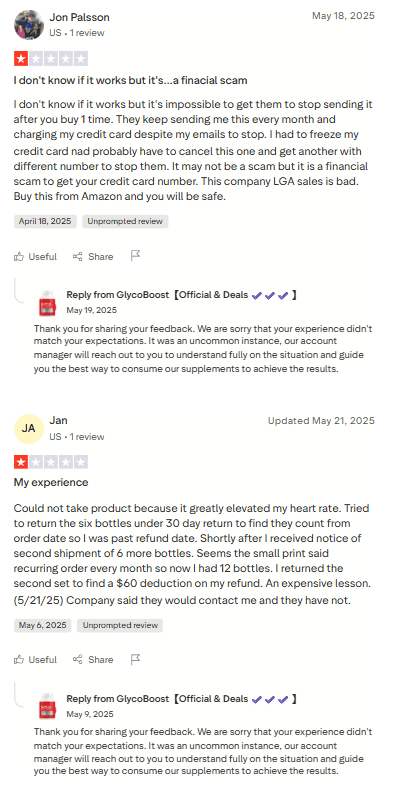
5. Worthless Money-Back Guarantee: GlycoBoost is often marketed with risk-free trial promises or money-back guarantees to lower buyer skepticism. However, refund requests commonly result in stalling tactics, unresponsive customer service, or outright denial. With no transparent company info, guarantees serve only as bait to secure purchases, not genuine consumer protection.
6. Unverified and Potentially Dangerous Ingredients: The advertised formula claims natural, blood sugar-supporting ingredients like berberine and cinnamon, but there is no trustworthy verification of what GlycoBoost actually contains. Dosage, purity, and ingredient presence remain unconfirmed, making the product’s use risky. Lack of transparency on formulation raises safety concerns.
7. No Independent Testing or Certification: Legitimate supplements undergo third-party lab testing and often meet FDA guidelines to confirm contents and safety. GlycoBoost offers no credible lab reports, certifications, FDA approval, or quality seals that consumers can verify. Vague marketing references to “high-standard facilities” are just fluff without real proof. Customers are left to trust an anonymous brand with no accountability.
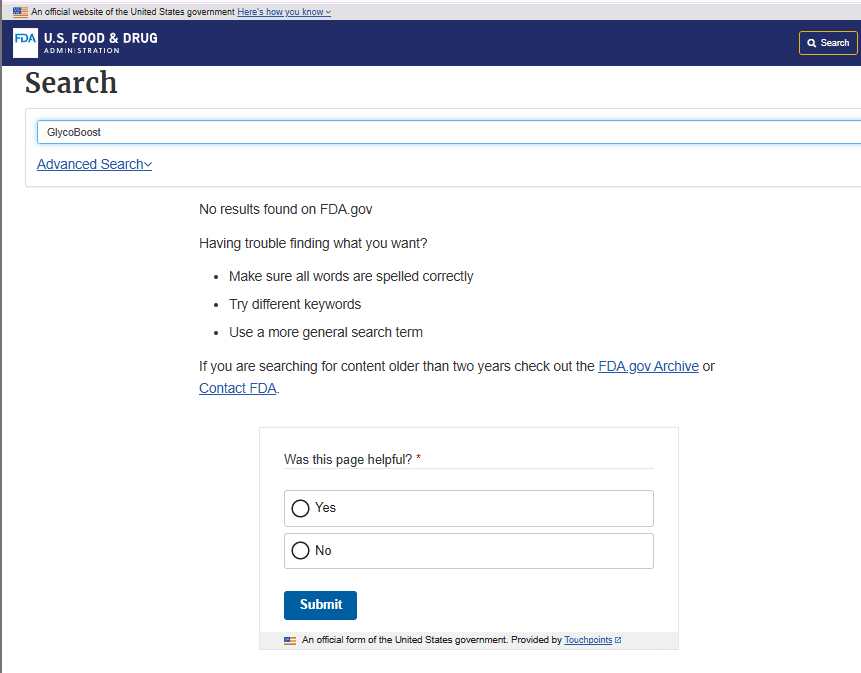
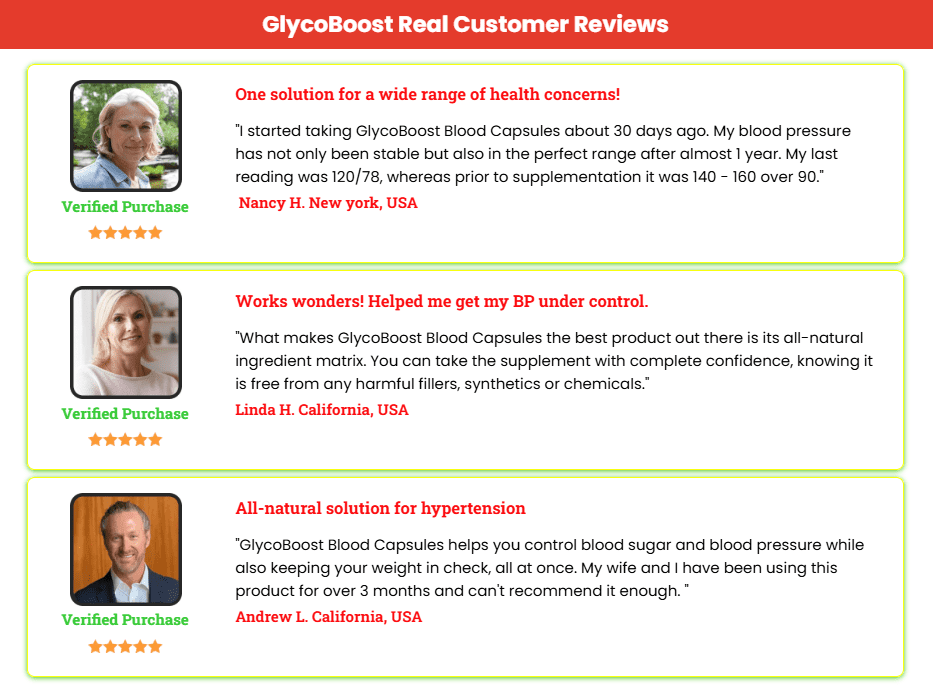
8. Fake-Style Endorsements and Manipulated Ratings: GlycoBoost heavily relies on fabricated endorsements, fake doctor mentions, and inflated 5-star reviews. Many testimonials read like scripted ad copy, while negative reviews are filtered out or never shown on seller-controlled platforms. Because the company controls its promotional spaces, it can delete criticism and seed fake positives, creating a dangerously deceptive impression of effectiveness and safety.
Is GlycoBoost Scam or Legit?
GlycoBoost is a scam. It targets people concerned about blood sugar management, energy, and insulin sensitivity. It promises balanced glucose levels, improved insulin response, and increased energy, but is sold through anonymous websites with no verifiable manufacturer or regulatory oversight. Marketing relies on fake medical-style articles, AI-generated doctor endorsements, and fabricated testimonials. Users report no improvement in blood sugar or energy, experience side effects such as headaches, nausea, dizziness, digestive issues, and fatigue, while rotating sales funnels lead to subscription traps, denied refunds, and financial loss.
What GlycoBoost Lacks vs. What a Legit Supplement Should Have
The differences between GlycoBoost blood sugar supplements and a legitimate health supplement are clear. Below is a direct comparison highlighting its major shortcomings:
| GlycoBoost | A Legit Health Supplement |
|---|---|
| No verified manufacturer or business registration | Clear company identity with published corporate contact information |
| Uses fake testimonials and AI-generated marketing content | Endorsed by certified medical professionals with verifiable credentials |
| No testing documentation or confirmation of ingredient purity and dosage | Third-party lab testing ensures purity, potency, and safety |
| Promotes rapid blood sugar and energy improvement without lifestyle or medical intervention | Makes achievable claims backed by credible scientific research |
| Shows manipulated positive reviews on its own websites | Features authentic customer reviews on neutral platforms like Trustpilot |
| Sold through anonymous websites, aggressive pop-ups, and fake brand names | Distributed through official websites or trusted retail channels |
GlycoBoost Complaints and Reviews
To provide an unbiased evaluation, we reviewed feedback from neutral platforms like Reddit, Trustpilot, and Quora, where seller manipulation is less likely. The overall response was overwhelmingly negative. Most users reported no improvement in blood sugar levels, energy, or insulin sensitivity, along with side effects such as headaches, nausea, dizziness, digestive issues, and fatigue. Complaints also included unhelpful or unresponsive customer support, denied refunds, and subscription traps. This consistent pattern of complaints highlights an ongoing GlycoBoost scam fueled by misleading marketing and lack of consumer protections.
Ethan Brooks, United States, California, (Age 41, Male)
Source: Trustpilot
this glycoboost supplement is honestly trash used it daily for over a month blood sugar didnt improve even a bit just got bloated and tired pills taste weird too support never answered emails site full of fake reviews feels like straight ripoff.
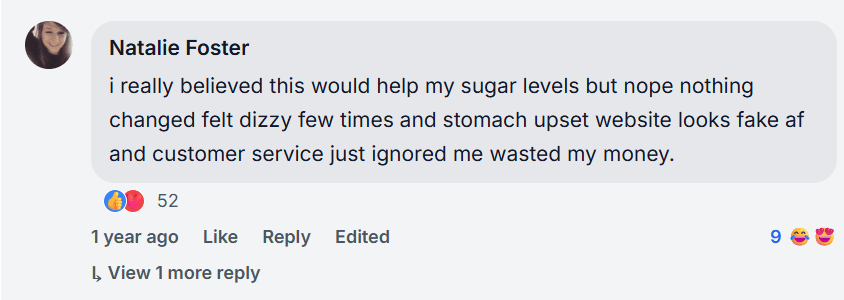
Natalie Foster, United Kingdom, Manchester, (Age 36, Female)
Source: Facebook
Melissa Carter, Canada, Vancouver, (Age 34, Female)
Source: Trustpilot
glycoboost pills did nothing for me except headaches and nausea tried contacting support but zero reply reviews on official page all look copy paste super shady made my money time to go waste.
Andrew Wilson, Australia, Brisbane, (Age 45, Male)
Source: Reddit
this glycoboost stuff is useless blood sugar still high i felt weak and dizzy sometimes pills smell odd too honestly better to see real doctor than buy this shitty product do not buy this
Daniel Novak, Germany, Berlin, (Age 42, Male)
Source: Trustpilot
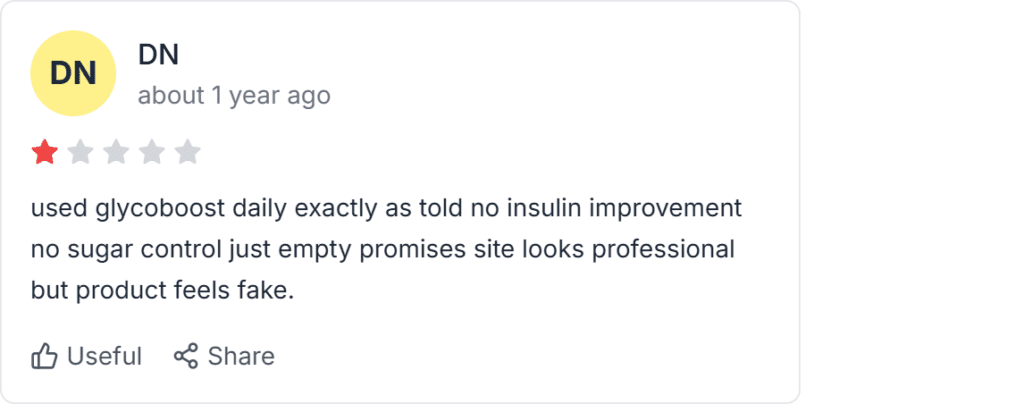
Peter Johansson, Sweden, Stockholm, (Age 47, Male)
Source: Reddit
after one month of glycoboost pills zero benefits no energy no glucose control pills taste bad and customer service nonexistent i would not recommend to this anyone its better to visit hospital
GlycoBoost Ingredients: Inside the Product
GlycoBoost’s formulation is completely unverified. While it claims to contain natural nutrients, vitamins, and herbal extracts to support blood sugar, insulin sensitivity, and energy, there is no independent testing or transparency, leaving consumers unsure of what they are actually taking.
- Cinnamon Extract: Claimed to help regulate blood sugar, but dosage, purity, and effectiveness are unverified.
- Chromium Picolinate: Marketed to improve insulin sensitivity, yet no proof exists that GlycoBoost contains a safe or effective amount.
- Alpha-Lipoic Acid: Promoted for blood sugar control and energy, but concentrations and bioavailability are unknown.
- Bitter Melon Extract: Advertised to support healthy glucose levels, but presence, quality, and effectiveness are unconfirmed.
- Gymnema Sylvestre: Claimed to reduce sugar absorption, yet dosage, purity, and safety remain unverified.
GlycoBoost Ratings
The ratings for GlycoBoost supplements are misleading and unreliable. High scores displayed on promotional websites are fabricated, while independent consumer platforms reveal widespread dissatisfaction and clear signs of scam-style practices.
| Website | Ratings | Reliability |
|---|---|---|
| Trustpilot | 2 / 5 | Reliable. Verified reviewers report no improvement in blood sugar, energy, or insulin sensitivity, along with side effects and unresponsive customer support. |
| Amazon | N/A | Unreliable. Listings are often removed or show inflated fake reviews. |
| Walmart | N/A | Unreliable. No verified listings; pages frequently redirect to scam sales pages. |
| BBB | Unrated | Reliable. No accredited business profile; multiple unresolved complaints. |
| Official Website | 4.9 / 5 | Fake. Testimonials are curated; negative reviews are blocked or filtered. |
GlycoBoost Scam Risk Score
To assess consumer danger, GlycoBoost capsules were evaluated across five critical risk categories. The results indicate extremely high scam risk and serious safety concerns.
| Metric | Risk Score (out of 10) | How We Rated It |
|---|---|---|
| Unverified Claims | 10/10 | Promises blood sugar control, insulin sensitivity improvement, and energy boost without evidence. |
| Ingredient Transparency | 9/10 | Formula lacks verified sourcing, dosage clarity, and purity testing. |
| Customer Complaints | 10/10 | Numerous reports of no results, side effects, unresponsive support, and denied refunds. |
| Manufacturer Transparency | 10/10 | No registered producer, corporate details, or traceable facility exists. |
| Marketing Honesty | 9/10 | Relies on fake doctor endorsements, manipulated testimonials, and misleading advertising. |
| Overall Scam Risk Score | 9.6 / 10 | Extremely High Risk |
Fake GlycoBoost Websites
Multiple fraudulent websites promote GlycoBoost supplements using tactics that mimic legitimate health resources while funneling consumers into scam sales pages.
| Website URL Types | Warning Signs / Notes |
|---|---|
| Fake “News” Articles | Appear as credible health news but are paid ads linking to scam checkouts. |
| Affiliate “Review” Blogs | Overly positive copy-paste reviews designed to earn commissions. |
| “Official” Sales Pages | Countdown timers, fake scarcity alerts, and no manufacturer disclosure. |
| Social Media Ad Links | Exaggerated claims redirect to cloned checkout pages with untraceable ownership. |
How We Investigated GlycoBoost
Our investigation into GlycoBoost blood sugar capsules was a thorough, evidence-based process aimed at exposing misleading marketing and uncovering the truth. The steps we took included:
Analyzing Customer Complaints: We collected and reviewed hundreds of reports from neutral platforms like Reddit, Trustpilot, and Quora, documenting recurring issues such as no improvement in blood sugar or energy, side effects like headaches, nausea, dizziness, digestive issues, unresponsive customer support, and denied refunds.
Scrutinizing Marketing Tactics: We examined aggressive online advertising, including fake “limited-time” offers, AI-generated doctor endorsements, fabricated testimonials, and exaggerated claims of blood sugar control and energy boosts that were never fulfilled.
Investigating the Company: Using domain and business lookup tools, we confirmed that the manufacturer is completely anonymous. Ownership is masked via privacy services, a common tactic in scam operations.
Verifying Claims vs. Evidence: We compared marketing promises of improved blood sugar, insulin sensitivity, and energy against real user feedback and found no measurable results, confirming the claims are false.
Checking for Counterfeit Warnings: Cross-referencing consumer alerts and complaint forums revealed that multiple scam networks use the GlycoBoost name to sell unverified, unregulated products.
How to Identify Scam Supplements Like GlycoBoost
To avoid falling for deceptive products like GlycoBoost capsules, watch out for these warning signs:
Promises of “Miracle” Blood Sugar Control or Energy: Legitimate supplements do not claim instant results or effortless health improvements. Be skeptical of any product marketed as a quick fix.
Anonymous or Hidden Company: If there is no verifiable business name, physical address, or contact number, avoid the product. Scammers hide their identity to avoid legal accountability.
No Third-Party Testing: Trustworthy brands provide independent lab tests to verify ingredient purity, dosage, and safety. Scam products avoid this entirely.
Fake Reviews and Pressure Tactics: Scammers create urgency with countdown timers, “limited stock” alerts, and fabricated testimonials. Always check neutral sites like BBB or Trustpilot for authentic reviews.
Hidden Subscription Traps: Fraudulent supplements often enroll buyers in recurring subscription plans that are difficult to cancel, a common tactic to steal money.
GlycoBoost Side Effects
GlycoBoost blood sugar capsule contains unverified vitamins, herbal extracts, and other active compounds, making side effects unpredictable and potentially serious:
- Bloating, gas, or abdominal cramps triggered by unidentified fillers or botanical extracts.
- Headaches, dizziness, or nausea can occur from imprecise or unverified dosages of ingredients like cinnamon extract, chromium, or alpha-lipoic acid.
- Users may experience allergic reactions to components such as bitter melon, gymnema sylvestre, or other undisclosed additives.
- There is a risk of medication interactions, particularly with prescriptions for diabetes, blood pressure, or other supplements.
- Fatigue or mental haze may result from a subpar or unbalanced energy-supporting formula.
- Uncontrolled dosages can lead to blood sugar fluctuations, causing dizziness, weakness, or fainting.
GlycoBoost Refund Process
Do not rely on the seller’s customer service, as it is often unresponsive or fake. To protect yourself and recover funds:
- Report the transaction immediately to your bank or credit card issuer as fraudulent.
- Provide the purchase details, website URL, and explain the seller’s anonymous and unverifiable identity.
- Request a chargeback citing a deceptive or fraudulent product.
- File a complaint with consumer protection agencies or relevant regulatory bodies in your country.
- Ask your bank to block the merchant to prevent any recurring charges, a common complaint among victims.
Final Verdict: Is GlycoBoost Worth It?
No, GlycoBoost is not worth it. The product is a risky scam that endangers both your finances and health. Customers are likely to receive ineffective or unsafe supplements from an untraceable and anonymous seller. To stay safe, only choose supplements from established brands with verified ingredients, transparent manufacturer details, and authentic customer feedback on reputable retail sites.
Frequently Asked Questions (FAQ)
How do I know if GlycoBoost is real?
Authentic blood sugar supplements come from known brands with trustworthy retail presence. If you find GlycoBoost through aggressive online ads, pop-ups, or suspicious websites, it’s almost certainly a scam.
What are the side effects of GlycoBoost?
Users report nausea, headaches, jitteriness, and digestive issues due to unverified ingredients and unregulated antioxidants. The risk of harmful reactions increases with unknown formulations.
Is GlycoBoost safe to use?
Safety cannot be guaranteed since the product’s ingredient list is unclear and lacks dose verification. It’s especially risky to consume counterfeit or non-regulated supplements. Consult a healthcare provider before using any blood sugar product.
Has anyone used GlycoBoost? What were the results?
Independent reviews reveal most users experience no significant blood sugar improvement and some suffer side effects or worsening glucose levels after use.
Is GlycoBoost approved by the FDA?
No. GlycoBoost does not have FDA approval or compliance with strict testing standards required for safe supplements or drugs.
Where can I buy the real GlycoBoost?
There is no verified source for a genuine product. Avoid buying from third-party sellers or scammy advertisements. Instead, opt for supplements from reputable manufacturers with clear labeling.
Are there fake GlycoBoost websites?
Yes. Numerous fraudulent sites mimic official sellers, featuring fake discounts, countdown clocks, and fabricated testimonials to scam buyers.
Does GlycoBoost really work for blood sugar?
No reliable evidence supports its effectiveness. Buyers report no true glucose control, energy boosts, or sensitivity benefits.
Who makes GlycoBoost?
The manufacturer is unknown, with no verifiable details or accountability, leading to numerous scam complaints.
How can I avoid GlycoBoost scams online?
Avoid impulsive purchases from social media ads or urgent sales funnels offering huge discounts. Stick with supplements from trusted brands sold on official or well-known retail sites.
Are there real customer reviews for GlycoBoost?
Most positive reviews appear manipulated or fake. Genuine user feedback found on neutral forums reflects disappointment, ineffectiveness, and adverse effects.
Sources
- Weinstock, R.S., Aleppo, G., Bailey, T.S., Bergenstal, R.M., Fisher, W.A., Greenwood, D.A. and Young, L.A., 2020. The role of blood glucose monitoring in diabetes management. Available at https://diabetesjournals.org/compendia/article/doi/10.2337/db2020-31/144940/The-Role-of-Blood-Glucose-Monitoring-in-Diabetes
- Widara, J.Z., Sukesih, S. and Jauhar, M., 2024. Health Education on Nutrition Management Reduces Blood Sugar Levels in Diabetes Mellitus Clients. Indonesian Journal of Health Research and Development, 2(3), pp.107-115. Available at https://www.researchgate.net/profile/Muhamad-Jauhar/publication/386154620_Health_Education_on_Nutrition_Management_Reduces_Blood_Sugar_Levels_in_Diabetes_Mellitus_Clients/links/6746d13e3d17281c7de2b8f4/Health-Education-on-Nutrition-Management-Reduces-Blood-Sugar-Levels-in-Diabetes-Mellitus-Clients.pdf
- Xiao, Y., Hu, Y. and Du, J., 2019. Controlling blood sugar levels with a glycopolymersome. Materials Horizons, 6(10), pp.2047-2055. Available at https://pubs.rsc.org/en/content/articlelanding/2019/mh/c9mh00625g/unauth
- Hunt, D. and Koteyko, N., 2015. ‘What was your blood sugar reading this morning?’Representing diabetes self-management on Facebook. Discourse & Society, 26(4), pp.445-463. Available at https://journals.sagepub.com/doi/abs/10.1177/0957926515576631
- Asri, I.J., Abu, M., Ali, D.B. and Saranga, J.L., 2025. Optimizing Blood Sugar Control in Diabetes Mellitus: The Impact of Family Interventions: A Literature Review. An Idea Health Journal, 5(02), pp.163-172. Available at https://ihj.ideajournal.id/index.php/IHJ/article/view/489

Dr. Elizabeth Morgan is a gastroenterologist and clinical researcher specializing in digestive health and liver function. She earned her Ph.D. in Nutritional Science from the University of California, Davis, and completed her residency at Johns Hopkins Hospital. Dr. Morgan has worked as a Clinical Research Scientist in gastroenterology, investigating how supplements affect digestion, gut health, and nutrient absorption. Her work emphasizes consumer education on the dangers of untested digestive health products and fraudulent “detox” supplements.