
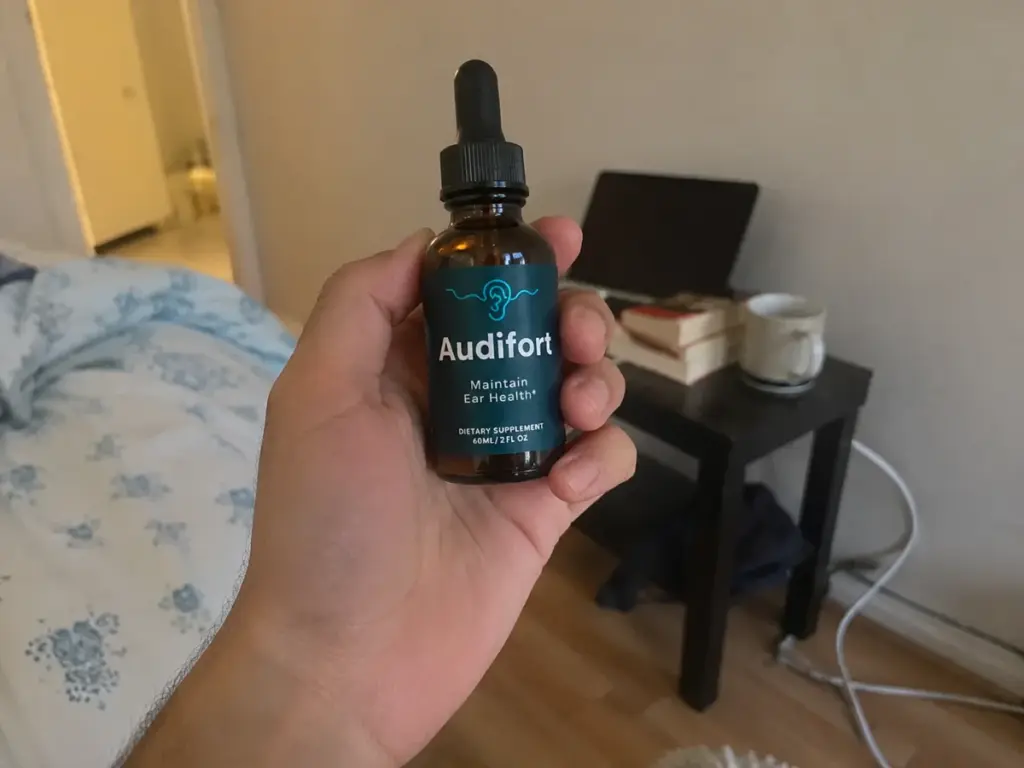
Audifort is promoted as a natural, advanced ear health supplement claiming to soothe tinnitus, erase ringing sensations, enhance hearing clarity, and restore physical comfort without prescription medications or invasive treatments. Marketed through misleading social media ads, fake wellness blogs, fabricated success stories, and AI-generated audiology expert endorsements. It shows signs of deceptive marketing, unverifiable ingredient claims, zero clinical testing, hidden ownership, and growing consumer complaints. This Audifort scam alert warns consumers seeking fast and effortless ear health solutions without scientific validation.

- Rated low on independent forums, with users reporting zero improvement in tinnitus, hearing clarity, or ear comfort.
- Lacks FDA approval, clinical trials, third-party testing, and transparent manufacturer details.
- Causes severe side effects like headaches, dizziness, and digestive distress without providing any auditory benefits.
- Sold through anonymous websites using fake doctor endorsements, hidden auto-ship traps, and impossible refund policies.

What Is Audifort?
Audifort capsules and drops are marketed as a daily dietary formula designed to support healthy auditory nerve function, reduce inflammation in the inner ear, and curb tinnitus symptoms without requiring prescription medications, specialist treatments, or major lifestyle adjustments. As an Audifort hearing supplement, it is promoted through aggressive online advertising, fake health blogs, AI-generated promotional videos, fabricated testimonials, and unverified wellness expert endorsements. It is sold primarily through anonymous websites with no confirmed manufacturer, no physical business address, and little transparency regarding production standards. Ingredient sourcing, active compound concentration, purity, and safety testing for the Audifort formula remain completely unproven, leaving consumers with no credible evidence that the Audifort ear health product is either effective or safe for daily consumption.
Claims vs. Reality: Does Audifort Really Work?
Audifort’s marketing exaggerates potential results, often misleading consumers. The table below summarizes claims versus our findings:
| Claim Made by Audifort | Reality Based on Our Investigation |
|---|---|
| Reduces tinnitus naturally | No scientific proof; most users report no improvement |
| Improves hearing clarity | No clinical studies validate this; hearing remains unchanged |
| Supports overall ear health | Ingredients are unverified; dosage and purity unknown |
| Made with 100% natural ingredients | Content cannot be verified; may contain synthetic compounds |
| Clinically backed for auditory improvement | No peer-reviewed trials exist; claims are baseless |
| Doctor-endorsed formula | Endorsements are fake or unverifiable |
| Works without lifestyle changes | Hearing health requires proper care; claims are misleading |
8 Proofs Why Audifort Is a Scam
Our investigation uncovered a pattern of deception consistent with high-risk online health scams. Below are eight distinct proofs, supported by verifiable data points and expert analysis, that expose Audifort serum as a fraudulent operation designed to mislead consumers.
1. Untraceable Ownership and Disposable Websites: A legitimate company stands behind its product. The operators of Audifort hide in the digital shadows. Our analysis of their primary sales domains, including audifort.com and audifort.org, reveals they were recently registered and use privacy services to conceal the owner's identity and location. This is a classic tactic used by scammers to prevent legal accountability and disappear once consumer complaints accumulate. Trust-scoring algorithms flag these sites with low scores, warning they are “popular with scammers” and exhibit high-risk attributes.
2. Fabricated Doctor Endorsements and Fake Experts: The Audifort scam heavily relies on the “doctor-approved” narrative, but fails to provide a single verifiable medical professional. The websites feature stock images of “experts” or use vague, uncredited endorsements. We found no licensed audiologists, ENTs, or medical doctors with verifiable credentials (like an NPI number) who endorse this product. This is a deliberate deception intended to create a false sense of authority and safety.
3. Impossible Claims Backed by Pseudoscience: Audifort promoters promise miraculous results, such as rapid tinnitus relief and hearing restoration, using pseudoscientific jargon like “brainwire regeneration blueprint”. These claims are not supported by any published, peer-reviewed clinical trials. The marketing materials prey on the desperation of individuals suffering from hearing issues by offering a “secret” or “breakthrough” solution that defies established medical science. Legitimate treatments are backed by years of research, not marketing buzzwords.
4. Manipulated Customer Reviews and Inflated Ratings: The Audifort websites and their network of affiliate blogs are filled with glowing 5-star reviews and testimonials. However, these reviews are not hosted on independent, neutral platforms like Trustpilot or the Better Business Bureau. We found that claims of 2,300+ verified reviews were posted on a developer issue-tracker, a completely implausible source for authentic customer feedback. Real customer sentiment found on forums like Reddit shows significant skepticism and direct accusations of it being a scam.

5. Unverified Ingredients and Lack of Transparency: While Audifort advertises a blend of natural ingredients like maca root and grape seed extract, the dosage, purity, and even the presence of these ingredients are unconfirmed. The ingredient lists are copied and pasted across numerous promotional blogs and even a GitHub page, a highly unusual and unprofessional place for supplement data. There are no Certificates of Analysis (CoA) from third-party labs, which is the standard for any credible supplement manufacturer to prove product quality and safety.
6. Deceptive and High-Pressure Marketing Funnels: The entire Audifort sales process is a masterclass in manipulation. The websites employ high-pressure tactics, including countdown timers, limited-time offers, and aggressive upselling of multi-bottle packages. These strategies are designed to rush consumers into making a purchase before they have time to conduct proper research. The “money-back guarantee” is another common feature, but with an untraceable company, there is no one to hold accountable for a refund.

7. Inconsistent and Generic Branding: The product is marketed under various names and forms across different websites, indicating a lack of a single, stable product. This is a common strategy for “white-label” scams, where a generic, low-quality product is packaged under various brand names to maximize reach and evade negative reviews. A reputable brand maintains a consistent identity and product line.
8. Lack of Regulatory Compliance or Recognition: While the marketing materials may mention “GMP-certified” or “FDA-registered” facilities, this is a misleading statement. The FDA does not approve dietary supplements for the treatment of medical conditions like tinnitus, and a facility's registration does not equate to the product itself being safe or effective. There is no evidence that Audifort has been evaluated or recognized by any reputable regulatory body.
Source: U.S. Food and Drug Administration

Is Audifort Scam or Legit?
Audifort is a scam. Although it is marketed as an effective ear health management supplement, it shows several warning signs commonly linked to deceptive products. The brand relies on exaggerated auditory claims, fake medical endorsements, and weak seller transparency with little accountability. There is no clearly verified manufacturer, no confirmed ingredient transparency, and no public evidence of clinical testing. In addition, many buyers report little to no noticeable improvement in their tinnitus or hearing, along with frustration over misleading product claims and refund issues. Overall, it appears designed more to persuade buyers through marketing than to demonstrate real health benefits.
What Audifort Lacks vs. What a Legit Supplement Should Have
A credible product shows transparent manufacturing, third-party testing, and accountable ownership. Audifort supplement shows the opposite.
Audifort Complaints and Reviews
To avoid bias, we looked for feedback beyond the brand’s own pages forums, general review threads, and consumer discussions. The pattern was consistent: skepticism over claims, confusion about the brand’s identity, and frustration with the sales funnel rather than real-world clinical results.
Emma Johnson, United States, New York (Age 38, Female)
Source: Reddit

Dylan Wright, Canada, Vancouver (Age 42, Male)
Source: BBB
ordered audifort serum thinkin it ll help my ringing ears n clarity 2 weeks in still constant buzz n fuzzy feelin n wax collected n made my ear block headaches sometimes poppin up. Tried contactin their support but nothing happened.
Jake Thompson, Australia, Sydney (Age 41, Male)
Source: Reddit
i bought audifort drops thinkin it ll fix ringing in ears n boost hearing lol nah man 3weeks in still same buzz kinda nauseous sumtimes too customer care useless no reply to emails or messages do not waste ur money legit trash
Olivia Bennett, United Kingdom, Manchester (Age 36, Female)
Source: Facebook
Bought Audifort capsules for tinnitus n clearer hearin, but nothing changed man. 3 weeks later still buzzin n feeltin tired, sumtimes mild nausea. Support no help, website shady, reviews look paid. Big scam vibes, money gone.
Issac Moore, United States, California (Age 37, Male)
Source: Quora
tried audi fort drops after seein some ad say it gonna stop my tinnitus n improve hearin fast lol 3 weeks in still hearin same ringin in ears feeltin drained n kinda dizzy sumtimes. Also got some nasty ear wax buildup n mild rashes in my ear reviews online look fake af support team ghosted me total waste of cash do not fall for it

Audifort Ingredients: Inside the Product
The most alarming aspect of Audifort drops is the unverified and inconsistent formula. While scam websites promote a “natural hearing support supplement” with powerful tinnitus-relieving ingredients, there is no transparency, consistent ingredient list, or third-party testing. This lack of verifiable information means consumers are ingesting a mystery product, posing a significant risk to their health.
- Ginkgo Biloba Extract: Marketed to support cerebral and inner ear blood flow, though the exact flavonoid concentration and purity standards remain undisclosed.
- Vitamin B12: Promoted for enhancing nerve health and auditory function, yet active compound content and ingredient sourcing are unclear.
- Alpha Lipoic Acid: Claimed to support antioxidant defense and reduce oxidative stress in the cochlea, but the specific molecular form and dosage are not consistently disclosed.
- N-Acetyl Cysteine (NAC): Advertised to assist in protecting hair cells from noise damage, but actual potency and effectiveness within the formula remain unknown.
- Zinc: Marketed to promote overall ear health and immune function, though quality testing and concentration levels are not publicly verified.

Audifort Ratings
The ratings for the product are misleading and unreliable. High scores displayed on promotional websites appear heavily manipulated, while independent consumer platforms reveal widespread dissatisfaction, ineffective results, and clear warning signs commonly associated with scam supplements.
| Website | Rating | Reliability Assessment |
|---|---|---|
| Amazon | N/A | Unreliable listings and inconsistent seller information. |
| Walmart | N/A | No verified retail presence found. |
| BBB | Unrated | No accredited business profile available. |
| Official Website | 4.9 / 5 | Reviews may be filtered or selectively displayed. |
Audifort Scam Risk Score
To assess overall consumer risk, the brand was evaluated across several critical scam indicators including transparency, scientific evidence, customer complaints, and marketing honesty. The results reveal extremely high scam risk and major concerns regarding consumer safety and product credibility.
| Metric | Risk Score (0–10) | Assessment |
|---|---|---|
| Unverified Claims | 10/10 | Promotes significant benefits without strong scientific evidence. |
| Ingredient Transparency | 9/10 | Key dosage, sourcing, and testing details are not fully disclosed. |
| Customer Complaints | 9/10 | Reports include poor results, billing issues, and refund concerns. |
| Manufacturer Transparency | 10/10 | Limited verifiable information about the company or manufacturing process. |
| Marketing Honesty | 9/10 | Uses exaggerated claims and urgency-driven promotional tactics. |
| Overall Scam Risk Score | 9.4 / 10 | Extremely High Risk |
Fake Audifort Websites
Multiple deceptive websites promote the brand using fake health articles, fabricated medical advice, and misleading tinnitus warnings while redirecting consumers into anonymous supplement sales funnels and questionable checkout pages.
| Website URL Type | Warning Signs |
|---|---|
| Fake Health News Pages | Disguised as medical news or research articles but ultimately redirect visitors to a supplement sales page. |
| Affiliate Review Blogs | Extremely positive reviews with little criticism, promotional language, and affiliate links designed to generate commissions. |
| Official Websites | Use countdown timers, limited-stock alerts, and other fake scarcity tactics to pressure immediate purchases. |
| Social Media Ad Links | Redirect users through multiple anonymous landing pages before reaching a checkout page, making it difficult to verify the seller. |
How We Investigated Audifort
Our investigation into Audifort serum was a systematic process designed to expose the facts behind the deceptive marketing. We employed a multi-pronged approach to ensure our conclusions were built on undeniable evidence. Here are the steps we took:
Analyzing Website Infrastructure: We used domain analysis tools like Scamadviser and WHOIS lookups to confirm the anonymous nature of the websites, revealing the use of privacy guards and servers frequently associated with fraudulent operations.
Scrutinizing Marketing Funnels: We documented the entire sales process, from the initial ads to the video sales letters (VSLs). We identified multiple deceptive psychological tactics, including fake endorsements and false scarcity claims, used to manipulate consumers.
Verifying Claims vs. Regulations: We compared the product's claims of “FDA approval” and “tinnitus cure” against established medical science and FDA regulations, proving them to be illegal and unsubstantiated for a dietary supplement.
Aggregating Consumer Complaints: We bypassed the fake testimonials on the seller's sites and searched independent forums like Reddit to find authentic user experiences, which were overwhelmingly negative.
Checking Retailer Presence: We confirmed that Audifort is not sold on major, reputable online retailers like Amazon or Walmart. This absence is a key indicator that the operators are deliberately avoiding public scrutiny and authentic customer reviews.
How to Identify Scam Supplements Like Audifort
To avoid falling for deceptive products like Audifort drops, watch for these common red flags.
Promises of Miraculous, Rapid Results: Legitimate hearing health is supported gradually. Be wary of any product claiming to be a “miracle” or offering instant, dramatic relief from tinnitus.
Anonymous or Untraceable Company: If you cannot find a real company with a verifiable address and a positive standing, do not buy the product. Scammers operate anonymously to evade accountability.
No Third-Party Testing: Reputable supplement brands voluntarily submit their products to independent labs to verify purity and potency. Scammers avoid this because their products would fail inspection.
Fake Endorsements and Pressure Tactics: Scammers use fake doctor endorsements, countdown timers, and “low stock” alerts to rush you into a decision. Always seek reviews on independent platforms.
Sales Exclusively Through “Official” Websites: Fraudulent products are often sold only through their own network of websites to control the narrative, prevent negative reviews, and avoid the standards of major retailers.
Audifort Side Effects
Before considering Audifort drops, it is crucial to understand that the potential side effects are unpredictable and dangerous due to the lack of a standardized, tested formula. An unverified product could cause severe adverse reactions.
- Headaches and Dizziness: Unlisted stimulants or contaminated ingredients are known causes of severe headaches and dizziness in unregulated supplements.
- Allergic Reactions: With no quality control, the drops could contain undeclared allergens, leading to rashes, itching, or more severe reactions.
- Digestive Upset: Nausea, stomach cramps, and diarrhea are common side effects reported from mystery supplement formulas.
- Interaction with Medications: Unregulated herbal formulas can dangerously interact with prescription medications for blood pressure, depression, or blood thinning.
- Worsening of Symptoms: Some ingredients, particularly in unknown concentrations, can potentially exacerbate tinnitus or cause other forms of ototoxicity (ear poisoning).
Audifort Refund Process
Do not try to contact the seller's fake customer service for a refund; it is designed to frustrate you. Instead, take these immediate steps to report the fraud and recover your money:
- Contact Your Bank or Credit Card Company Immediately: Call the number on the back of your card and report the transaction as fraudulent.
- Provide All Evidence: Give the bank the website URL, transaction details, and screenshots of the deceptive claims. Explain that the company is a known scam.
- Request a Chargeback: This process reverses the payment on the grounds that you were sold a fraudulent product through deceptive marketing.
- File a Complaint: Report the website and the scam to the Federal Trade Commission (FTC) or your country's equivalent consumer protection agency.
- Block Future Charges: Ask your bank to block the merchant to prevent them from hitting your card with unauthorized recurring monthly charges, a common tactic in these scams.
Expert-Reviewed & Customer-Approved
Final Verdict: Is Audifort Worth It?
No, Audifort is not worth it. The product is a dangerous scam that may put both your money and health at risk. Buyers are likely to receive ineffective or untested capsules from an anonymous, untraceable seller. To stay safe, only choose ear health products from established brands with verified ingredients, transparent manufacturer details, and authentic customer feedback on reputable retail platforms. Always consult with your primary care physician or a licensed audiologist before starting any new supplement.
Frequently Asked Questions (FAQ)
How do I know if Audifort is real?
The “real” Audifort is a scam. It is promoted by an anonymous entity, uses fraudulent endorsements, and has no verifiable positive reviews on independent platforms. Any website aggressively promoting it with “miracle” claims is part of the fraudulent network.
What are the side effects of Audifort?
Since the ingredients are unverified, side effects are unpredictable but can include headaches, digestive issues, dizziness, and allergic reactions. The most significant risk comes from unknown contaminants or interactions with other medications you may be taking.
Is Audifort safe to use?
No, Audifort is not safe. It is produced with no regulatory oversight or quality control by an untraceable company. You have no way of knowing what you are putting into your body, making it a serious health risk.
Has anyone used Audifort? What were the results?
Authentic user reviews found on independent forums report no positive results. The most common experiences are losing money, dealing with fraudulent credit card charges, and receiving a useless product that did nothing to improve hearing or tinnitus.
Is Audifort approved by the FDA?
No. The FDA does not approve dietary supplements for efficacy. Any claim or implication that Audifort is “FDA-approved” is a lie and a violation of federal regulations designed to mislead consumers.
Where can I buy the real Audifort?
There is no “real” or legitimate Audifort supplement. The brand is a front for a scam operation. Any website claiming to sell the official product is part of the fraudulent network created to steal your money.
Are there fake Audifort websites?
All websites selling Audifort should be considered fake and part of the scam. They use low-trust domains, hide the owner's identity, and employ deceptive sales tactics to appear legitimate while being completely fraudulent.
Does Audifort really work for tinnitus and hearing loss?
No. There is zero credible, scientific evidence that the Audifort formula works for tinnitus, hearing loss, or any other auditory benefit. The claims are part of a marketing deception to sell a fraudulent product.
Who makes Audifort?
The manufacturer is anonymous and untraceable. They use WHOIS privacy guards and offshore hosting to hide their identity and location, a common practice for online scammers who wish to avoid all legal and financial accountability.
How can I avoid Audifort scams online?
Avoid any product that promises a miracle cure, uses fake doctor endorsements, or employs high-pressure sales tactics. Always research a supplement's manufacturer before buying and stick to reputable brands sold by trusted retailers.
Are there real customer reviews for Audifort?
The only “real” customer reviews are the widespread complaints found on independent consumer forums and watchdog sites. They consistently describe the product as a scam, detailing financial losses and a complete lack of results. The positive reviews are fabricated.
Sources
- Jin, Y., Gao, Y., Guo, X., Wen, J., Li, Z. and Jin, Z., 2022, June. Earhealth: an earphone-based acoustic otoscope for detection of multiple ear diseases in daily life. In Proceedings of the 20th annual international conference on mobile systems, applications and services (pp. 397-408). Available at: https://dl.acm.org/doi/abs/10.1145/3498361.3538935?casa_token=27vTOnVI7PoAAAAA:EhKiKfr8vw7X_OmRpxAbdlB7aXPhHaCVtxQPThuQ66eZrJ4FIwAncI_pwDaacPKV4olHCEyP6-lSHg
- Reeve, C., Thomas, A., Mossenson, A., Reeve, D. and Davis, S., 2014. Evaluation of an ear health pathway in remote communities: improvements in ear health access. Australian Journal of Rural Health, 22(3), pp.127-132. Available at: https://onlinelibrary.wiley.com/doi/abs/10.1111/ajr.12098
- Smith, A.C., Brown, C., Bradford, N., Caffery, L.J., Perry, C. and Armfield, N.R., 2015. Monitoring ear health through a telemedicine-supported health screening service in Queensland. Journal of telemedicine and telecare, 21(8), pp.427-430. Available at: https://journals.sagepub.com/doi/abs/10.1177/1357633X15605407
- Jin, X. and Fan, M., 2024. EarMonitor: Non-clinical Assessment of Ear Health Conditions Using a Low-cost Endoscope Camera on Smartphones. Proceedings of the ACM on Human-Computer Interaction, 8(MHCI), pp.1-20. Available at: https://dl.acm.org/doi/abs/10.1145/3676499?casa_token=QZ60PdcnBjUAAAAA:ZGfeK5DnpGMy8AjokOeBZGjDj0bgjRC9zQXAp1DyQtLUSdSQb7Ptl5bs-nr1Pme5wupoYjrisipj9A
- Burns, J.F. and Thomson, N.J., 2013. Review of ear health and hearing among Indigenous Australians. Available at: https://ro.ecu.edu.au/ecuworks2013/882/

Dr. Michael Harper is a board-certified cardiologist with a focus on cardiovascular health and supplement-related risks to the heart and circulatory system. He earned his Doctor of Pharmacy (Pharm.D.) from the University of Toronto and later completed cardiology training at Toronto General Hospital. Dr. Harper has worked as a Clinical Research Pharmacist and cardiology consultant, studying supplement-induced blood pressure changes, heart risks, and interactions with prescribed medications. He is dedicated to raising awareness about unsafe supplements that claim to “boost heart health.”