

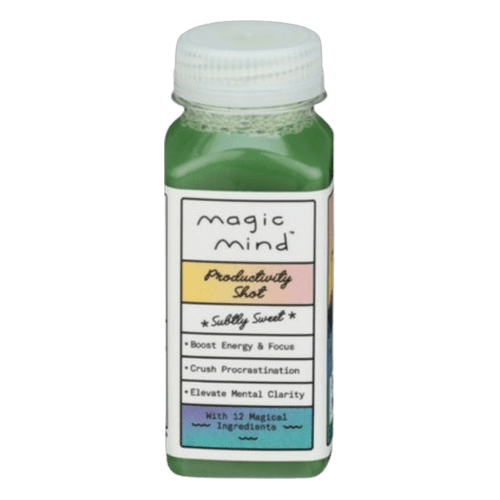
Magic Mind is promoted as a natural brain enhancement shot claiming to boost focus, improve mental clarity, reduce stress, and enhance productivity without medical treatment or lifestyle changes. Heavily marketed through podcast ads, influencer promotions, and bold “neuroscience-backed” claims, it targets professionals and students seeking a cognitive edge. However, our investigation uncovered red flags, including exaggerated promises, no published clinical trials on the final formula, unclear dosages, paid endorsements, and limited transparency raising serious Magic Mind scam concerns.

What Is Magic Mind?
Magic Mind is marketed as a natural brain enhancement shot designed to boost focus, improve mental clarity, reduce stress, and enhance productivity without requiring medical treatment, therapy, or major lifestyle changes. It is heavily promoted through podcast sponsorships, influencer endorsements, social media ads, and curated testimonials that present it as a “neuroscience-backed” solution for high performers. The product is positioned as a premium daily productivity drink, often compared to or marketed as an alternative to coffee. However, despite polished branding and widespread promotion, there is limited publicly available clinical research validating the final formula as marketed.
Claims vs. Reality: Does Magic Mind Really Work?
Independent analysis and real user feedback suggest that while Magic Mind may provide mild stimulation due to caffeine and adaptogens, its bold brain enhancement claims lack strong clinical validation on the final product formula.
| Claims by Magic Mind | Reality Based on Investigation |
|---|---|
| Boosts focus and productivity instantly | Effects likely due to caffeine; no proof of dramatic cognitive enhancement |
| Reduces stress significantly | Adaptogens may help mildly, but results vary widely |
| Improves long-term brain health | No long-term clinical trials on the final formula |
| Replaces coffee without crashes | Contains caffeine; crash potential still exists |
| Clinically backed neuroscience formula | No published peer-reviewed trials on the complete product |
| Works for everyone | Individual response to nootropics varies significantly |
| 100% safe and natural | Natural ingredients can still cause side effects |
| Delivers noticeable results within days | No evidence of rapid cognitive transformation |
| Trusted by doctors and experts | Endorsements largely influencer-based, not verified medical authorities |
8 Proofs Why Magic Mind Is a Scam
Magic Mind capitalizes on productivity anxiety, burnout culture, and the fear of falling behind in competitive work environments. It promises sharper focus, dopamine balance, and “optimized brain performance” through sleek branding and influencer endorsements. However, our investigation into marketing materials, ingredient disclosures, user complaints, and transparency gaps reveals eight undeniable proofs that strongly suggest a calculated Magic Mind scam strategy built more on hype than verified science.
1. Influencer-Driven Hype Over Clinical Evidence:
Magic Mind’s growth has been fueled primarily by podcast ads, YouTube sponsorships, and social media influencers claiming dramatic productivity boosts. However, paid testimonials are not clinical validation. There are no published peer-reviewed human trials confirming the effectiveness of the finished Magic Mind formula. Relying on influencers instead of medical data is a classic overhyped supplement tactic.
2. Exaggerated Brain Chemistry Claims:
The product claims to “boost dopamine,” “support neuroplasticity,” and “optimize cognitive performance.” These are complex neurological processes requiring controlled scientific measurement. Yet no publicly available data shows Magic Mind has been tested for measurable dopamine changes or executive function improvements. The claims sound scientific but lack verifiable proof.
3. Premium Pricing for Common Ingredients:
Magic Mind contains widely available ingredients such as matcha, L-theanine, ashwagandha, rhodiola, and B vitamins. These can be purchased separately at significantly lower cost. The high price appears driven by branding, convenience, and lifestyle positioning rather than breakthrough formulation. Consumers may be paying for packaging rather than potency.
4. Lack of Full-Formula Clinical Trials:
While individual ingredients have some supporting research, the complete Magic Mind blend has not undergone published double-blind, placebo-controlled human trials. Combining ingredients changes their interaction and effectiveness. Without testing the finished formula, claims of synergy and optimized cognitive impact remain unproven marketing language.
5. Fake Endorsements and Manipulated Ratings:
Magic Mind heavily relies on influencer promotions and polished five-star testimonials that appear curated for marketing impact rather than balanced feedback. Many endorsements come from paid podcast sponsorships rather than independent medical professionals. On official pages, ratings are overwhelmingly positive, yet neutral platforms show more mixed reactions. This imbalance suggests selective review filtering and reputation management tactics designed to inflate perceived credibility.

6. Negative Experiences on Independent Platforms:
While the brand’s website highlights dramatic productivity transformations, independent forums such as Reddit and Trustpilot contain more critical feedback. Several users report little to no improvement beyond a mild caffeine boost, describing the product as “overpriced matcha” or “all hype.” Some also mention headaches, jitters, or subscription frustration. The clear gap between controlled testimonials and uncontrolled public discussion raises serious concerns about authenticity.
7. No FDA Approval for Brain Enhancement Claims:
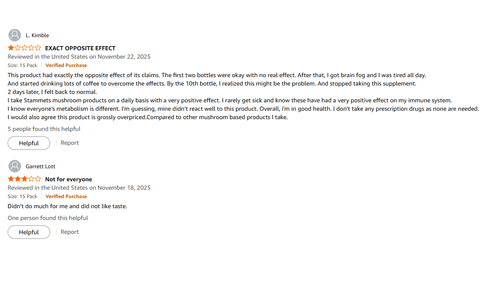
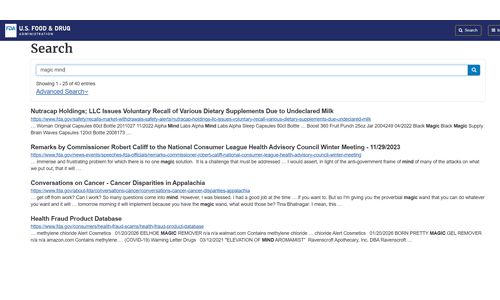
Magic Mind is sold as a dietary supplement, which means it is not FDA approved for treating or improving cognitive function. Despite this, marketing language strongly implies medical-level results. The absence of regulatory approval does not automatically mean a product is unsafe but bold neurological claims without oversight are misleading.
8. Psychological Marketing and Urgency Tactics:
Magic Mind’s branding often emphasizes limited offers, productivity optimization pressure, and aspirational success imagery. The messaging suggests that without daily cognitive enhancement, users risk underperformance. This emotional leverage targets professionals seeking an edge, steering attention away from the lack of verified scientific backing.
Is Magic Mind Scam or Legit?
Magic Mind appears to be an overhyped supplement targeting professionals, students, and entrepreneurs seeking sharper focus, better productivity, and enhanced cognitive performance. It promotes brain optimization without medical treatment or lifestyle adjustments, yet no published clinical trials validate the effectiveness of the finished formula. Heavily marketed through influencer sponsorships and curated testimonials, it leans more on branding than verified science. Many users report minimal results beyond a mild caffeine boost, while some experience jitters, headaches, anxiety, or sleep disruption. Premium pricing, subscription-based billing, and selective review presentation raise concerns about transparency and value, putting consumers at financial risk for benefits that remain largely unproven.
What Magic Mind Lacks vs. What a Legit Supplement Should Have
The contrast between Magic Mind’s productivity-focused brain shot and a truly legitimate cognitive health supplement is significant. The comparison below outlines the most important differences consumers should understand before making a purchase decision.
| Magic Mind | A Legit Health Supplement |
|---|---|
| No published full-formula clinical trials validating cognitive claims | Peer-reviewed, placebo-controlled human trials on the finished product |
| Heavy reliance on influencer sponsorships and podcast ads | Endorsements from licensed medical professionals with verifiable credentials |
| Limited public disclosure of standardized ingredient dosages | Clearly disclosed ingredient amounts with research-backed therapeutic ranges |
| Broad claims about dopamine balance and productivity optimization | Realistic, science-based claims aligned with regulatory guidelines |
| Curated five-star testimonials on official website | Balanced, independently verifiable reviews on neutral platforms |
| Subscription-based sales emphasis | Transparent pricing without aggressive auto-renewal pressure |
| Premium branding-driven pricing | Pricing aligned with ingredient value and proven efficacy |
Magic Mind Complaints and Reviews
To provide an unbiased assessment, we analyzed user feedback from neutral platforms such as Reddit, Trustpilot discussions, Quora threads, and Facebook groups where brand moderation is limited. The overall response was mixed to negative, with many users reporting little to no noticeable improvement in focus, productivity, or cognitive clarity beyond a mild caffeine effect. These recurring complaints suggest that Magic Mind reviews on official pages may not fully reflect broader consumer experiences.
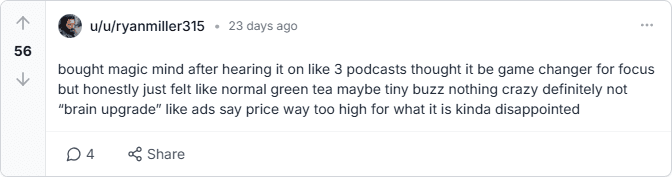
Ryan Miller, USA, Texas (Age 34, Male)
Source: Reddit
Hannah Clarke, UK, Manchester (Age 29, Female)
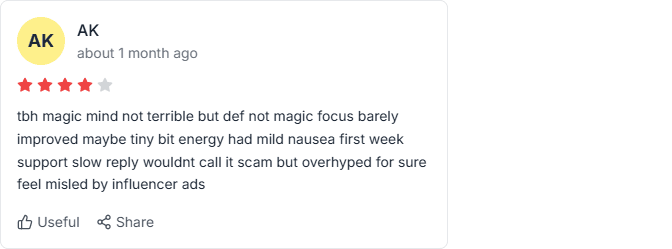
Source: Trustpilot
tried magic mind for a month expecting better productivity but didnt see big difference just mild caffeine kick sometimes felt jittery and couldnt sleep proper cancellation was bit confusing too not worth the hype in my opinion
Jason Kim, Canada, Vancouver (Age 37, Male)
Source: Quora
everyone online saying magic mind is amazing but for me it was meh focus same as coffee maybe placebo idk price is premium but results not premium felt slight headache couple days wont reorder again
Laura Bennett, Australia, Melbourne (Age 32, Female)
Source: Facebook
honestly magic mind looked cool n branding slick but results super average just tasted like matcha shot felt bit anxious few times nothing life changing like ads promise subscription thing annoying too
Carlos Rivera, USA, Florida (Age 40, Male)
Source: Reddit
used magic mind thinkin it help my brain fog at work but nah still same concentration issues just lighter caffeine buzz and expensive bottle lol marketing made it sound like silicon valley secret but feels overhyped
Magic Mind Ingredients: Inside the Product
The primary concern with Magic Mind’s brain enhancement shot is the lack of publicly available full-formula clinical validation and limited transparency around standardized dosages. While the brand markets its blend as scientifically designed and “neuroscience-backed,” there is no published third-party clinical trial confirming the effectiveness of the finished combination. Consumers must rely largely on label claims without independent verification of optimal therapeutic dosing, ingredient synergy, or measurable cognitive outcomes.
Matcha (Natural Caffeine Source): Marketed to provide clean, sustained energy and focus, but its primary active compound is caffeine, which may cause jitters or sleep disruption in sensitive individuals.
L-Theanine: Claimed to promote calm focus and balance caffeine effects, yet the exact clinically effective ratio with caffeine is not clearly validated in the finished formula.
Ashwagandha (KSM-66®): Promoted for stress reduction and cortisol support, but long-term cognitive enhancement benefits remain debated without product-specific trials.
Rhodiola Rosea: Advertised to combat fatigue and enhance mental stamina, though standardized potency levels and synergistic impact are not independently verified.
Bacopa Monnieri: Claimed to improve memory retention and learning speed, yet benefits in research typically require consistent long-term dosing not clearly demonstrated here.
Lion’s Mane Mushroom: Marketed to support neurogenesis and brain health, but human evidence remains limited and dosage effectiveness within this blend is unconfirmed.

Magic Mind Ratings
The ratings for Magic Mind’s brain enhancement shot should be viewed with caution. While promotional materials and the official website showcase near-perfect scores and glowing testimonials, independent platforms reflect more balanced and sometimes critical feedback. The discrepancy between curated reviews and neutral discussions raises concerns about selective reputation management and marketing bias.
| Website | Ratings | Reliability |
|---|---|---|
| Trustpilot | 2.6 / 5 | Moderately reliable. Users report minimal results beyond caffeine, pricing concerns, and occasional subscription complaints. |
| Amazon | Limited / Inconsistent | Unreliable. Product availability fluctuates and reviews are limited or absent. |
| Walmart | N/A | Unreliable. Not consistently sold through verified Walmart listings. |
| BBB | No major accreditation | Moderately reliable. Limited profile transparency; no strong corporate accreditation presence. |
| Official Website | 4.8–5 / 5 | Biased. Reviews appear curated; negative feedback rarely visible. |
Magic Mind Scam Risk Score
To assess consumer risk, Magic Mind was evaluated across five major transparency and credibility indicators. While not an outright illegal operation, several risk markers suggest overhyped marketing and questionable value relative to claims.
| Metric | Risk Score (out of 10) | How We Rated It |
|---|---|---|
| Unverified Claims | 8 / 10 | Bold claims about dopamine balance and productivity without full-formula clinical trials. |
| Ingredient Transparency | 7 / 10 | Ingredients listed but limited clarity on standardized potency and clinical validation of blend. |
| Customer Complaints | 6 / 10 | Repeated reports of minimal results and subscription frustration. |
| Manufacturer Transparency | 6 / 10 | Brand identity present, but limited detailed production and third-party lab disclosures. |
| Marketing Honesty | 8 / 10 | Heavy influencer sponsorships and aspirational urgency tactics. |
| Overall Scam Risk Score | 7.0 / 10 | High marketing risk; moderate consumer caution advised. |
Fake Magic Mind Websites
While Magic Mind has an official domain, several promotional or imitation-style landing pages circulate online.
| Website URL Types | Warning Signs / Notes |
|---|---|
| “Discount Magic Mind” pages | Countdown timers and “only a few left” warnings. |
| Affiliate review blogs | Overly positive, copy-paste style reviews written for commission. |
| Sponsored ad landing pages | Redirect to subscription checkout without clear pricing transparency. |
| Social media promo links | Limited company disclosure; urgency-based language. |
How We Investigated Magic Mind
Our investigation followed a structured, evidence-based framework to ensure fairness and accuracy.
Analyzing Customer Feedback:
We examined user discussions on Reddit, Trustpilot, Quora, and Facebook groups. Recurring themes included minimal noticeable cognitive improvement, mild caffeine-like stimulation, pricing dissatisfaction, and occasional side effects such as jitters or headaches.
Reviewing Marketing Practices:
We assessed podcast sponsorship scripts, influencer promotions, and website claims. Messaging heavily emphasized productivity optimization, dopamine balance, and “neuroscience-backed” performance without linking to peer-reviewed trials of the final blend.
Evaluating Ingredient Claims:
We cross-referenced listed ingredients against scientific databases to determine whether the complete combination has been clinically tested. While individual ingredients have research, no published human trials validate the exact Magic Mind formula.
Checking Corporate Transparency:
We reviewed public company disclosures, regulatory standards for supplements, and third-party testing visibility. Limited independent lab certification data was available.
Comparing Claims to Scientific Standards:
Bold neurological enhancement claims were compared against medical literature. Evidence for measurable dopamine or executive function improvement specific to this product was not found.
How to Identify Scam Supplements Like Magic Mind
To avoid falling for overhyped brain enhancement products like Magic Mind, watch for these warning signs before purchasing:
Miracle Productivity Claims: Promises of instant focus, dopamine boosts, or dramatic cognitive upgrades without medical treatment, therapy, or lifestyle improvements are major red flags. Real brain health improvements require evidence and time—not overnight transformations.
Influencer-Driven Credibility: Heavy reliance on podcast ads, social media influencers, or “biohacker” endorsements instead of licensed medical professionals often signals marketing over science.
No Full-Formula Clinical Testing: Legitimate supplements publish peer-reviewed studies or third-party lab reports confirming ingredient dosages and safety. If only individual ingredients are cited without testing the final blend, caution is warranted.
Curated Reviews and Urgency Tactics: Countdown timers, “limited stock” alerts, and overwhelmingly perfect five-star testimonials create artificial pressure. Always cross-check reviews on neutral platforms.
Subscription and Refund Barriers: Complicated cancellation processes, unclear auto-renewal terms, or slow customer support can indicate a profit-driven billing model rather than a customer-focused product.
Magic Mind Side Effects
Magic Mind contains caffeine, adaptogens, and herbal extracts, which may cause side effects in some individuals especially those sensitive to stimulants or taking medications. Because the full formula has not been validated through large-scale clinical trials, individual reactions can vary.
- Jitteriness, rapid heartbeat, or anxiety due to caffeine from matcha and stimulant sensitivity
- Headaches or dizziness potentially linked to caffeine fluctuations or herbal interactions
- Nausea or stomach discomfort from concentrated herbal extracts
- Sleep disturbances or insomnia if taken later in the day
- Digestive upset or bloating from adaptogenic blends
- Potential medication interactions, particularly with antidepressants, anxiety medication, or blood pressure drugs
Magic Mind Refund Process
If you experience billing issues or difficulty canceling a Magic Mind subscription, act quickly rather than relying solely on customer support responses. To protect your finances and recover funds if necessary, follow these steps:
- Contact your bank or credit card provider immediately and report the disputed charge, especially if it involves unexpected subscription renewals.
- Provide documentation, including the website URL, order confirmation emails, screenshots of subscription terms, and any cancellation attempts.
- Request a chargeback if the merchant refuses a refund or continues billing after cancellation. Clearly state that the product did not meet advertised expectations or that billing terms were unclear.
- File a complaint with consumer protection agencies, such as the FTC (U.S.) or your country’s equivalent authority, if you suspect deceptive marketing or unfair billing practices.
- Ask your bank to block future recurring charges from the merchant to prevent automatic rebills while the dispute is under review.
Expert-Reviewed & Customer-Approved


Final Verdict: Is Magic Mind Worth It?
No, Magic Mind is not worth the premium price for most consumers seeking meaningful cognitive enhancement. While it is legally sold as a dietary supplement, its strong claims about dopamine support, neuro-optimization, and sustained productivity lack published full-formula clinical validation. The brand depends heavily on influencer sponsorships, polished branding, and aspirational marketing rather than transparent scientific proof. Many users report effects similar to a mild caffeine boost rather than a transformative nootropic experience. Given its high cost, subscription-based sales structure, and limited independent research on the finished blend, the overall value remains questionable. Consumers seeking genuine brain health support should choose reputable brands that offer peer-reviewed data, standardized ingredient transparency, third-party lab testing, and balanced reviews from independent platforms.
Frequently Asked Questions (FAQ)
How do I know if Magic Mind is real?
Authentic purchases should only be made through the official website. Be cautious of social media ads, cloned discount domains, or “limited-time” pop-up pages that redirect to unclear checkout funnels.
What are the side effects of Magic Mind?
Some users report jitteriness, headaches, nausea, digestive upset, anxiety, or sleep disruption—mostly linked to caffeine and adaptogenic herbs. Reactions vary depending on tolerance and health status.
Is Magic Mind safe to use?
As a dietary supplement, it is not FDA-approved for cognitive enhancement claims. While ingredients are commonly used in wellness products, individuals with medical conditions should consult a healthcare provider first.
Has anyone used Magic Mind? What were the results?
Yes. Feedback is mixed. Some users report mild focus improvement similar to coffee, while others say they experienced minimal noticeable changes despite consistent use.
Is Magic Mind approved by the FDA?
No. Like all dietary supplements, Magic Mind is not FDA-approved before sale and is not evaluated for cognitive performance claims.
Where can I buy the real Magic Mind?
It is primarily sold through its official website. Be cautious of third-party listings or imitation domains offering steep discounts or urgent deals.
Are there fake Magic Mind websites?
Yes. Some promotional and affiliate-style sites mimic official branding and use countdown timers or exaggerated claims to pressure buyers.
Does Magic Mind really work for focus and productivity?
Evidence suggests any noticeable effect may come primarily from caffeine content rather than unique neurological enhancement.
Who makes Magic Mind?
The product is marketed under the Magic Mind brand, but detailed public disclosure of manufacturing facilities and third-party lab certifications is limited.
How can I avoid Magic Mind scams online?
Avoid impulse purchases driven by influencer hype. Verify domain authenticity, review independent feedback, and read subscription terms carefully before buying.
Are there real customer reviews for Magic Mind?
Yes, but many online testimonials are influencer-sponsored. Independent forums like Reddit and Trustpilot show more balanced feedback, including criticism about price and effectiveness.
Sources
- Webster, P. and Healey, N., 2024. Eleven clinical trials that will shape medicine in 2026. Nature Medicine, 30, pp.3384–3388. Available at: https://doi.org/10.1038/s41591-024-03383-y [Accessed 16 Feb. 2026].
- Vallabh, S., 2026. Gene therapy for prion disease: advancing early treatment in neurodegeneration. MyPeBS. Available at: https://www.mypebs.eu/2025/01/09/eleven-clinical-trials-that-will-shape-medicine-in-2025/ [Accessed 16 Feb. 2026].
- Peer Reviewed Medical Research Program (PRMRP), 2026. Military medical research and its impact on health care advancements. Available at: https://cdmrp.health.mil/prmrp/default [Accessed 16 Feb. 2026].
- Sage Journals, 2026. The dose-response relationship and gender differences of serum uric acid with total cholesterol: a cross-sectional study. Journal of International Medical Research. Available at: https://journals.sagepub.com/home/imr [Accessed 16 Feb. 2026].
- TFS HealthScience, 2026. Clinical research trends to love: advancements in personalized medicine and patient-centered trials. Available at: https://tfscro.com/resources/2025-clinical-research-trends-to-love/ [Accessed 16 Feb. 2026].
- The BMJ, 2024. Chemotherapy among patients with triple-negative breast cancer based on integrated mRNA-lncRNA signature. The BMJ. Available at: https://www.bmj.com/research/research [Accessed 16 Feb. 2026].
- Gregory, F., 2024. CAR-T therapies and personalization in emerging therapies: progress and challenges ahead in clinical trials for oncology treatments. Pharmaceutical Executive. Available at: https://www.pharmexec.com/view/future-clinical-trials-trends-2025 [Accessed 16 Feb. 2026].
- Nature Medicine, 2024. Digital tools for cancer and mental health: shaping the future of clinical trials in precision medicine. Nature Medicine. Available at: https://doi.org/10.1038/s41591-024-03383-y [Accessed 16 Feb. 2026].
- Sage Journals, 2024. Artificial intelligence in public health: potential epidemic early warning systems and their impact on global health outcomes. Journal of International Medical Research. Available at: https://journals.sagepub.com/home/imr [Accessed 16 Feb. 2026].
- BMJ Research, 2024. Association of non-alcoholic fatty liver disease with cardiovascular disease and all-cause mortality in patients with type 2 diabetes: a systematic review and meta-analysis approach to public health challenges. The BMJ. Available at: https://www.bmj.com/research/research [Accessed 16 Feb. 2026].

Dr. Elizabeth Morgan is a gastroenterologist and clinical researcher specializing in digestive health and liver function. She earned her Ph.D. in Nutritional Science from the University of California, Davis, and completed her residency at Johns Hopkins Hospital. Dr. Morgan has worked as a Clinical Research Scientist in gastroenterology, investigating how supplements affect digestion, gut health, and nutrient absorption. Her work emphasizes consumer education on the dangers of untested digestive health products and fraudulent “detox” supplements.