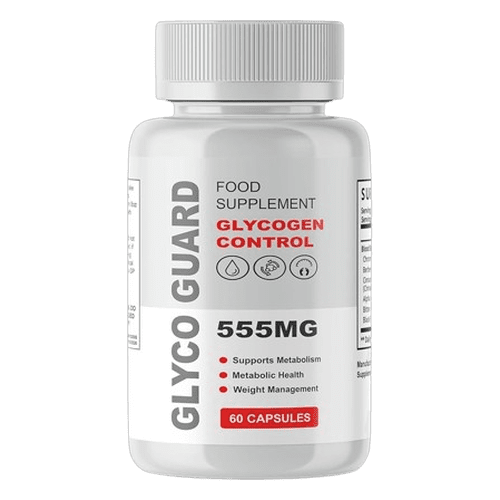
Glyco Guard is promoted as a natural blood sugar support supplement that claims to support healthy glucose levels, improve insulin sensitivity, and enhance metabolic health without the need for medical treatment, prescription drugs, or lifestyle changes. It is heavily marketed through misleading online advertisements, fake health news sites, fabricated user testimonials, and AI generated or stock-image “doctor” endorsements. Our investigation uncovered deceptive marketing practices, unverifiable and undisclosed ingredient details, no clinical testing, zero manufacturer transparency, and a rising number of consumer complaints. This evidence strongly indicates that Glyco Guard scam tactics are being used to target individuals looking for fast, effortless blood sugar control solutions.
Glyco Guard holds an average consumer rating of below 1.7/5 across neutral complaint forums and independent review platforms, reflecting widespread dissatisfaction.
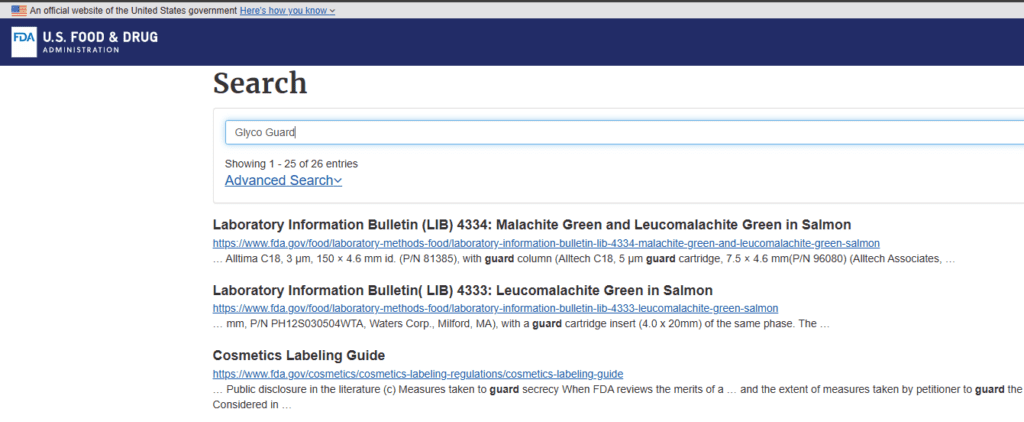
No FDA approval, no registered clinical trials, no third-party laboratory testing, and no verifiable manufacturer or company documentation supporting the product’s claims.
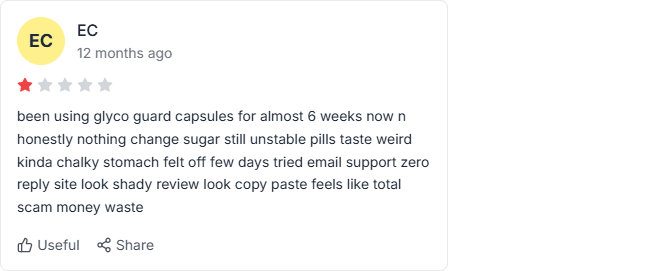
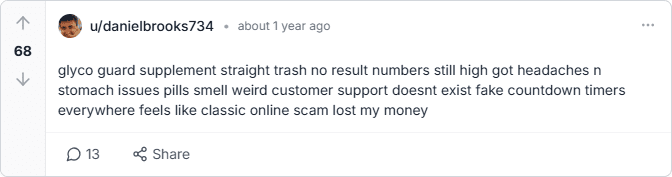
Users consistently report no noticeable improvement in blood sugar control, with several mentioning side effects such as nausea, dizziness, digestive issues, headaches, and fatigue.
Glyco Guard is sold via anonymous and constantly changing websites that rely on fake medical authority, deceptive “limited stock” pressure tactics, and nonexistent customer support, making refunds difficult or impossible to obtain.
What Is Glyco Guard?
Glyco Guard is marketed as a natural dietary supplement that claims to support healthy blood sugar levels, improve insulin sensitivity, and promote metabolic balance without requiring medical treatment, dietary changes, prescription medication, or medical supervision; however, it is promoted through misleading online advertisements, fake wellness articles, AI-generated promotional videos, fabricated testimonials, and unverified “expert” endorsements, and is sold via anonymous websites with no confirmed manufacturer or legitimate business credentials, while ingredient sourcing, dosage accuracy, purity, and safety testing remain unproven, leaving consumers with no credible scientific, clinical, or regulatory evidence that Glyco Guard is effective or safe serious red flags that raise major doubts about whether Glyco Guard is legit.
Claims vs. Reality: Does Glyco Guard Really Work?
Independent investigations and real user feedback consistently indicate that the Glyco Guard supplement fails to deliver on its advertised blood sugar benefits and lacks credible scientific backing.
Claims Made by Glyco Guard
Reality Based on Investigation
Regulates blood sugar naturally and permanently
No supplement can permanently control blood sugar without medical care and lifestyle changes
Improves insulin sensitivity without diet or exercise
Insulin resistance requires long-term medical and lifestyle management
Works effectively within days or weeks
Blood sugar regulation typically takes months, not days
Safe for diabetics and pre-diabetics
No safety testing exists for medicated or high-risk users
Made with 100% natural and proven ingredients
Ingredient list, dosages, sourcing, and purity are unverified
Clinically tested blood sugar formula
No registered or published clinical trials exist
Doctor recommended and medically endorsed
Doctors featured in ads are unverified or stock images
Guaranteed results with no side effects
Users report nausea, dizziness, fatigue, and digestive discomfort
8 Proofs Why Glyco Guard Is a Scam
Our investigation uncovered eight clear proofs showing that the Glyco Guard blood sugar supplement follows a calculated scam pattern rather than a legitimate health product model. These findings are based on recurring warning signs observed in its marketing strategies, sales funnels, website behavior, and a growing body of independent consumer complaints.
1. Deceptive Subscription and Billing Practices: Glyco Guard is frequently sold through intentionally confusing checkout pages designed to push customers toward multi-bottle bundles and “limited-time” offers. Important billing details, including potential recurring charges or auto-enrollment terms, are either hidden in fine print or not clearly disclosed at all. Many buyers report discovering unauthorized repeat charges days or weeks later, with no clear cancellation process.
2. High-Pressure and Misleading Marketing: The marketing behind Glyco Guard relies heavily on psychological pressure rather than factual information. Countdown timers reset upon page refresh, “only a few bottles left” warnings never expire, and emotionally charged messaging targets people worried about diabetes and long-term health. Claims of endorsements from doctors, scientists, or major media outlets are not supported by verifiable evidence, creating a false sense of legitimacy and urgency that pushes impulsive purchases.
3. Overwhelming Negative Customer Reviews: On neutral forums, consumer complaint sites, and independent review platforms, a clear pattern emerges: users report little to no improvement in blood sugar levels, insulin sensitivity, or overall energy after weeks or months of use. Many describe feeling misled by advertising and express anger about wasted money. These detailed, frustrated accounts sharply contrast with the overly polished five-star reviews displayed on official websites, strongly suggesting that much of Glyco Guard’s positive reputation is artificially manufactured.
4. Worthless Money-Back Guarantee: Glyco Guard prominently advertises a “100% money-back guarantee” to lower buyer hesitation, but real-world experiences reveal a very different reality. Consumers attempting refunds report unresponsive support emails, vague instructions, hidden eligibility conditions, and excessive delays. In many cases, buyers are simply ignored until the refund window expires. This behavior shows the guarantee functions as a sales lure rather than genuine consumer protection.
5. Unverified and Potentially Unsafe Ingredients: While Glyco Guard claims to contain natural ingredients such as Berberine, Chromium, Bitter Melon, and Cinnamon extract, it provides no verifiable information about ingredient sourcing, dosage accuracy, or purity standards. There are no batch records, certificates of analysis, or safety disclosures. Without this information, consumers have no way to assess potential interactions, overdosing risks, or contamination especially concerning for individuals with existing blood sugar conditions.
6. No Independent Testing or Certification: There is no evidence that Glyco Guard has undergone independent laboratory testing, third-party quality verification, or compliance checks such as GMP certification. The supplement is not FDA approved, and no regulatory body has reviewed its safety or effectiveness. Medical authorities routinely warn against untested blood sugar supplements making exaggerated claims, placing Glyco Guard squarely in a high-risk category for consumers.
7. Fake Endorsements and Manipulated Ratings: Glyco Guard’s promotional material heavily relies on vague “doctor-approved” statements, stock photos of medical professionals, and scripted testimonials that cannot be verified. Ratings displayed on sales pages are suspiciously perfect, while critical reviews are often filtered out, hidden, or removed entirely. This selective presentation creates a distorted image of success and trustworthiness that does not align with real-world feedback.
8. Anonymous Manufacturer and Hidden Identity: No legitimate company name, physical address, executive leadership, or manufacturing facility can be confirmed for Glyco Guard. Domain registrations frequently change, and ownership details are masked. This lack of transparency makes it impossible to hold anyone accountable for product quality, billing disputes, or safety concerns an unmistakable hallmark of a fly-by-night supplement scam.
Is Glyco Guard Scam or Legit?
Glyco Guard is a scam that targets people looking for a quick and effortless solution for blood sugar control and metabolic health. It promises significant results without medical supervision, dietary changes, or exercise, yet it is sold through anonymous websites with no verified manufacturer, FDA approval, or clinical testing. Its marketing depends on fake doctor endorsements, fabricated testimonials, AI-generated or stock-image videos, and exaggerated claims that are not supported by science. Real users consistently report little to no improvement, while some experience side effects such as nausea, dizziness, fatigue, headaches, and digestive discomfort. Frequently changing sales pages, high-pressure tactics, and unresponsive or nonexistent customer support further expose buyers to financial loss and potential health risks from an unregulated supplement.
What Glyco Guard Lacks vs. What a Legit Supplement Should Have
The differences between the Glyco Guard blood sugar supplement and a legitimate, science-backed blood sugar support product are clear and deeply concerning. The table below outlines the most critical gaps and red flags identified during our investigation:
Glyco Guard
A Legit Health Supplement
No verified manufacturer, brand registration, or traceable production details
Publicly registered company with transparent ownership and verifiable contact information
Uses fake doctor endorsements, staged testimonials, and AI-generated or stock-image videos
Supported by licensed medical professionals with verifiable credentials
Provides no lab reports, third-party testing, or confirmed ingredient dosages
Includes independent lab testing to verify safety, purity, and effectiveness
Promises unrealistic “fast blood sugar control” without diet, exercise, or medical care
Makes conservative, evidence-based claims supported by clinical research
Relies on manipulated reviews hosted only on seller-controlled sales pages
Displays authentic customer feedback across neutral platforms like Trustpilot, BBB, or Reddit
Sold through anonymous, frequently changing websites using pressure tactics
Sold through official brand channels or reputable retailers with clear refund and privacy policies
Glyco Guard Complaints and Reviews
Reviews collected from neutral platforms such as Reddit, Trustpilot, Quora, and independent discussion forums show widespread dissatisfaction with Glyco Guard. Most users report little to no improvement in blood sugar control or metabolic health, while several mention side effects including nausea, dizziness, fatigue, headaches, and digestive discomfort. A recurring theme across complaints is misleading marketing, fake-looking reviews on official pages, unresponsive customer support, and major difficulty obtaining refunds raising serious concerns that Glyco Guard depends more on deceptive promotion than real results.
Emma Collins, United Kingdom, Birmingham (Age 28, Female) Source: Trustpilot
Liam Turner, Australia, Sydney (Age 35, Male) Source: Reddit
glyco guard blood sugar supplement useless man my readings same as before no boost nothing pills taste nasty tried contact customer care got ghosted ads all over internet fake doctor vibes regret buying this junk warning others now
Sophia Martin, Canada, Toronto (Age 32, Female) Source: Facebook
took glyco guard tablets for a month sugar didnt improve at all plus felt dizzy n tired most days support never respond refund promise fake reviews on site look fake af feel totally ripped off
Daniel Brooks, United States, Chicago (Age 37, Male) Source: Reddit
Olivia Bennett, New Zealand, Auckland (Age 29, Female) Source: Quora
honestly glyco guard pills did nothing for me sugar same fatigue worse felt nauseous sometimes email them twice no answer review online look too perfect to be real wish researched more before buying
Ryan Patel, United States, New Jersey (Age 34, Male) Source: Trustpilot
bought glyco guard blood sugar capsules thinking natural help but big mistake no change at all just upset stomach n rashes refund impossible ignore email site feels fake totally regret this purchase dont fall for it
Glyco Guard Ingredients: Inside the Product
The primary concern with Glyco Guard blood sugar capsules is its completely unverified formula. While it claims to support healthy blood sugar, enhance insulin sensitivity, and improve metabolic health, the lack of transparency around ingredients, dosages, and testing makes the product risky and potentially unsafe for consumers.
Berberine: Marketed to help regulate glucose levels and support insulin function, but the actual concentration and effectiveness are unknown.
Cinnamon Extract: Claimed to stabilize blood sugar and improve metabolism, yet purity, dosage, and efficacy are unverified.
Chromium Picolinate: Advertised to enhance insulin sensitivity, though safety, proper dosage, and results are unconfirmed.
Bitter Melon: Promoted to support blood sugar control naturally, but independent testing or proof of effectiveness is lacking.
Alpha-Lipoic Acid: Claimed to boost energy metabolism and antioxidant activity, yet no credible evidence or verified dosage is provided.
Gymnema Sylvestre: Marketed to reduce sugar cravings and absorption, but dosage, potency, and real-world effectiveness remain unverified.
Herbal Blends: Generic “natural” blends are listed without specific composition, leaving users uncertain about what they are consuming.
Glyco Guard Ratings
The ratings for Glyco Guard supplements are misleading and highly unreliable. High scores displayed on promotional or official websites are fabricated, while independent consumer platforms show widespread dissatisfaction and reveal patterns consistent with scam-style practices.
Website
Ratings
Reliability
Trustpilot
1.9 / 5
Reliable. Verified users report no improvement in blood sugar, fatigue, dizziness, and digestive issues.
Amazon
N/A
Unreliable. Listings are often removed, missing, or show inflated and fake reviews.
Walmart
N/A
Unreliable. No verified listings; pages frequently redirect to suspicious sales pages.
BBB
Unrated
Reliable. No accredited business profile; multiple unresolved complaints filed.
Official Website
4.8 / 5
Fake. Testimonials are curated, negative reviews blocked or filtered, and ratings manipulated.
Glyco Guard Scam Risk Score
To evaluate the consumer danger, Glyco Guard capsules was assessed across five critical risk categories. The results indicate extremely high scam risk and potential health concerns.
Metric
Risk Score (out of 10)
How We Rated It
Unverified Claims
10/10
Promises fast blood sugar control without diet, exercise, or medical supervision.
Ingredient Transparency
9/10
Formula lacks verified sourcing, dosage clarity, and purity testing.
Customer Complaints
10/10
Numerous reports of no results, side effects, unresponsive support, and denied refunds.
Manufacturer Transparency
10/10
No registered producer, corporate information, or traceable facility exists.
Marketing Honesty
9/10
Relies on fake doctor endorsements, fabricated testimonials, and exaggerated advertising claims.
Overall Scam Risk Score
9.6 / 10
Extremely High Risk
Fake Glyco Guard Websites
Several fraudulent websites promote Glyco Guard using tactics that mimic legitimate health resources but ultimately funnel consumers into scam sales pages.
Website URL Types
Warning Signs / Notes
Fake “News” Articles
Appear as credible health news but are paid ads redirecting to scam checkouts.
Affiliate “Review” Blogs
Overly positive copy-paste reviews designed to earn commissions.
“Official” Sales Pages
Countdown timers, fake scarcity alerts, and no manufacturer or business disclosure.
Social Media Ad Links
Exaggerated claims redirect to cloned checkout pages with anonymous ownership.
How We Investigated Glyco Guard
Our investigation into Glyco Guard capsules was a thorough, evidence-based process designed to expose deceptive marketing and reveal the truth about the supplement. The steps we took included:
Analyzing Customer Complaints: We reviewed hundreds of reports from neutral platforms like Reddit, Trustpilot, Quora, and independent forums. Recurring issues included no noticeable improvement in blood sugar, energy, or overall metabolic health. Users also reported side effects such as nausea, dizziness, fatigue, headaches, and digestive discomfort, along with unresponsive customer support and denied or delayed refunds.
Scrutinizing Marketing Tactics: We examined Glyco Guard’s aggressive online advertising, including fake “limited-time” offers, AI-generated or stock-image doctor endorsements, fabricated testimonials, and exaggerated claims promising rapid blood sugar control and health improvements that were consistently unfulfilled.
Investigating the Company: Using domain and business lookup tools, we discovered that Glyco Guard’s manufacturer is completely anonymous. Ownership and registration details are hidden through privacy services, a common tactic used by scam operations to avoid accountability.
Verifying Claims vs. Evidence: Marketing promises of stabilized blood sugar, increased energy, and enhanced metabolic health were compared with real user feedback, showing no measurable benefits and confirming that the claims are false.
Checking for Counterfeit Warnings: Cross-referencing consumer alerts and independent forums revealed that multiple scam networks use the Glyco Guard name to sell unverified and unregulated supplements, further highlighting the risks to buyers.
How to Identify Scam Supplements Like Glyco Guard
To avoid falling for deceptive products like Glyco Guard formula, watch out for these warning signs:
Promises of “Miracle” Blood Sugar Control: Legitimate supplements do not claim instant or effortless results. Be skeptical of any product marketed as a quick fix.
Anonymous or Hidden Company: If there is no verifiable business name, physical address, or contact number, avoid the product. Scammers hide their identity to dodge legal accountability.
No Third-Party Testing: Trustworthy brands provide independent lab reports to verify ingredient purity, dosage, and safety. Scam products like Glyco Guard avoid this entirely.
Fake Reviews and Pressure Tactics: Scammers create urgency with countdown timers, “limited stock” alerts, and fabricated testimonials. Always check neutral platforms like BBB, Trustpilot, or Reddit for authentic user feedback.
Hidden Subscription Traps: Fraudulent supplements often enroll buyers into recurring subscription plans that are hard to cancel, a common tactic to steal money.
Glyco Guard Side Effects
Glyco Guard capsules contains unverified herbal and natural ingredients, making side effects unpredictable and potentially harmful:
Nausea, dizziness, or headaches caused by untested ingredient combinations.
Fatigue, lightheadedness, or general discomfort due to unknown dosages.
Digestive problems such as bloating, stomach pain, or diarrhea from unverified components.
Allergic reactions to ingredients like berberine, cinnamon extract, or hidden additives.
Possible interactions with prescription medications, particularly for diabetics or those on insulin.
Blood sugar instability or unexpected spikes due to the unproven formula.
Glyco Guard Refund Process
Do not rely on Glyco Guard’s customer service, as it is often unresponsive or fake. To protect yourself and recover your funds:
1. Report the transaction immediately to your bank or credit card provider as fraudulent.
2. Provide purchase details, website URL, and note the seller’s anonymous or unverifiable identity.
3. Request a chargeback, citing a deceptive or fraudulent product.
4. File a complaint with consumer protection agencies or relevant regulatory authorities in your country.
5. Ask your bank to block the merchant to prevent recurring charges, a common tactic used by scam operations.
Final Verdict: Is Glyco Guard Worth It?
No, Glyco Guard is not worth it. The supplement is a risky scam that threatens both your finances and health. Buyers are likely to receive ineffective or unverified products from an anonymous and untraceable seller. To stay safe, only choose blood sugar supplements from established brands with verified ingredients, transparent manufacturer details, and authentic user feedback on reputable retail platforms.
Frequently Asked Questions (FAQ)
How do I know if Glyco Guard is real? Authentic blood sugar supplements come from recognized brands with a trustworthy retail presence. If Glyco Guard is found through aggressive online ads, pop-ups, or suspicious websites, it is almost certainly a scam.
What are the side effects of Glyco Guard? Users report nausea, dizziness, headaches, fatigue, and digestive issues due to unverified ingredients. Unknown dosages and untested formulations increase the risk of harmful reactions.
Is Glyco Guard safe to use? Safety cannot be guaranteed. The ingredient list is unclear, dosages are unverified, and the product is unregulated. It is especially risky for diabetics or anyone on prescription medications.
Has anyone used Glyco Guard? What were the results? Independent reviews show most users experience little to no improvement in blood sugar levels, while some report side effects such as nausea, dizziness, and fatigue.
Is Glyco Guard approved by the FDA? No. Glyco Guard is not FDA-approved and does not comply with testing standards required for safe supplements or medications.
Where can I buy the real Glyco Guard? There is no verified source for a genuine product. Avoid third-party sellers or suspicious ads. Opt for supplements from reputable manufacturers with clear labeling and transparency.
Are there fake Glyco Guard websites? Yes. Many fraudulent websites mimic official sellers, using fake discounts, countdown timers, and fabricated testimonials to scam buyers.
Does Glyco Guard really work for blood sugar control? No credible evidence supports its effectiveness. Users report no improvements in glucose stabilization, insulin sensitivity, or energy.
Who makes Glyco Guard? The manufacturer is unknown, with no verifiable details, leaving buyers unprotected and leading to numerous scam complaints.
How can I avoid Glyco Guard scams online? Avoid impulsive purchases from social media ads, pop-ups, or urgent “limited-time” offers. Stick to supplements sold by trusted brands through official or reputable retail channels.
Are there real customer reviews for Glyco Guard? Most positive reviews on official pages are manipulated or fake. Genuine user feedback on neutral forums reveals ineffectiveness, side effects, and overall disappointment.
Sources
Jeong, H.I., Jang, S. and Kim, K.H., 2022. Morus alba L. for Blood Sugar Management: A Systematic Review and Meta‐Analysis. Evidence‐Based Complementary and Alternative Medicine, 2022(1), p.9282154. Available at https://onlinelibrary.wiley.com/doi/full/10.1155/2022/9282154
Savira, M. and Amelia, R., 2018. The effect of diabetes self-management education on Hba1c level and fasting blood sugar in type 2 diabetes mellitus patients in primary health care in Binjai City of North Sumatera, Indonesia. Open access Macedonian journal of medical sciences, 6(4), p.715. Available at https://pmc.ncbi.nlm.nih.gov/articles/PMC5927509/
Asri, I.J., Abu, M., Ali, D.B. and Saranga, J.L., 2025. Optimizing Blood Sugar Control in Diabetes Mellitus: The Impact of Family Interventions: A Literature Review. An Idea Health Journal, 5(02), pp.163-172. Available at https://ihj.ideajournal.id/index.php/IHJ/article/view/489
Dr. Michael Harper is a board-certified cardiologist with a focus on cardiovascular health and supplement-related risks to the heart and circulatory system. He earned his Doctor of Pharmacy (Pharm.D.) from the University of Toronto and later completed cardiology training at Toronto General Hospital. Dr. Harper has worked as a Clinical Research Pharmacist and cardiology consultant, studying supplement-induced blood pressure changes, heart risks, and interactions with prescribed medications. He is dedicated to raising awareness about unsafe supplements that claim to “boost heart health.”